
the basic pay of ₹29,200 is only the starting point. Once dearness allowance (DA), house rent allowance (HRA), and travel allowance (TA) are added, the actual in-hand salary is noticeably higher than the basic figure.
If you have done D Pharma (Diploma in Pharmacy) and you are wondering how much a pharmacist earns every month in a government hospital, you are at the right place. A government pharmacist job is one of the most preferred careers for D Pharma students in India. It gives job security, a fixed monthly income, allowances, and a pension after retirement. In this article, we will break down the D Pharmacy salary per month in a government hospital, the pay scale, in-hand salary, and how it compares with the private sector.
What is D Pharmacy and Why Government Jobs Matter
D Pharmacy, also called D Pharm, is a two-year diploma course approved by the Pharmacy Council of India (PCI). After finishing the course and registering with the state pharmacy council, a candidate can legally work as a registered pharmacist. Government hospital jobs are in high demand among D Pharma holders mainly because of the stability they offer. Private jobs may pay differently from place to place, but a government post comes with a fixed pay scale, yearly increment, and long-term benefits.
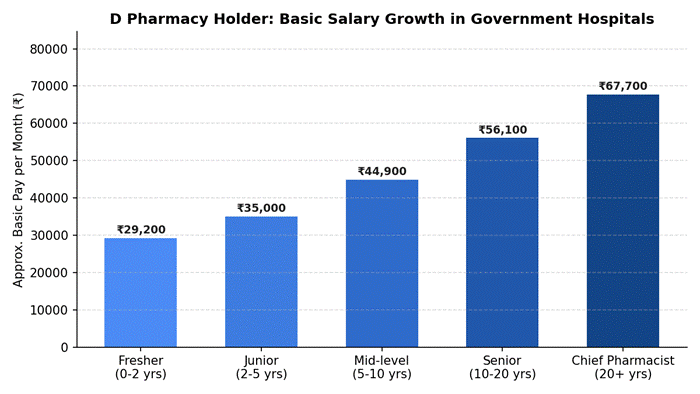
D Pharmacy Salary Per Month in Government Hospital: Quick Overview
Here is a simple table that gives you a quick idea of what a D Pharma pharmacist can expect to earn monthly in a government hospital, before we go into the details.
| Level | Approx. Monthly Salary (In-Hand) | Remarks |
| Fresher / New Recruit | ₹35,000 – ₹46,000 | Basic pay ₹29,200 + DA + HRA + TA |
| 2–5 Years Experience | ₹40,000 – ₹52,000 | Annual increment added to basic pay |
| 5–10 Years Experience | ₹48,000 – ₹65,000 | Possible promotion to Senior Pharmacist |
| 10+ Years / Senior Pharmacist | ₹60,000 – ₹85,000 | Includes supervisory allowance in some states |
| Contract Basis (NHM/BMC) | ₹17,000 – ₹25,000 | Fixed pay, no pension or annual increment |
These numbers can change a little depending on the state, the hiring body (central or state government), and the city category. But this table gives you a fair, realistic picture.
Government Pharmacist Pay Scale: 7th Pay Commission Structure
Most regular (non-contract) government pharmacist posts in India, whether in central hospitals, railways, ESIC, CGHS, or state health departments, are placed under Pay Level 5 of the 7th Central Pay Commission (7th CPC). This level was earlier known as the Grade Pay ₹2,800 scale.
| Component | Details |
| Pay Level | Level 5 (Pay Matrix) |
| Old Pay Band | ₹5,200 – ₹20,200 |
| Old Grade Pay | ₹2,800 |
| Starting Basic Pay | ₹29,200 per month |
| Maximum Basic Pay (with increments) | Up to ₹92,300 per month |
| Annual Increment | Roughly 3% of basic pay each year |
So, the basic pay of ₹29,200 is only the starting point. Once dearness allowance (DA), house rent allowance (HRA), and travel allowance (TA) are added, the actual in-hand salary is noticeably higher than the basic figure.

In-Hand Salary Breakdown: What Actually Lands in Your Bank Account
Many students only look at the basic pay and get confused about the real take-home amount. Let’s break it down for a fresher pharmacist posted in a Y-category city (a mid-sized city, not a metro).
| Salary Component | Approx. Amount |
| Basic Pay | ₹29,200 |
| Dearness Allowance (DA, ~55-60%) | ₹16,000 – ₹17,500 |
| House Rent Allowance (HRA) | ₹4,700 – ₹7,000 |
| Travel Allowance (TA) | ₹1,350 – ₹3,600 |
| Gross Salary (before deductions) | ₹51,000 – ₹57,000 |
| Deductions (NPS, GIS, Professional Tax) | ₹5,000 – ₹7,000 |
| Net In-Hand Salary | ₹44,000 – ₹50,000 |
Note: HRA depends on the city category (X, Y, or Z), so a pharmacist working in a metro city will get a higher HRA than one working in a smaller town.
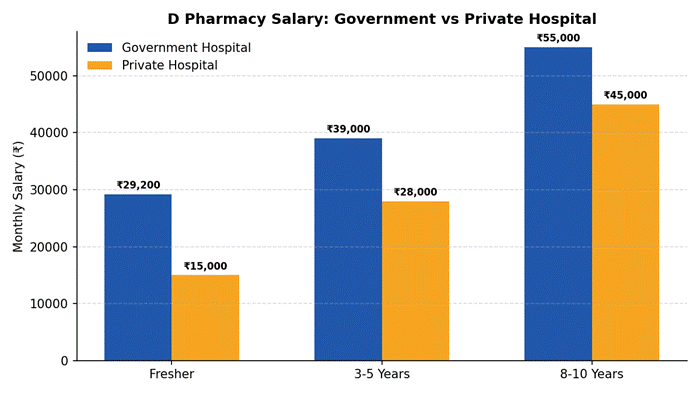
Government hospital pay is more structured and usually higher than private hospital pay at the same experience level.
Salary in Different Government Bodies
Not every government pharmacist job pays the same. The hiring organisation matters a lot. Here is how different departments generally compare.
| Government Body | Approx. Monthly Salary | Notes |
| ESIC (Employees’ State Insurance Corporation) | ₹35,000 – ₹55,000 | Popular exam among D Pharma aspirants |
| Indian Railways | ₹35,000 – ₹56,000 | Good allowances, regular vacancies |
| CGHS (Central Government Health Scheme) | ₹35,000 – ₹52,000 | Posted in central government dispensaries |
| State Health Department (via State PSC) | ₹28,000 – ₹48,000 | Salary varies state to state |
| AIIMS and Central Institutes | ₹38,000 – ₹58,000 | Higher allowances due to central pay rules |
| NHM / Contract Posts | ₹17,000 – ₹25,000 | No pension, fixed monthly pay |
D Pharmacy Salary: Government vs Private Hospital
This is the question most students ask before choosing a career path. Both options have their own pros and cons.
| Point | Government Hospital | Private Hospital |
| Starting Salary | ₹29,200 (basic) + allowances | ₹12,000 – ₹20,000 |
| Job Security | Very high | Depends on employer |
| Pension / Retirement Benefits | Yes (NPS) | Rarely offered |
| Salary Growth | Fixed, slow but steady | Can be faster with performance |
| Work Pressure | Moderate, fixed hours | Can vary, sometimes higher |
| Selection Process | Competitive exam | Interview based |
Government jobs generally win on stability and long-term benefits. Private hospitals, especially big chains, can offer faster salary hikes to pharmacists who gain specialised skills like clinical pharmacy or ICU support.
Factors That Affect D Pharmacy Salary in Government Hospitals
- Experience: More years of service means higher basic pay through annual increments.
- City Category: Metro cities (X category) offer higher HRA than smaller towns (Z category).
- State vs Central Government: Central government posts often pay a bit more than state posts.
- Type of Post: Regular/permanent posts pay far more than contract-based (NHM) posts.
- Additional Allowances: Some states give extra pay for postings in trauma wards, infectious disease units, or remote areas.
- Educational Upgrade: Completing B Pharma later can help in getting promoted to higher posts with better pay.
Career Growth and Promotion Path
A government pharmacist’s career does not stop at the entry-level post. With time, exams, and seniority, there is a clear path upward.
- Pharmacist (Entry Grade) – starting post after selection
- Pharmacist (Senior Grade) – after a few years of service
- Chief Pharmacist / Pharmacy Supervisor – after 15-20 years or through promotion
- Drug Inspector or Administrative Roles – possible with additional qualification and departmental exams
Additional Benefits of Government Pharmacist Jobs
Apart from the monthly salary, government hospital jobs come with several benefits that add real value over a career.
- Dearness Allowance revised twice a year to adjust for inflation
- Medical facility for self and family
- Leave Travel Concession (LTC) once every two years
- Pension under the National Pension System (NPS)
- Gratuity after retirement
- Paid leaves, including casual, medical, and earned leave
How to Get a Government Pharmacist Job After D Pharma
Government pharmacist posts are filled through competitive exams. Here are the common routes D Pharma candidates take.
- State PSC (Public Service Commission) exams for state health department posts
- ESIC recruitment exams, held for pharmacist vacancies across states
- Railway Recruitment Board (RRB) exams for pharmacist posts in Indian Railways
- SSC (Staff Selection Commission) exams for select central departments
- AIIMS and other central institute recruitment drives
Most of these exams test general knowledge, reasoning, and core pharmacy subjects. Registration with the state pharmacy council is compulsory before applying.
Frequently Asked Questions
What is the basic pay of a D Pharma pharmacist in a government hospital?
The basic pay generally starts at ₹29,200 per month under Pay Level 5 of the 7th Pay Commission, before allowances are added.
What is the in-hand salary after all allowances and deductions?
For a fresher, the net in-hand salary is usually between ₹40,000 and ₹50,000 per month, depending on the city and state.
Is D Pharma enough for a government hospital job, or do I need B Pharma?
D Pharma is sufficient for most pharmacist posts in government hospitals. B Pharma can help with faster promotion or higher-level posts later.
Do contract pharmacists get the same salary as permanent ones?
No. Contract posts under schemes like NHM usually pay ₹17,000 to ₹25,000 per month, without pension or annual increment benefits.
Which government exam is best for D Pharma holders?
ESIC, Railway RRB, and State PSC exams are the most commonly attempted by D Pharma candidates, as they offer regular vacancies.
Conclusion
A government hospital job remains one of the safest and most respected career choices for a D Pharma graduate. While the starting basic pay of ₹29,200 might look modest at first glance, the real in-hand salary after allowances, along with long-term benefits like pension and medical facilities, makes it a solid career option. If you are preparing for a government pharmacist post, focus on subject knowledge, stay updated on exam notifications, and be patient. The pay scale grows steadily with each year of service.
People also interested in article
- B Pharmacy Salary in Government Hospital: Full 2026 Guide
- Top 10 Government Pharma Jobs in India After B.Pharm
- How to Identify Genuine Work-from-Home Data Entry Jobs
- Part-Time Jobs for College Students in India
- Clinical Data Management Career: A Complete Guide
- B Pharma Government Jobs: Complete Guide for 2026
- M Pharm Career Options: A Complete Guide to Jobs After Master of Pharmacy
- Medical Representative Salary in 2026: Complete Guide with Numbers
- Pharmacovigilance Career Guide: How to Build a Strong Career in Drug Safety
- How to Introduce Yourself in Job Interviews