A simple, honest look at what clinical data management is, why people choose it, and how you can build a strong career in it.
What Is Clinical Data Management?
Clinical data management, often shortened to CDM, is the work of collecting, cleaning, and checking data from clinical trials. Every time a new drug or medical device is tested on people, someone has to make sure the data from that test is correct, complete, and safe to use. That is the job of a clinical data manager.
Think of it this way. A clinical trial can involve thousands of patients across many hospitals. Each patient visit creates new data, such as lab results, side effects, and doctor notes. Clinical data management professionals gather all of this information and make sure it is clean and ready for analysis. Without this step, drug companies could not prove that a new treatment is safe or effective.
Why Clinical Data Management Is a Great Career Choice
Growing Demand in Healthcare and Pharma
More clinical trials are happening every year. New drugs, vaccines, and medical devices all need testing, and every trial needs a data team behind it. This steady flow of trials means steady demand for skilled people in this field, in both large pharma companies and smaller research organizations.
Good Work-Life Balance and Remote Options
Many clinical data management jobs allow remote or hybrid work. Since most of the work happens on a computer using databases and software, you do not always need to be in a lab or office. This makes it a good fit for people who want flexibility in where and how they work.
A Clear Path for Growth
This career has a clear ladder. You can start as a data entry associate and grow into a data manager, then a senior manager, and later a director. Each step usually comes with more pay, more responsibility, and more say in how studies are run.
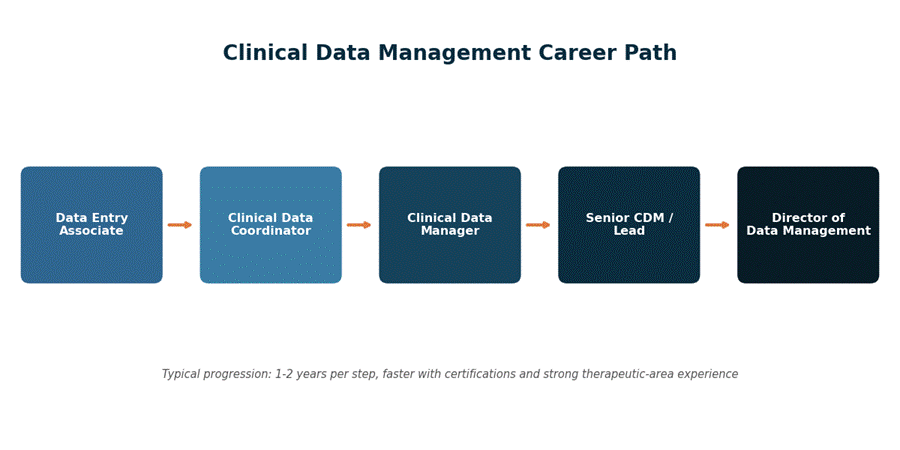
A typical clinical data management career path, from entry-level roles to director-level positions.
What Does a Clinical Data Manager Do?
A clinical data manager wears many hats. The exact tasks change from company to company, but most days include a mix of the following work.
- Building and testing the database used to collect trial data
- Checking data for errors, missing values, or unusual entries
- Writing queries to ask hospital sites to fix or explain data issues
- Working with study teams to plan how data will be collected
- Preparing clean data for final analysis once a trial ends
- Making sure all work follows Good Clinical Practice (GCP) rules
Good Clinical Practice is a set of international rules that keep clinical trials safe and honest. You can read the official guidance on the FDA’s Good Clinical Practice page if you want to understand these rules in more depth.
Job Roles and Responsibilities
Clinical data management is not just one job title. It is a family of roles, each with its own level of responsibility. Here is a simple breakdown of common titles.
| Job Title | What They Do | Experience Needed |
| Data Entry Associate | Enters and double-checks basic trial data into the database | 0-1 years |
| Clinical Data Coordinator | Reviews incoming data and raises queries when something looks wrong | 1-3 years |
| Clinical Data Manager | Owns the database setup, data cleaning plan, and query process for a study | 3-6 years |
| Senior Data Manager / Lead | Manages several studies at once and guides junior team members | 6-10 years |
| Director of Data Management | Sets department strategy and manages staff, budgets, and vendors | 10+ years |
Skills You Need for This Career
You do not need to be a computer genius to work in clinical data management, but a few core skills will help you succeed. Attention to detail matters more than almost anything else, since a single wrong entry can affect an entire study.
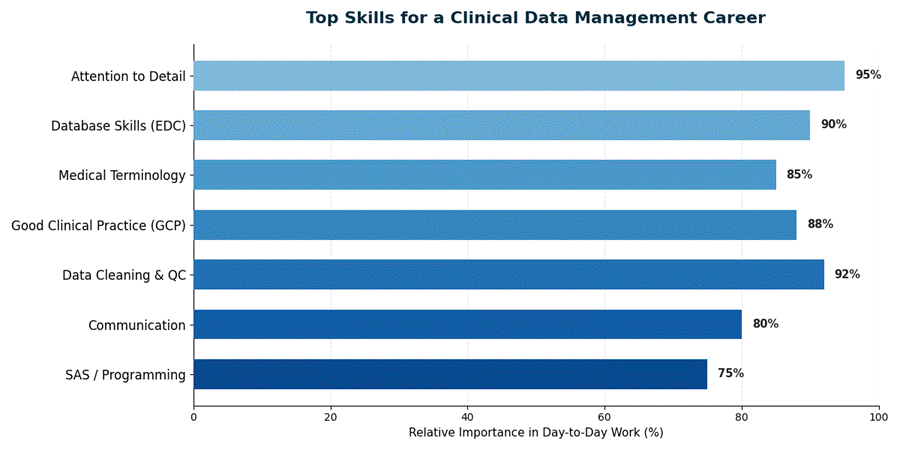
The top skills that matter most in day-to-day clinical data management work.
- Attention to detail and patience with repetitive checks
- Basic medical terminology and understanding of clinical trials
- Comfort using electronic data capture (EDC) systems
- Knowledge of Good Clinical Practice (GCP) rules
- Clear written communication for writing queries and reports
- Basic data skills in Excel; SAS or R is a bonus, not always required
Education and Certifications
Degree Requirements
Most employers look for a bachelor’s degree in life sciences, nursing, pharmacy, statistics, or a related field. Some people move into clinical data management after working in nursing, lab work, or general clinical research. A strong interest in healthcare and a careful mindset often matter as much as the exact degree title.
Popular Certifications
Certified Clinical Data Manager (CCDM)
The CCDM certification is one of the most respected credentials in this field. It is offered by the Society for Clinical Data Management (SCDM), and it shows employers that you understand industry standards, data quality, and regulations.
Other Helpful Training
Short courses in Good Clinical Practice, medical coding, and specific EDC tools can also boost your resume, especially if you are just starting out and do not have work experience yet.
Tools Used in Clinical Data Management
Clinical data managers rely on a set of common software tools. Learning even one or two of these can make you a stronger job candidate.
- Medidata Rave – one of the most widely used EDC platforms
- Oracle Clinical / InForm – used by many large pharma companies
- Veeva Vault – popular for managing clinical documents and data
- SAS – used for deeper data checks and reporting
- Microsoft Excel – still used daily for quick checks and summaries
Salary Expectations
Pay in clinical data management depends on your role, location, and years of experience. The numbers below are general estimates meant to give you a rough idea, not an exact promise.
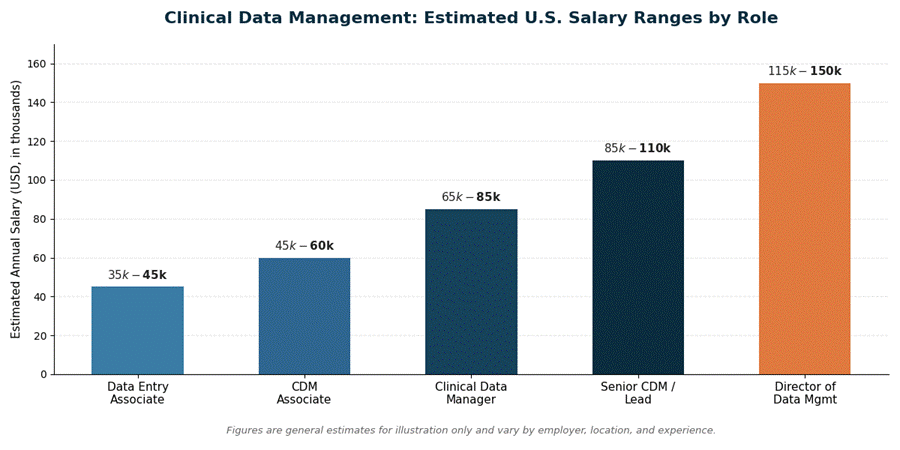
Estimated salary ranges across common clinical data management roles.
| Job Title | Estimated U.S. Salary Range |
| Data Entry Associate | $35,000 – $45,000 per year |
| Clinical Data Associate | $45,000 – $60,000 per year |
| Clinical Data Manager | $65,000 – $85,000 per year |
| Senior Data Manager / Lead | $85,000 – $110,000 per year |
| Director of Data Management | $115,000 – $150,000 per year |
Challenges in Clinical Data Management
Like any career, this field has its tough spots. Study timelines can be tight, and a delay in data cleaning can slow down an entire drug approval process. Data can also come in messy, with missing values or entries that do not match across sites. On top of that, rules and guidelines change over time, so staying updated is part of the job. People who enjoy solving problems and do not mind detailed, careful work tend to handle these challenges well.
How to Start Your Career in Clinical Data Management
- Get the right education. A degree in life sciences, nursing, or a related field gives you a strong base.
- Learn the basics of EDC tools. Many companies offer free demos or short online courses to get familiar with systems like Rave.
- Apply for entry-level roles such as data entry associate or clinical trial assistant to get your foot in the door.
- Once you have some experience, work toward a certification such as the CCDM to stand out from other candidates.
- Keep learning. Rules, tools, and best practices in this field change, so staying curious will help your career grow.
Future of Clinical Data Management
This field keeps changing as trials become more complex and more global. More studies now use decentralized methods, where patients share data from home using apps and wearable devices. This means clinical data managers need to handle new types of data, not just paper forms and hospital visits. At the same time, software is taking over some of the repetitive checking work, which frees up data managers to focus on harder problems and better decision-making. For people entering the field now, this means more chances to work with new technology while still using the core skills of accuracy and care.
Frequently Asked Questions
Is clinical data management a good career?
Yes, for people who enjoy detailed work and want a stable role in healthcare or pharma. It offers steady demand, clear growth steps, and often flexible or remote work options.
Do I need to know how to code?
No, coding is not always required, especially for entry-level roles. Knowing tools like Excel and basic EDC systems is usually enough to start. Skills like SAS or R can help later on but are not a strict requirement.
Can I work from home in this field?
Many clinical data management roles offer remote or hybrid work, since most tasks happen through software and databases rather than in a physical lab.
Final Thoughts
Clinical data management is a steady, meaningful career for people who care about accuracy and want to play a part in bringing new treatments to patients. It does not always get the spotlight that other healthcare careers get, but the work behind the scenes matters just as much. If you like structure, enjoy solving small puzzles in data, and want a career with room to grow, this field is worth a serious look.