Working from home sounds great. You skip the drive, you set your own hours, and data entry jobs seem like an easy way to start. But there is a catch. For every real data entry job online, there are many fake ones waiting to trick you. Some just waste your time. Others steal your money or your personal details.
The good news is that fake job posts almost always have warning signs. Once you know what to look for, spotting them gets much easier. This guide walks you through the signs of a real data entry job, the red flags of a scam, and simple steps to check any offer before you say yes.
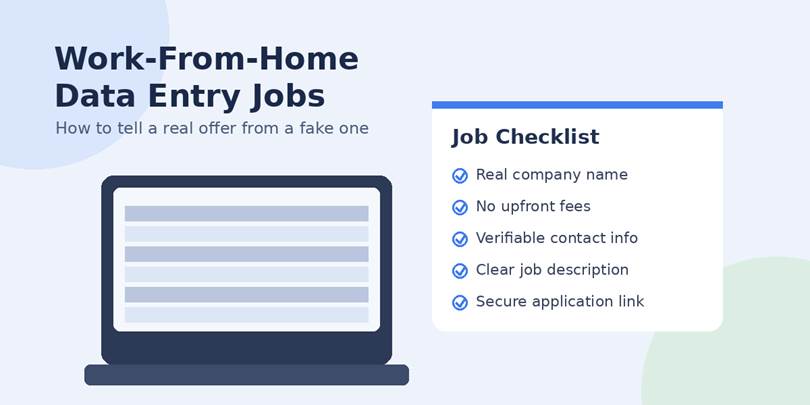
Know what to check before you accept a work-from-home data entry job.
What Is a Work-from-Home Data Entry Job?
A data entry job usually means typing information into a computer system. This can include entering customer details, updating spreadsheets, sorting records, or copying data from paper forms into a database. Many companies hire remote workers for this because it does not need special equipment, just a computer, internet, and good typing skills.
Real companies that hire for data entry include insurance firms, hospitals, research groups, online retailers, and staffing agencies. The pay is usually modest and matches the amount of work involved. If a listing promises huge pay for very little effort, that alone should make you pause.
Why Scammers Target Data Entry Job Seekers
Data entry is one of the most searched remote job terms online. It sounds simple, and many people look for it when they need extra income fast, such as students, parents, or people between jobs. Scammers know this and use it to their advantage.
They build fake postings that look real, use company names people trust, and promise flexible hours with high pay. Their goal is usually one of these:
- Get you to pay an upfront fee for training, software, or a starter kit
- Collect your personal details, like your bank account or ID number
- Use you to move stolen money without you knowing
- Sell your contact information to other scammers
Red Flags of Fake Data Entry Jobs
Before you get excited about a job post, run it past this checklist. If two or more of these apply, be very careful.
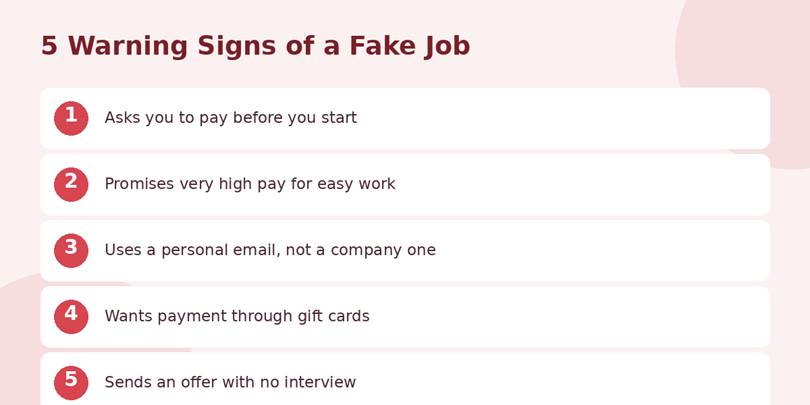
Common warning signs that a data entry job post is not real.
The Job Asks You to Pay First
This is the biggest warning sign of all. A real employer never asks a new hire to pay for training, software, a background check, or a starter kit. If a job wants money from you before you start working, walk away.
The Pay Sounds Too High for the Work
Data entry is entry-level work. If a post promises hundreds of dollars a day for simple typing with no experience needed, treat it as a red flag. Real pay for this kind of work is usually modest and clearly stated.
Contact Is Only Through Text or Chat Apps
Genuine employers usually reach out through a company email address or a proper hiring platform. If a recruiter only messages you on WhatsApp, Telegram, or through text from a personal number, that is a warning sign.
There Is No Real Interview
Most legitimate jobs, even simple ones, involve some kind of screening. This could be a short call, a video chat, or a written test. If you are hired within minutes with no questions asked, be suspicious.
The Company Has No Real Online Presence
Search for the company name. A real business usually has a working website, reviews, and a history you can check. If you find nothing, or the website was made a few weeks ago, that is a red flag.
Signs of a Genuine Data Entry Job
Not every remote data entry post is a scam. Real ones tend to share these features:
- A clear job description with tasks, tools, and expected hours
- A pay range that matches similar jobs in your area
- A company email address, not a free personal email
- A real application process, sometimes with a short test or interview
- No request for payment at any stage of hiring
- A privacy policy that explains how your data will be used
Genuine vs Fake Job Postings at a Glance
Here is a quick side-by-side comparison to keep handy while job hunting.
| Sign | Genuine Job | Fake Job |
| Payment | You get paid to work | You must pay a fee first |
| Contact info | Company email and phone number | Only a personal email or chat app |
| Job details | Clear duties and pay range | Vague, says “easy work, big pay” |
| Interview | Call or video chat before hiring | Hired right away, no interview |
| Company presence | Real website and online reviews | No website, or a very new one |
Where to Find Legitimate Work-from-Home Data Entry Jobs
The safest way to avoid scams is to start your search in the right places.
Trusted Job Boards
Stick to well-known job sites that review or verify listings. Many large job boards now flag or remove posts that look like scams, which lowers your risk compared to random ads on social media.
Company Career Pages
If you have companies in mind, such as retailers, insurance providers, or staffing agencies, visit their official career page directly. Applying straight through a company website removes the risk of a fake middleman.
Staffing and Recruiting Agencies
Established staffing agencies often place workers in data entry and admin roles. Look for agencies with a long track record and a real office address, not just a phone number.
A Quick Note on Social Media Job Ads
Be extra careful with data entry jobs advertised through social media posts or messages from strangers. Scammers use these platforms heavily because they are easy to set up and hard to trace.
Steps to Verify a Job Offer Before You Apply
Even when a post looks fine, take a few minutes to check it properly. This small step can save you a lot of trouble.
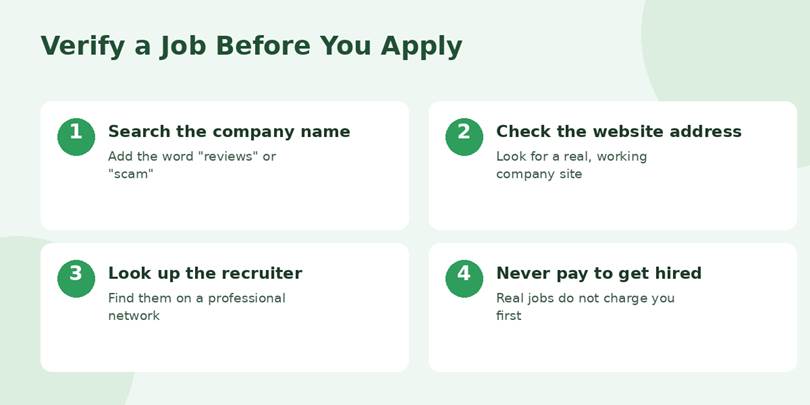
A simple four-step routine to check any job offer before applying.
1. Search the Company Name Online
Type the company name into a search engine along with the word “reviews” or “scam.” If many people report problems, take that seriously.
2. Check the Website Carefully
Look for a working website with a proper domain name, not a free page builder link. Check if the site has an about page, a contact address, and a privacy policy.
3. Look Up the Recruiter
Search for the recruiter’s name on a professional network. Real recruiters usually have a work history and connections that match the company they claim to represent.
4. Never Send Money or Sensitive Documents Early
A real employer will not ask for your bank details, a copy of your ID, or any payment before you are formally hired and have signed proper paperwork.
What to Do If You Suspect a Scam
If something feels off, trust that feeling and take these steps:
- Stop replying to the recruiter right away
- Do not send any money, documents, or bank details
- Report the job post on the site where you found it
- Report the scam to your country’s consumer protection agency
In the United States, you can report job scams directly to the Federal Trade Commission through their job scams reporting page, which also explains common tricks scammers use.
You can also check a company or offer against the BBB Scam Tracker to see if others have already reported it.
Frequently Asked Questions
Are all work-from-home data entry jobs fake?
No. Many real companies hire remote data entry workers. The key is checking each offer carefully instead of trusting it right away.
Should I ever pay to get a data entry job?
No. A real employer pays you, not the other way around. Any request for payment before you start working is a major warning sign.
How much should I expect to earn from data entry work?
Pay varies by company and location, but it is usually similar to other entry-level remote roles. Be cautious of any post promising unusually high pay for very simple tasks.
Is it safe to give my bank details during hiring?
Only share bank details after you are formally hired, and only through secure company systems, such as official payroll forms. Never send this information over chat apps or text messages.
What should I do if I already paid a scammer?
Contact your bank or card provider right away to ask about a reversal, then report the scam to your local consumer protection agency so others can be warned.
Final Thoughts
Work-from-home data entry jobs can be a good way to earn extra income, but the field also attracts scammers. The best protection is simple: never pay to get hired, always check the company, and trust your instincts when something feels off. A few minutes of checking can save you from a lot of trouble later.