Learn what pharmaceutical stability testing is, why it matters, and how medicines are tested to stay safe, effective, and high quality over time.
What Is Pharmaceutical Stability Testing?
Stability testing is a set of studies that check how a drug changes over time in specific condition or storage. QC analyst store samples of a medicine under different conditions, such as different temperate and different humidity, and then test the samples as per SOP at specific interval for example 0-month, 3-month, 6 month, 12-month, 18-month, 24-month and 36-month.
The goal is simple: find out how long a medicine stays safe, strong, and pure, and what storage conditions keep it that way. The result of this work is the shelf life and the storage instructions you see printed on every medicine box, such as “Store below 25°C” or “Use within 12 months of opening.”
These studies follow international rules, mainly the ICH Q1A(R2) guideline, which is used by drug regulators around the world, including the U.S. FDA and the World Health Organization.
Why Stability Testing Matters
Stability testing is not just a paperwork step. It protects patients and builds trust in every medicine that reaches the market. Here is why it matters so much:
- It confirms the medicine still works as expected after storage and shipping.
- It stops unsafe or broken-down drugs from reaching patients.
- It sets a clear expiry date instead of a guess.
- It decides the right packaging, such as glass, blister packs, or bottles with silica gel.
- It helps companies meet legal rules before selling a medicine in any country.
- It gives early warning if a drug formula needs to be changed or improved.
Types of Stability Studies
Not all stability tests are the same. Drug makers run different studies depending on the stage of development and the questions they need answered. Below is a simple breakdown of the four main types.
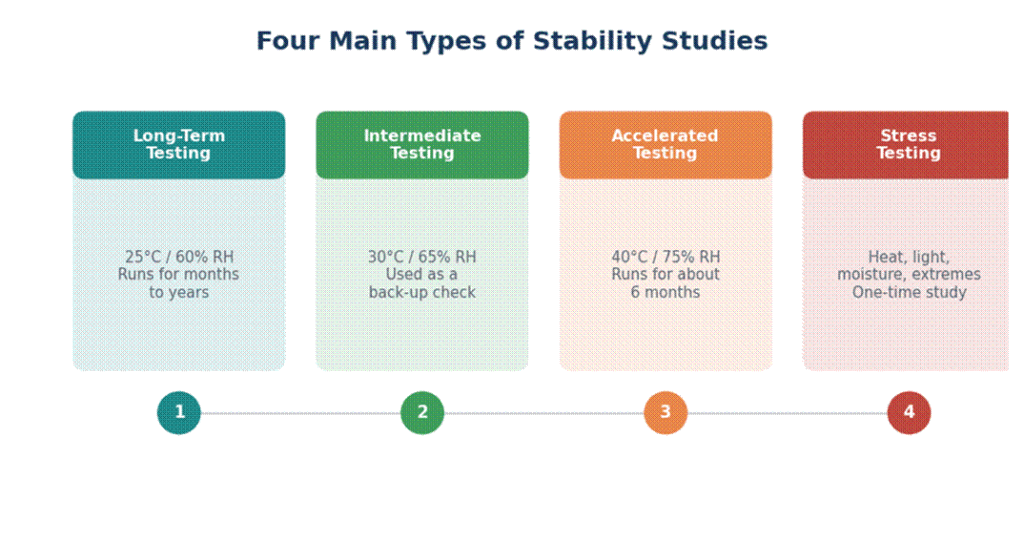
The four main types of pharmaceutical stability studies
Long-Term Testing
This is the main study used to set the real shelf life. Samples are stored at normal room conditions, usually 25°C and 60% relative humidity, for as long as the planned shelf life, which can be one to five years.
Intermediate Testing
This study runs at a slightly higher stress level, around 30°C and 65% relative humidity. It acts as a backup if the accelerated study shows a big change, giving a clearer picture before waiting for the full long-term results.
Accelerated Testing
Here, samples are stored at higher heat and humidity, often 40°C and 75% relative humidity, for about six months. Because heat speeds up chemical breakdown, this short study gives an early estimate of shelf life long before the long-term study finishes.
Stress Testing
Stress testing pushes a drug to its limits with extreme heat, strong light, high moisture, or changes in acidity. It is usually a one-time study during early development, and it helps scientists understand how a drug breaks down and which impurities may form.
ICH Climatic Zones and Storage Conditions
Different parts of the world have different weather, so the ICH divides the globe into four climatic zones. Each zone has its own standard storage condition for long-term testing, as shown in the table below.
| Climatic Zone | Description | Long-Term Test Condition |
| Zone I | Temperate (e.g., UK, Russia, Canada) | 21°C / 45% RH |
| Zone II | Mediterranean/subtropical (e.g., USA, Japan, EU) | 25°C / 60% RH |
| Zone III | Hot, dry (e.g., Iraq, Sudan) | 30°C / 35% RH |
| Zone IVA | Hot, humid (e.g., Thailand, Brazil) | 30°C / 65% RH |
| Zone IVB | Hot, very humid (e.g., Singapore, Philippines) | 30°C / 75% RH |
Choosing the right zone matters because a medicine sold in a hot, humid country needs to prove it can survive tougher conditions than one sold in a cooler climate.
What Gets Tested During a Stability Study
A stability study does not just check if a tablet still looks fine. Lab teams measure many different properties at each time point, including:
- Appearance – color, shape, cracks, or spots
- Assay (potency) – how much active drug is still present
- Related substances – breakdown products or impurities
- Dissolution – how fast the drug releases in the body
- Moisture content – water levels that can affect stability
- Microbial limits – checking for unwanted bacteria or mold
- pH – for liquids and injections
- Container closure – whether the packaging still seals properly
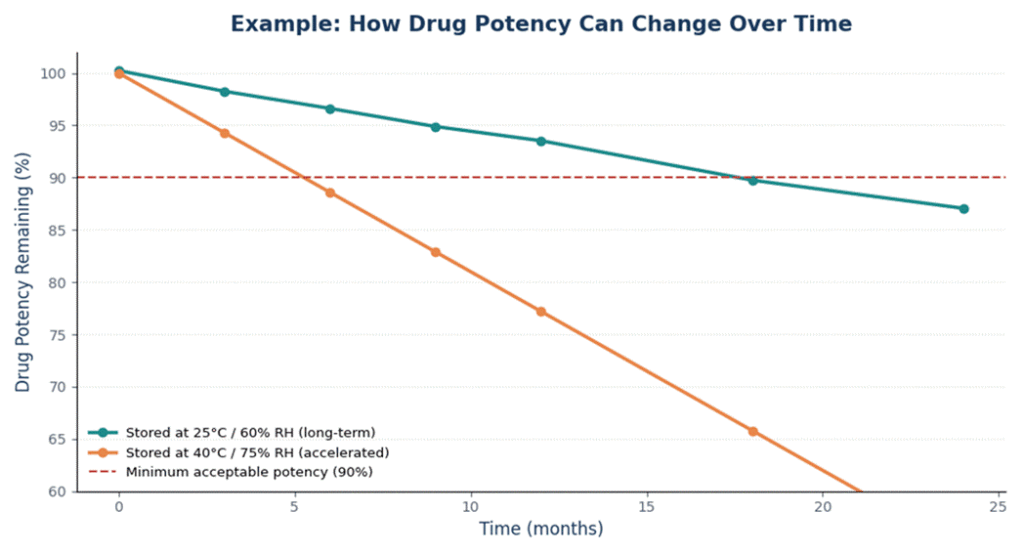
Example chart: drug potency naturally drops faster under higher heat and humidity
Step-by-Step Stability Testing Process
While every company has its own detailed procedures, most stability programs follow the same basic path from start to finish.
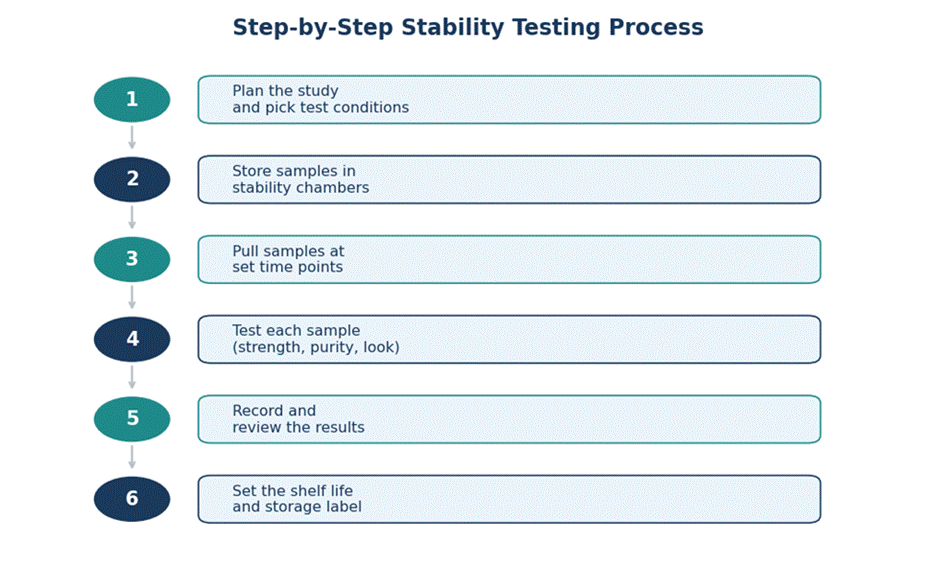
A simple overview of the stability testing workflow
- Plan the study. Decide the storage conditions, test points, and which quality checks to run, based on ICH rules.
- Store the samples. Place the medicine in stability chambers that hold a steady temperature and humidity.
- Pull samples on schedule. Common time points are 0, 3, 6, 9, 12, 18, and 24 months.
- Test each sample. Run lab checks such as assay, dissolution, and appearance on every pulled sample.
- Record and review results. Compare each result against the approved limits and watch for trends.
- Set the shelf life. Use the data to confirm the expiry date and the final storage label.
Common Challenges in Stability Testing
Stability programs can run into real-world problems. Some of the most common ones are:
- Chamber failures – a power cut or equipment fault can ruin months of data.
- Late or missed samples – a skipped time point can create gaps in the study.
- Unexpected results (OOS) – an out-of-specification result needs a full investigation.
- Packaging changes – a new bottle or blister design may need fresh testing.
- Photostability surprises – some drugs break down in light more than expected.
- Data management – tracking years of results across many products takes strong systems.
Best Practices for Reliable Stability Data
A well-run stability program is built on good habits, not just good equipment. Keep these practices in mind:
- Calibrate and monitor stability chambers regularly.
- Use validated, accurate test methods for every property you check.
- Keep a backup plan for power outages or equipment failure.
- Train staff so every sample is handled and tested the same way.
- Start photostability and stress testing early in development.
- Review data as it comes in, instead of waiting until the study ends.
- Keep detailed, audit-ready records for every batch and test.
Frequently Asked Questions
What is the main goal of pharmaceutical stability testing?
The main goal is to find out how long a medicine stays safe and effective, and under what storage conditions. This information sets the expiry date and storage instructions on the label.
How long does a stability study take?
Accelerated studies usually take about six months. Long-term studies can take one to five years, depending on the planned shelf life of the product.
What is the difference between accelerated and long-term testing?
Accelerated testing uses higher heat and humidity to get quick, early results. Long-term testing uses normal storage conditions and takes much longer, but it gives the true, real-world shelf life.
Who sets the rules for stability testing?
The ICH (International Council for Harmonisation) sets the main global guidelines, mainly Q1A(R2). Local regulators like the FDA and WHO also add their own rules for specific markets.
What happens if a drug fails a stability test?
If results fall outside approved limits, the company must investigate the cause. This can lead to a shorter shelf life, a packaging change, a formula update, or in serious cases, a recall of the product.
Does every medicine need the same storage conditions?
No. Storage conditions depend on the climatic zone where the drug will be sold and on the drug’s own chemical makeup. Some medicines need refrigeration, while others are stable at room temperature.
What is photostability testing?
Photostability testing checks how a drug reacts to light. Some medicines break down quickly under bright light, so this test helps decide if amber bottles, foil packs, or other light-blocking packaging are needed.
Can stability testing predict problems after a medicine is approved?
Yes. Many companies run ongoing stability studies even after approval. This confirms that real production batches still match the original test data and catches any long-term issues early.
Conclusion
Pharmaceutical stability testing may seem like a background task, but it is one of the most important steps in making sure medicines are safe. From long-term studies to quick accelerated tests, each type of study answers a different question about how a drug behaves over time.
By following clear guidelines, using reliable equipment, and building good lab habits, drug makers can set accurate shelf lives and correct storage instructions. In the end, this careful work protects the people who depend on these medicines every day.