Learn what WHO GMP certification is, why it matters for pharmaceutical companies, how the certification process works, estimated costs, and practical tips to prepare for and pass your inspection successfully.
What Is WHO GMP Certification?
WHO GMP stands for World Health Organization Good Manufacturing Practices. It is a set of rules that tell a drug maker how to produce medicines the right way, every single time. The goal is simple: every tablet, syrup, or injection that leaves the factory should be safe, pure, and exactly what the label says it is.
A WHO GMP certificate is proof that a manufacturing plant follows these rules. It is issued after health inspectors visit the plant, check the records, watch the process, and confirm that everything meets the required standard.
What Does GMP Actually Mean?
GMP means Good Manufacturing Practice. It covers things like clean work areas, trained staff, proper equipment, correct raw materials, careful record keeping, and strong testing before a product is released. It is not one single rule but a full system that touches almost every part of a factory.
Who Issues This Certificate?
In most countries, the certificate is issued by the national drug regulator, working under WHO guidelines. In India, for example, the State FDA or CDSCO office grants WHO GMP certification based on WHO’s own guidance documents. WHO itself does not run around inspecting every factory in the world; it sets the standard, and national bodies apply it.
You can read the official WHO guidelines on Good Manufacturing Practices on the WHO Prequalification of Medicines Programme
Why Do Pharma Companies Need WHO GMP Certification?
A WHO GMP certificate is not just a piece of paper for the office wall. It opens doors and builds trust. Here is why most serious pharma companies chase this certification:
- Export approval: Many countries in Africa, Asia, and Latin America will not accept a drug shipment without proof of WHO GMP.
- Tender eligibility: UN agencies, government hospitals, and NGOs often ask for WHO GMP before they buy from a supplier.
- Buyer trust: Hospitals, pharmacies, and distributors feel safer ordering from a certified plant.
- Fewer product problems: Following GMP rules cuts down mistakes, contamination, and product recalls.
- Long term growth: Certified companies find it easier to raise funds, sign distribution deals, and enter new markets.
Key Areas Checked Under WHO GMP Guidelines
When an inspector visits your plant, they do not just glance around. They check specific areas in detail. Here are the six areas that matter most:
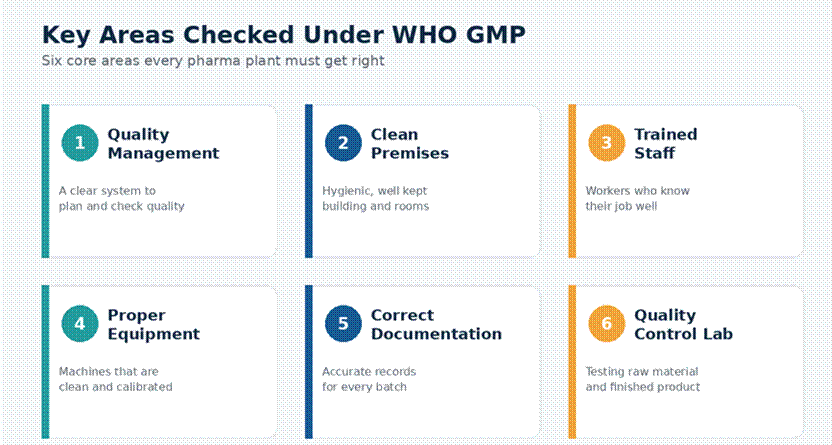
These six areas form the core of every WHO GMP inspection
| Area | What It Covers |
| Quality Management | A written system to plan, check, and improve quality at every stage |
| Premises & Hygiene | Clean building, proper layout, and pest and dust control |
| Staff Training | Workers who understand their job and follow written steps |
| Equipment | Machines that are clean, calibrated, and well maintained |
| Documentation | Accurate batch records, SOPs, and logs for every step |
| Quality Control Lab | Testing of raw material, in-process samples, and finished goods |
Step-by-Step Process to Get WHO GMP Certification
The process looks long on paper, but it usually follows the same five stages in every country. Here is how it works, step by step:
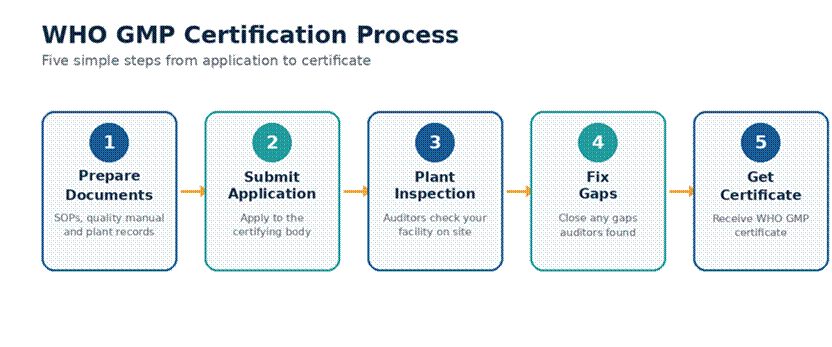
The typical journey from paperwork to certificate
- Prepare your documents: Write or update your quality manual, SOPs, and plant layout drawings. This is the base of your whole application.
- Submit your application: Send the application, along with fees and documents, to your national drug regulator.
- Plant inspection: A team of auditors visits your factory. They check the process, talk to staff, and review records.
- Close the gaps: If auditors find problems, you get time to fix them and send proof of correction.
- Receive your certificate: Once the regulator is satisfied, they issue the WHO GMP certificate, usually valid for two to three years.
Documents Required for WHO GMP Certification
Keep these documents ready before you apply. Missing paperwork is one of the biggest reasons applications get delayed:
- Company license and manufacturing license copy
- Site master file describing the plant and its activities
- Quality manual and standard operating procedures (SOPs)
- Plant layout and equipment list
- List of products with their formulas
- Validation and calibration records
- Staff training records and organisation chart
- Previous inspection reports, if any
Cost and Validity of WHO GMP Certificate
Cost changes from country to country and depends on your plant size and product range. Here is a rough idea to help you plan:
| Item | Typical Detail |
| Application fee | Varies by regulator; often a fixed government fee per product or per plant |
| Consultant fee (optional) | Charged if you hire outside help for documentation and training |
| Validity period | Usually 2 to 3 years from the date of issue |
| Renewal process | Re-inspection and fresh application before the certificate expires |
| Time to get certified | Around 3 to 8 months, depending on how ready your plant is |
Note: Always confirm exact fees with your local drug regulator, since amounts change and differ between states or countries.
WHO GMP vs Other Certifications
People often mix up WHO GMP with other quality marks. Here is a quick comparison to clear the confusion:
| Certification | Issued By | Main Focus |
| WHO GMP | National drug regulator, based on WHO guidelines | Medicine manufacturing quality, mainly for export markets |
| US FDA cGMP | US Food and Drug Administration | Manufacturing standards for the US market |
| ISO 9001 | ISO certification bodies | General quality management, not specific to medicines |
| EU-GMP | European regulators | Manufacturing standards for the European market |
Common Challenges Companies Face During Certification
Getting certified is not always smooth. These are the problems companies run into most often:
- Incomplete or poorly written SOPs that confuse staff during audits
- Old or uncalibrated equipment that fails inspection checks
- Weak record keeping, with missing or unclear batch data
- Staff who are not trained well enough to answer auditor questions
- Underestimating the time needed to fix gaps before re-inspection
Benefits of WHO GMP Certification for Your Business
Once you get certified, the real advantages start showing up in your day to day business:
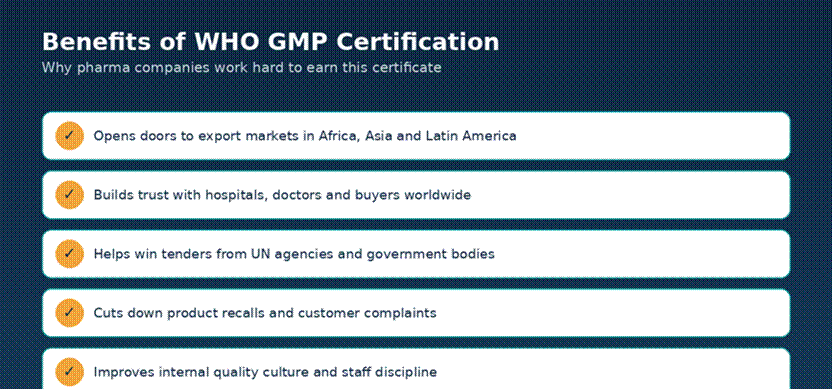
WHO GMP certification pays off well beyond the audit day
- Export ready: You can bid for supply contracts in dozens of countries.
- Stronger brand: Buyers see your company as reliable and professional.
- Tender access: You qualify for UN, WHO, and government purchase programs.
- Fewer recalls: Better process control means fewer faulty batches.
- Better internal culture: Staff follow clear steps, which reduces confusion and errors.
Tips to Pass Your WHO GMP Inspection Smoothly
- Do a mock audit a few weeks before the real one, using an internal team or consultant.
- Keep your documents updated in real time, not just before an inspection.
- Train new staff on GMP basics as soon as they join, not months later.
- Fix small maintenance issues right away instead of waiting for a big repair.
- Keep a clear, simple filing system so auditors can find records fast.
Frequently Asked Questions
1. What is the full form of WHO GMP?
WHO GMP stands for World Health Organization Good Manufacturing Practices. It is a quality standard for making medicines safely and correctly.
2. Is WHO GMP certification mandatory in India?
It is not mandatory for selling medicines within India, but it is required if you want to export to many countries or bid for international tenders.
3. How long does it take to get WHO GMP certification?
On average, it takes around 3 to 8 months. The time depends on how ready your documents and plant already are before you apply.
4. How long is a WHO GMP certificate valid?
Most certificates stay valid for 2 to 3 years. After that, you need to reapply and go through inspection again.
5. What is the difference between WHO GMP and US FDA approval?
WHO GMP is mainly used for exports to countries that follow WHO standards. US FDA approval is specific to selling in the United States and has its own separate process.
6. Can a small pharma company get WHO GMP certification?
Yes. Plant size does not stop you from applying. What matters is whether your process, documents, and hygiene meet the required standard.
7. What happens if a plant fails the WHO GMP inspection?
The regulator usually gives a list of gaps to fix, along with a deadline. Once you correct the issues and submit proof, they schedule a follow up inspection.
8. Does WHO itself inspect every factory?
No. WHO sets the guidelines, but national regulators, such as a country’s drug control authority, carry out the actual inspection and issue the certificate.
Conclusion
WHO GMP certification can feel like a big mountain to climb, but it really comes down to a few basics: clean facilities, trained people, correct documents, and honest record keeping. Companies that build these habits early find the certification process much easier, and they keep the benefits long after the inspector leaves.
If you are just starting this journey, begin with your documents and staff training. Those two areas cause most of the delays, and getting them right early will save you months later.
Related Articles
- How to Get a Drug Manufacturing License in India
- cGMP vs WHO GMP: Key Differences Explained
- Pharma Export Documentation: A Beginner’s Checklist
- How to Prepare Your Plant for an FDA Audit
References
• WHO Prequalification Team – Guidelines
• WHO Medicines Quality Assurance
• Central Drugs Standard Control Organisation (CDSCO), India