Merck Lipfendra approval, enlicitide FDA, oral PCSK9 inhibitor, hypercholesterolemia treatment, new cholesterol drug 2026.
In a landmark development for cardiovascular medicine, Merck & Co. (NYSE: MRK) announced today that the U.S. Food and Drug Administration (FDA) has approved Lipfendra (enlicitide) tablets as the first and only once-daily oral PCSK9 inhibitor. The drug is indicated as an adjunct to diet and exercise to reduce low-density lipoprotein cholesterol (LDL-C) in adults with primary hypercholesterolemia, including heterozygous familial hypercholesterolemia (HeFH).
This approval represents a major breakthrough in cholesterol management, potentially transforming treatment for millions of patients who struggle with injectable therapies or inadequate response to statins.
Understanding PCSK9 and the Need for New Options
PCSK9 (proprotein convertase subtilisin/kexin type 9) is a protein that regulates cholesterol levels by binding to LDL receptors on the surface of liver cells, leading to their degradation. This reduces the liver’s ability to clear LDL cholesterol (“bad cholesterol”) from the bloodstream, elevating cardiovascular risk.
Injectable monoclonal antibody PCSK9 inhibitors (such as evolocumab and alirocumab) have been available for years and can reduce LDL-C by approximately 60%. However, their injectable administration, higher cost, and patient adherence challenges have limited widespread use.
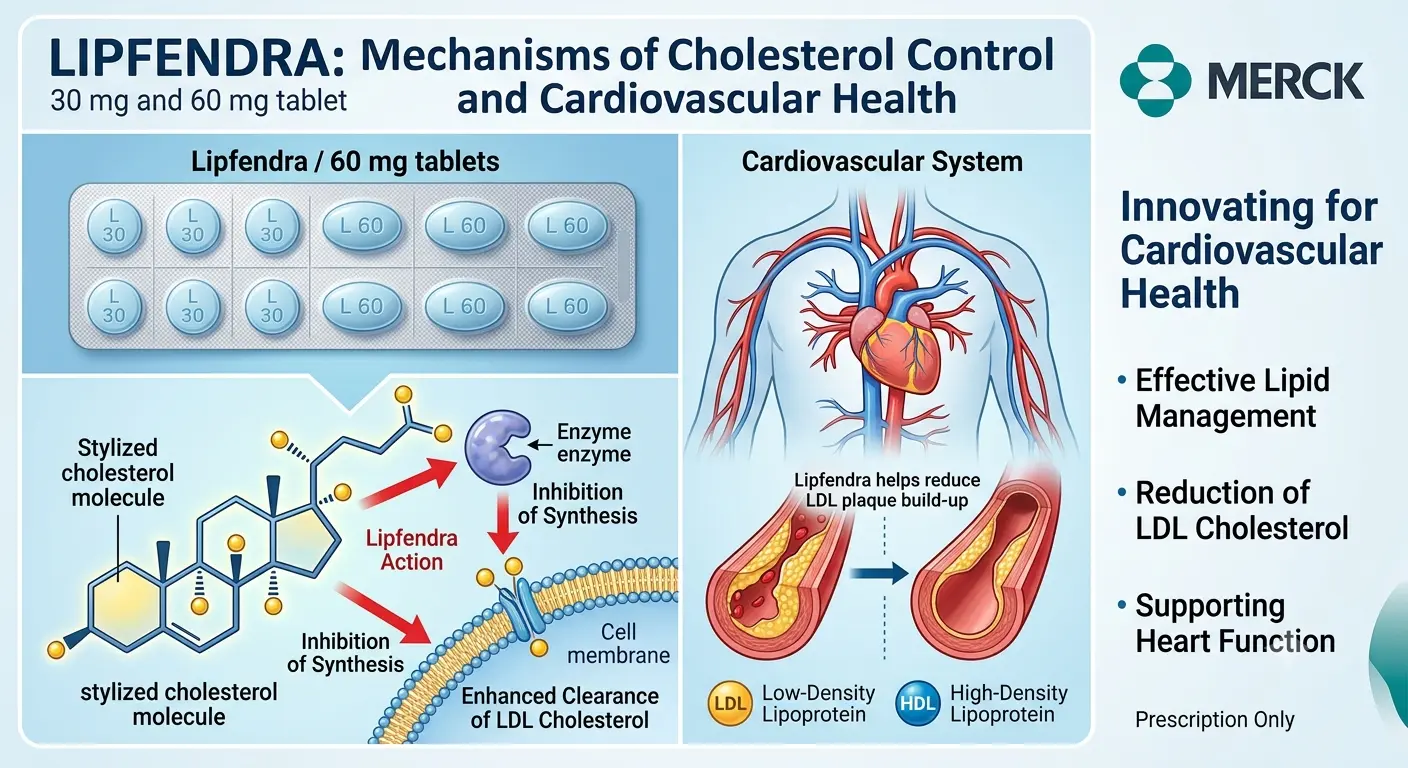
Lipfendra (enlicitide) is a novel macrocyclic peptide designed to bind directly to PCSK9, preventing it from interacting with LDL receptors. This mechanism mirrors that of injectable PCSK9 inhibitors but delivers it in a convenient daily oral tablet (20 mg).
Clinical Evidence: Strong Efficacy in Phase 3 Trials
The FDA approval is primarily supported by data from the Phase 3 CORALreef Lipids trial (and related studies in the CORALreef program). Key findings include:
- Significant LDL-C reduction: Enlicitide achieved clinically meaningful and statistically significant reductions in LDL-C levels compared to placebo at 24 weeks, with efficacy comparable to injectable PCSK9 inhibitors (up to ~60% in some analyses).
- Broad lipid improvements: The drug also lowered other atherogenic lipids, including non-HDL-C, apolipoprotein B, and total cholesterol.
- Durable effect: Benefits were sustained with once-daily dosing.
- Well-tolerated safety profile: The treatment demonstrated a favorable safety and tolerability profile consistent with earlier Phase 2 data, with no major new safety signals reported in the pivotal trials.
“Enlicitide, designed to deliver antibody-like efficacy, is the first oral macrocyclic peptide PCSK9 inhibitor with clinically meaningful and statistically significant LDL-C lowering in Phase 3 trials,” noted Dean Y. Li, M.D., Ph.D., President of Merck Research Laboratories, in the company’s announcement.
Implications for Patients and Physicians
Lipfendra offers a game-changing option for:
- Patients with HeFH or clinical atherosclerotic cardiovascular disease (ASCVD) who require additional LDL-C lowering beyond statins.
- Individuals who prefer oral medications over injections due to needle phobia, injection-site reactions, or lifestyle factors.
- Those seeking greater convenience to improve long-term adherence.
Cardiovascular disease remains the leading cause of death globally, and elevated LDL-C is a primary modifiable risk factor. An oral PCSK9 inhibitor could expand access to advanced lipid-lowering therapy, particularly in primary care settings.
Market Context and Merck’s Strategy
The approval bolsters Merck’s cardiovascular portfolio at a time when the company seeks to diversify beyond its oncology blockbuster Keytruda. Analysts view oral PCSK9 inhibitors as a potentially large market opportunity, given the high prevalence of hypercholesterolemia.
Merck competed in this space with AstraZeneca’s own oral PCSK9 candidate (AZD0780), but enlicitide reached the finish line first.
Availability and Next Steps
Lipfendra is expected to become available in the coming weeks/months. Merck has not yet publicly detailed pricing, but oral administration could position it competitively against injectables.
Physicians and patients should consult full prescribing information for contraindications, warnings, and monitoring recommendations once available.
Expert Reactions
Cardiologists and lipid specialists have welcomed the news as a significant step forward in personalized cardiovascular prevention. Long-term outcomes data (e.g., cardiovascular event reduction) will be important in future studies to fully establish its role.