Learn what the pharmaceutical cold chain is, why it matters, and how temperature-controlled storage and transport keep medicines safe and effective. Understand the pharmaceutical cold chain, its importance, common challenges, and best practices for maintaining medicine quality and safety.
What Is Cold Chain in Pharma?
A cold chain is a system of storing and moving products at a set temperature range, without any breaks. In the pharmaceutical world, this means keeping medicines, vaccines, and biological products cold from the moment they are made until they reach the patient.
The word “chain” is important here. Every link matters. If even one step in the journey — a warehouse, a truck, a delivery box — fails to keep the right temperature, the whole product can be damaged. That is why pharma companies treat cold chain as a single connected system, not a series of separate steps.
Why Cold Chain Matters in the Pharma Industry
Many medicines are sensitive to heat and cold. Vaccines, insulin, biologics, and some gene therapies can lose their strength if they are stored outside their safe temperature range. A vaccine that gets too warm may still look normal, but it may no longer protect the person who receives it.
Here is why cold chain management is so important:
- Patient safety: Spoiled medicine can be useless or even harmful.
- Money: A single failed shipment of vaccines can cost thousands of dollars.
- Trust: Hospitals and pharmacies need to trust that the medicine they receive still works.
- Rules and law: Health authorities require proof that cold chain rules were followed.
The World Health Organization has stated that up to half of vaccines worldwide are wasted each year, and poor temperature control is one of the main reasons. This shows how big the problem can be if cold chain is not managed well.
Temperature Ranges Used in Pharma Cold Chain
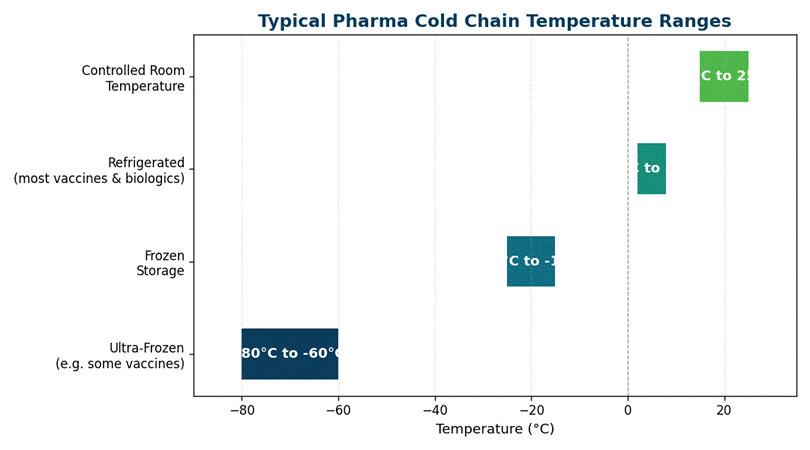
Not every medicine needs the same temperature. Some need to be frozen, others just need a cool room. The table below shows the common ranges used across the pharma industry.
| Storage Type | Temperature Range | Example Products | Risk Level |
| Ultra-frozen | -80°C to -60°C | Some mRNA vaccines | Very High |
| Frozen | -25°C to -15°C | Certain vaccines, plasma | High |
| Refrigerated | 2°C to 8°C | Most vaccines, insulin, biologics | High |
| Controlled Room Temp | 15°C to 25°C | Many tablets, capsules | Moderate |
How Cold Chain Works: Step by Step
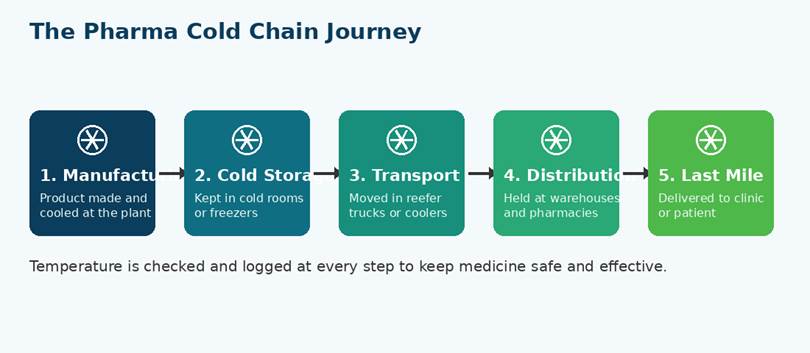
The pharma cold chain is not just one truck ride. It is a series of steps, and each one needs its own temperature control and checks.
1. Manufacturing
The process starts right after the medicine is made. Many products are cooled immediately at the factory, before they are ever packed for shipping.
2. Cold Storage
Once packed, products move into cold rooms, fridges, or freezers. These storage units are checked many times a day to make sure the temperature stays steady.
3. Transportation
This is often the riskiest part of the journey. Medicines travel in refrigerated trucks (often called “reefer” trucks), cold air cargo, or insulated boxes with ice packs or dry ice. Long trips, border checks, and delays can all put the cold chain at risk.
4. Distribution and Storage at Point of Use
Once medicine reaches a warehouse, hospital, or pharmacy, it is stored again at the correct temperature until it is ready to be used.
5. Last-Mile Delivery
The final step is often the hardest to control. This might mean a nurse carrying vaccines to a rural clinic, or a courier delivering insulin to a patient’s home. Good planning and insulated packaging are key here.
Types of Cold Chain Equipment Used in Pharma
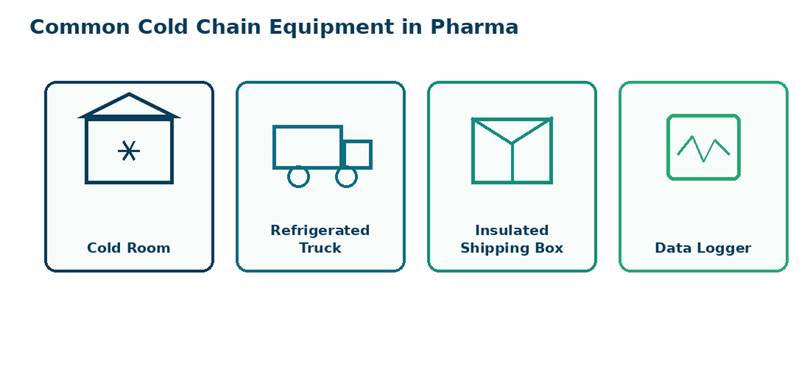
Different tools are used at different points in the journey. Here are the most common ones:
- Cold rooms: Large walk-in spaces used to store bulk medicine at a steady temperature.
- Refrigerated trucks and vans: Vehicles built with cooling units to move medicine over long distances.
- Insulated shipping boxes: Boxes lined with foam or vacuum panels, often packed with ice packs, gel packs, or dry ice.
- Data loggers: Small devices that record temperature during the entire trip, so companies can check it later.
- Portable freezers and fridges: Used in clinics and remote areas without steady power.
Common Challenges in Pharma Cold Chain Management
Even with good planning, things can go wrong. Some of the most common challenges include:
- Power cuts at storage facilities, especially in rural or developing areas.
- Long delays at customs or airports during international shipping.
- Human error, such as forgetting to check a fridge or close a cooler box properly.
- Extreme weather, like heat waves or very cold winters, that stress equipment.
- Poor tracking, where no one notices a temperature problem until it is too late.
- High cost of cold chain equipment, which can be hard for smaller companies or clinics to afford.
Best Practices to Maintain a Strong Cold Chain
Companies that manage cold chain well tend to follow a few simple habits:
- Use real-time temperature monitors, not just manual checks.
- Train staff so everyone understands why temperature control matters.
- Build backup plans, such as generators or backup coolers, for power failures.
- Choose the shortest and most reliable shipping routes possible.
- Keep clear records of every temperature reading, in case of an audit.
- Test packaging under real-world conditions before using it for shipments.
Small steps like these can prevent big losses. A single ice pack placed wrong, or a door left open a few minutes too long, can spoil an entire shipment.
Technology Used in Cold Chain Monitoring
Modern cold chains use more than just fridges and boxes. Technology now plays a big role in keeping medicine safe:
- IoT sensors: Small internet-connected devices that send live temperature data to a phone or computer.
- GPS tracking: Lets companies see exactly where a shipment is at any time.
- Cloud dashboards: Central systems where teams can watch temperature data from many shipments at once.
- Automated alerts: Warning messages sent instantly if temperature goes outside the safe range.
These tools do not replace good planning, but they make it much easier to catch a problem early, before the medicine is damaged.
Cold Chain Regulations and Standards
Pharma companies must follow strict rules to prove their cold chain is working. Some of the most well-known standards include Good Distribution Practice (GDP) guidelines and World Health Organization (WHO) guidance on vaccine storage. In the United States, the FDA also expects drug makers to show proof of proper storage and transport conditions.
The Real Cost of Cold Chain Failure
When cold chain fails, the cost is not just about wasted medicine. Hospitals may run short of important drugs. Vaccination programs can be delayed. Patients may lose trust in the healthcare system. For a pharma company, a single major cold chain failure can also damage its reputation for years, even if the mistake happened only once.
This is why many companies now see cold chain not as a shipping cost, but as part of patient safety itself.
Frequently Asked Questions
What is cold chain in the pharmaceutical industry?
It is the system used to keep medicines, vaccines, and biological products at a safe temperature from the time they are made until they reach the patient.
What temperature is used for most vaccines?
Most vaccines are stored between 2°C and 8°C, which is normal refrigerator temperature. Some special vaccines need much colder storage, even down to -80°C.
What happens if a vaccine gets too warm?
It may lose its strength and stop working properly, even if it still looks and smells normal. This is why temperature checks are so important.
What is a reefer truck?
A reefer truck is a delivery truck with a built-in cooling system. It is commonly used to move medicine and food over long distances.
How do companies track temperature during shipping?
They use tools like data loggers and IoT sensors, which record temperature the whole time and send alerts if something goes wrong.
Why is the last-mile delivery step so risky?
It often depends on smaller vehicles, rural roads, or manual handling, which makes it harder to control temperature compared to large trucks or warehouses.
Is cold chain only used for vaccines?
No. It is also used for insulin, biologics, blood products, some cancer drugs, and many other temperature-sensitive medicines.
Conclusion
Cold chain may seem like a simple idea, but it plays a huge role in keeping people safe. From the moment a medicine is made to the moment it reaches a patient, every step needs careful temperature control. With the right equipment, trained staff, and modern tracking tools, pharma companies can protect their products and, more importantly, protect the people who depend on them.
As medicine becomes more advanced, with new vaccines and biologic drugs, the need for a strong cold chain will only grow. Companies that invest in good cold chain systems today are building trust that will last for years to come.