A practical, step-by-step guide to how pharmaceutical tablets are made, tested, and packaged — written for manufacturers, students, and quality teams.
Tablet manufacturing is one of the most important processes in the pharmaceutical industry. Every time someone swallows a tablet for a headache, high blood pressure, or a vitamin deficiency, that small dose of medicine has passed through a carefully controlled manufacturing journey. This guide walks through the entire tablet manufacturing process, the equipment involved, the quality checks that keep patients safe, and the best practices that separate a reliable manufacturer from a risky one.
Whether you are a pharmaceutical manufacturer setting up a new production line, a student studying pharmaceutics, or a procurement professional evaluating suppliers, this article answers the questions that matter most. We will cover raw material selection, granulation methods, compression, coating, packaging, common defects, GMP guidelines, and where the industry is headed next.
What Is Tablet Manufacturing?
| Definition: Tablet manufacturing is the pharmaceutical process of converting a blend of active pharmaceutical ingredients (APIs) and excipients into solid, compressed dosage forms that deliver an accurate, consistent dose of medicine to patients. |
In simple terms, tablet manufacturing takes powders and turns them into the small, solid pills we recognize as medicine. This is not as simple as pressing powder into a shape. Each tablet must contain the exact right amount of active drug, dissolve at the right speed in the body, stay stable on a pharmacy shelf for years, and look and taste acceptable to the patient.
A modern pharmaceutical tablet manufacturing facility combines chemistry, mechanical engineering, and strict regulatory oversight. Getting this combination right is what makes tablet manufacturing both a science and a craft.
Importance of Tablet Manufacturing
Tablets remain the most widely used dosage form in the world, and there are good reasons for that. Tablet manufacturing matters because it directly affects patient safety, treatment effectiveness, and the affordability of medicine.
- Dose accuracy: Correct tablet manufacturing ensures every tablet in a batch contains the same amount of active ingredient.
- Patient safety: Strict quality control during pharmaceutical manufacturing catches defects before they reach a patient.
- Shelf stability: Well-made tablets resist moisture, light, and temperature changes, so they stay effective until the expiry date.
- Cost efficiency: Tablets are cheaper to produce, store, and transport than liquids or injectables.
- Patient convenience: Tablets are easy to carry, dose, and swallow, which improves how well patients follow their treatment plans.
Types of Pharmaceutical Tablets
Not all tablets are made the same way or for the same purpose. Understanding the main types helps explain why tablet manufacturing equipment and processes vary from one product to another.
- Compressed tablets: The standard tablet made by compressing granules under pressure.
- Coated tablets: Tablets covered with a sugar, film, or enteric coating for taste masking or controlled release.
- Chewable tablets: Designed to be chewed rather than swallowed whole, common in pediatric and antacid products.
- Effervescent tablets: Dissolve in water and release carbon dioxide, releasing the drug in solution.
- Sustained-release tablets: Release the drug slowly over several hours for extended therapeutic effect.
- Orally disintegrating tablets (ODTs): Dissolve quickly on the tongue without water, useful for patients who struggle to swallow.
- Sublingual and buccal tablets: Placed under the tongue or against the cheek for fast absorption into the bloodstream.
Tablet Manufacturing Process
The tablet manufacturing process follows a defined sequence of steps. While exact methods vary by product and by manufacturer, almost every pharmaceutical tablet manufacturing process includes the stages described below.
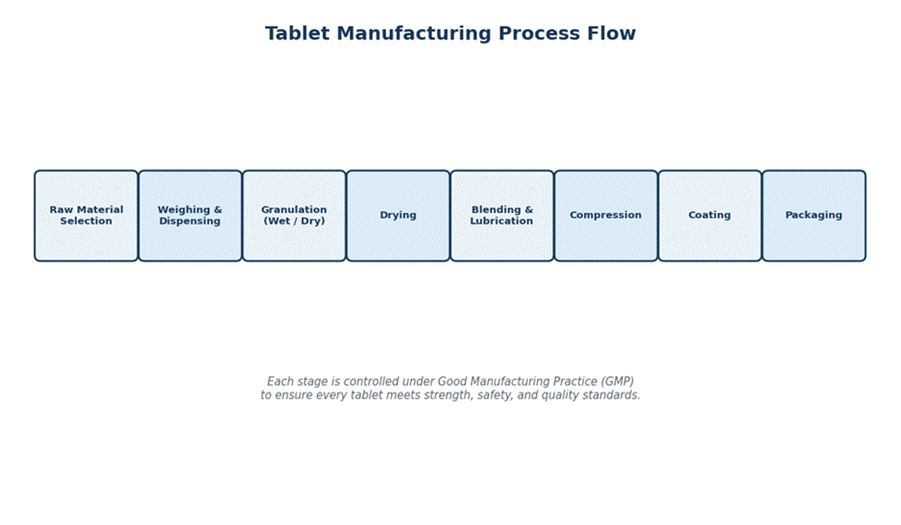
Figure 1: The tablet manufacturing process flow, from raw material selection to final packaging.
Raw Material Selection
Every tablet manufacturing process begins with raw material selection. This includes the active pharmaceutical ingredient (API) and excipients such as binders, fillers, disintegrants, and lubricants. Each raw material batch is tested against approved specifications before it is released for production. Poor-quality raw materials are one of the most common root causes of tablet manufacturing problems later in the process.
Granulation
Granulation turns fine powders into larger, more uniform granules. This step improves how the powder blend flows through equipment and compresses into tablets. There are two main granulation methods used in tablet manufacturing.
Dry Granulation
Dry granulation is used when the active ingredient is sensitive to moisture or heat. Powders are compacted into slugs or ribbons using a roller compactor, then milled into granules. No liquid binder is needed, which makes this method faster and simpler for moisture-sensitive formulations.
Wet Granulation
Wet granulation is the most common tablet manufacturing method. Powders are mixed with a liquid binder solution to form a wet mass, which is then dried and milled into granules. Wet granulation generally produces stronger, more uniform granules, though it takes longer and is not suitable for moisture-sensitive drugs.
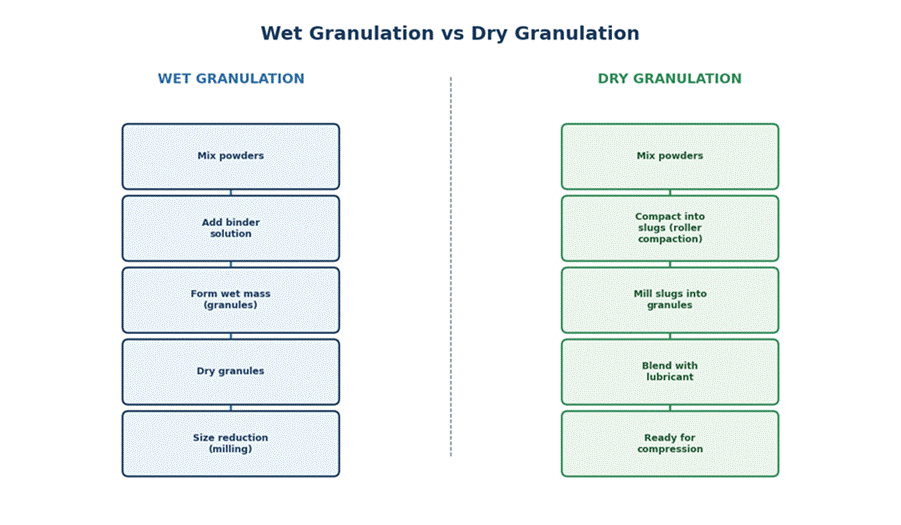
Figure 2: Wet granulation versus dry granulation — two core tablet manufacturing steps.
Wet vs Dry Granulation Comparison
| Factor | Wet Granulation | Dry Granulation |
| Moisture use | Requires liquid binder | No liquid used |
| Best for | Moisture-stable drugs | Moisture- or heat-sensitive drugs |
| Process time | Longer (drying required) | Shorter |
| Granule strength | Generally stronger | Moderate |
| Equipment needed | Granulator, fluid bed dryer | Roller compactor, mill |
| Cost | Higher (more steps, more energy) | Lower |
Direct Compression
Direct compression skips granulation entirely. If the API and excipients already flow and compress well on their own, powders can be blended and compressed directly into tablets. This is the simplest and most cost-effective tablet production process, but it only works for formulations with good natural flow properties.
Mixing and Blending
Mixing combines the API with excipients into a uniform powder blend. Blending, which usually happens after granulation, adds the lubricant (such as magnesium stearate) that keeps the powder from sticking to the tablet press tooling. Blending time is carefully controlled, because over-blending can weaken tablet hardness while under-blending can cause sticking during compression.
Compression
Tablet compression is the step where granules are pressed into the familiar tablet shape using a tablet press fitted with punches and dies. This stage determines the tablet’s weight, hardness, thickness, and disintegration behavior. In-process checks during compression include weight variation, hardness, and thickness, tested at regular intervals throughout the run.
Coating
Many tablets go through a coating process after compression. The tablet coating process applies a thin film — sugar-based, film-based, or enteric — over the tablet core. Coating can mask bitter taste, protect the drug from moisture and light, make the tablet easier to swallow, or control where in the digestive tract the drug is released.
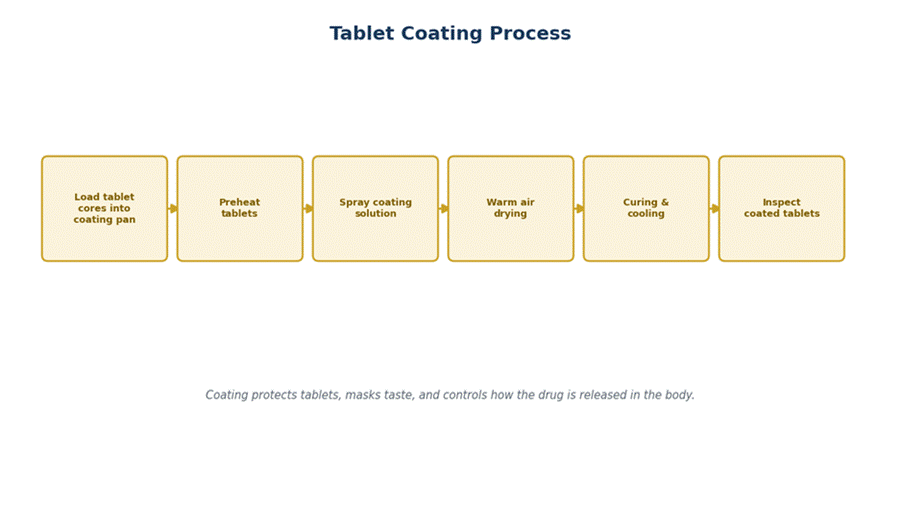
Figure 3: The tablet coating process, from loading cores to final inspection.
Packaging
Tablet packaging protects the finished product from moisture, light, and physical damage while it moves through the supply chain. Common packaging formats include blister packs, strip packs, and bottles with induction seals. Packaging lines also include printing of batch numbers and expiry dates, along with a final check — often a metal detector — before cartons are sealed and released.
Tablet Manufacturing Process Flow (Summary Table)
| Step | Purpose | Typical Equipment |
| Raw material selection | Confirm identity, purity, and quality of API and excipients | QC lab, sampling tools |
| Weighing & dispensing | Measure exact quantities for the batch | Calibrated weighing balances |
| Granulation | Improve flow and compressibility | Rapid mixer granulator, roller compactor |
| Drying | Remove moisture from wet granules | Fluid bed dryer |
| Blending & lubrication | Achieve uniform mix and prevent sticking | Octagonal / V-blender |
| Compression | Form the tablet shape and size | Tablet press |
| Coating | Protect, mask taste, or control release | Coating pan / coating machine |
| Packaging | Protect and prepare for distribution | Blister/strip/bottle packaging line |
Tablet Manufacturing Equipment
Reliable tablet manufacturing equipment is the backbone of a compliant production line. Below are the machines you will find in almost every pharmaceutical tablet manufacturing facility.
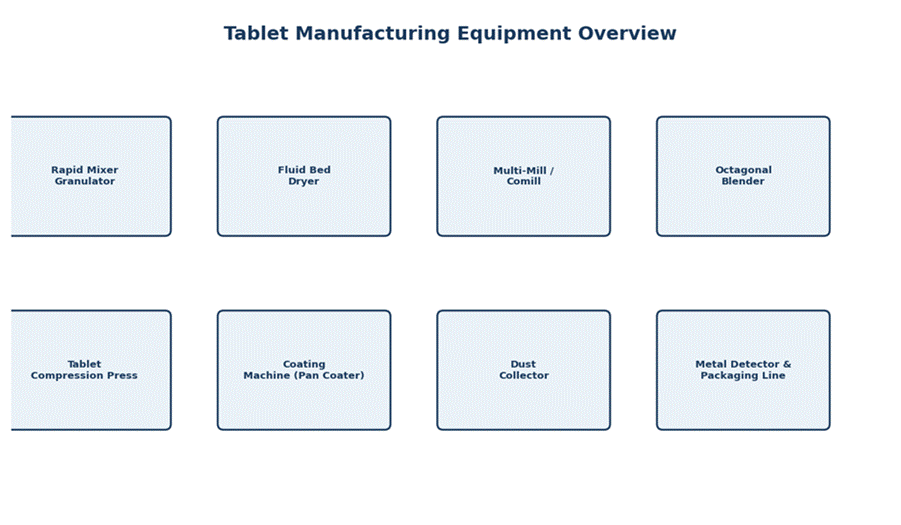
Figure 4: Core tablet manufacturing equipment used across the production line.
Tablet Press
The tablet press compresses granules into tablets using punches and dies. Rotary presses, used in large-scale pharmaceutical manufacturing, can produce hundreds of thousands of tablets per hour while continuously monitoring weight and hardness.
Granulator
A rapid mixer granulator combines dry mixing and wet granulation in a single vessel, saving time and reducing product handling between steps.
Fluid Bed Dryer
A fluid bed dryer removes moisture from wet granules by suspending them in a stream of warm air. This method dries granules faster and more evenly than tray drying.
Blender
Octagonal or V-shaped blenders mix the final granule blend with lubricants and glidants before compression, ensuring an even distribution of active ingredient throughout the batch.
Coating Machine
A perforated coating pan sprays a fine coating solution onto tumbling tablets while warm air dries the film, building an even coating layer.
Dust Collector
Dust collectors capture fine powder generated during granulation, blending, and compression, protecting workers and preventing cross-contamination between products.
Metal Detector
Metal detectors scan finished tablets or packaged product for metal fragments that may have come from equipment wear, acting as a final safety checkpoint.
Packaging Machine
Blister packaging machines and bottle-filling lines package finished tablets and print batch and expiry information, completing the tablet manufacturing process.
Equipment and Functions
| Equipment | Function |
| Tablet Press | Compresses granules into tablets |
| Rapid Mixer Granulator | Mixes powders and forms wet granules |
| Fluid Bed Dryer | Dries wet granules using hot air |
| Multi-Mill / Comill | Reduces granule or slug size |
| Octagonal Blender | Blends granules with lubricant before compression |
| Coating Machine | Applies film or sugar coating to tablets |
| Dust Collector | Removes airborne powder for safety and cleanliness |
| Metal Detector | Screens tablets for metal contamination |
| Packaging Machine | Packs tablets into blisters, strips, or bottles |
Quality Control in Tablet Manufacturing
Tablet quality control is what separates a safe medicine from a defective one. Quality control teams test raw materials, in-process samples, and finished tablets at multiple points in the tablet manufacturing process to confirm the product meets its approved specifications.
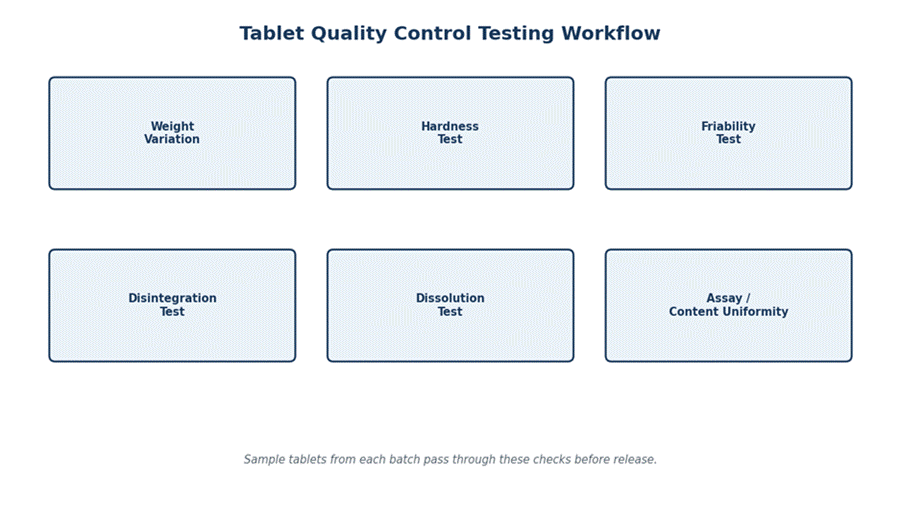
Figure 5: Core tablet testing performed as part of quality control.
Important Tablet Tests
The following tablet tests are standard across pharmaceutical manufacturing and are typically described in pharmacopeial standards such as the United States Pharmacopeia (USP).
| Test | What It Checks | Why It Matters |
| Weight Variation | Consistency of tablet weight across a batch | Confirms accurate dosing |
| Hardness Test | Force needed to break the tablet | Predicts handling and transport durability |
| Friability Test | Resistance to chipping and abrasion | Prevents damage during packaging and shipping |
| Disintegration Test | Time taken for a tablet to break apart in fluid | Confirms the tablet will break down in the body |
| Dissolution Test | Rate at which the drug dissolves in fluid | Predicts how the drug will be absorbed |
| Assay / Content Uniformity | Actual amount of active drug present | Confirms each tablet delivers the correct dose |
| Quick answer: What is the most important tablet quality control test? Content uniformity and assay testing are considered the most critical, because they directly confirm whether each tablet delivers the correct, labeled amount of active drug — the core promise of any medicine. |
Common Tablet Manufacturing Problems
Even well-designed processes can produce tablet defects if formulation, equipment, or environmental conditions are not properly controlled. Recognizing these problems early helps manufacturers correct them before a batch is rejected.
| Defect | Common Cause | Solution |
| Capping | Trapped air or over-compression | Reduce compression force; improve granule flow |
| Lamination | Poor bonding between granule layers | Adjust binder level; slow down press speed |
| Sticking / Picking | Excess moisture or insufficient lubricant | Optimize drying; increase lubricant level |
| Mottling | Uneven color distribution | Improve mixing; use consistent raw material color |
| Chipping | Weak tablet edges or rough handling | Adjust hardness; review conveyor and coating settings |
| Weight Variation | Inconsistent granule flow into the die | Improve granule size distribution and flow properties |
Best Practices in Tablet Manufacturing
Consistent tablet quality comes from disciplined process control, not luck. The best practices below apply across nearly every pharmaceutical tablet manufacturing operation.
Tablet Manufacturing Best Practices Checklist
- Qualify every raw material supplier and test each incoming batch.
- Validate the granulation, compression, and coating processes before routine production.
- Calibrate weighing, compression, and testing equipment on a fixed schedule.
- Train operators on standard operating procedures (SOPs) and document all deviations.
- Monitor in-process parameters (weight, hardness, moisture) continuously during production.
- Maintain proper environmental controls for temperature and humidity in production areas.
- Conduct stability studies to confirm shelf life under real storage conditions.
- Keep detailed batch records to support traceability and regulatory audits.
GMP Guidelines in Tablet Manufacturing
Good Manufacturing Practice (GMP) is the regulatory framework that governs pharmaceutical production worldwide. GMP in tablet manufacturing covers facility design, equipment qualification, personnel hygiene, documentation, and quality control testing.
Regulatory bodies such as the U.S. Food and Drug Administration (FDA), the European Medicines Agency (EMA), and the World Health Organization (WHO) publish GMP guidelines that manufacturers must follow to sell pharmaceutical products legally. Key GMP principles for tablet manufacturing include:
- Written, approved SOPs for every manufacturing step.
- Clean, controlled manufacturing environments to prevent contamination.
- Equipment qualification and process validation before commercial production.
- Batch documentation that allows full traceability from raw material to finished product.
- A quality unit independent of production, responsible for approving or rejecting batches.
Latest Industry Trends in Tablet Manufacturing
Pharmaceutical manufacturing is evolving quickly. These trends are shaping how tablets are produced today and in the coming years.
Automation
Automated tablet presses, robotic material handling, and automated in-process testing are reducing human error and increasing production speed while maintaining tight quality control.
Artificial Intelligence
AI-driven predictive models now help formulators select excipients, predict granulation outcomes, and detect quality deviations in real time, shortening development timelines for new tablet products.
Continuous Manufacturing
Rather than producing tablets in separate batches, continuous manufacturing runs raw materials through the entire process in one uninterrupted flow. This reduces production time and improves consistency between tablets.
Sustainability
Manufacturers are adopting energy-efficient dryers, reducing solvent use in coating, and minimizing packaging waste to lower the environmental footprint of pharmaceutical production.
Frequently Asked Questions
What is tablet manufacturing?
Tablet manufacturing is the pharmaceutical process of converting a blend of active pharmaceutical ingredients and excipients into solid, compressed dosage forms. It includes raw material selection, granulation, blending, compression, coating, and packaging. Every step is controlled to ensure the finished tablet contains an accurate, consistent dose of medicine and remains stable until its expiry date. Pharmaceutical companies follow Good Manufacturing Practice guidelines throughout this process to protect patient safety and meet regulatory requirements set by agencies such as the FDA and EMA.
What are the main steps in the tablet manufacturing process?
The main steps are raw material selection, weighing and dispensing, granulation (wet or dry), drying, blending with lubricant, compression, coating, and packaging. Not every tablet goes through every step — for example, direct compression skips granulation entirely. Each step includes in-process checks, such as weight and hardness testing during compression, to catch problems early. Following this sequence consistently is what allows manufacturers to produce millions of tablets with the same quality, batch after batch.
What is the difference between wet and dry granulation?
Wet granulation uses a liquid binder to bind powders into granules, which are then dried and milled; it generally produces stronger granules but takes longer. Dry granulation compacts powders into slugs using pressure, without any liquid, making it suitable for moisture- or heat-sensitive drugs. The right choice depends on the properties of the active ingredient and the desired tablet characteristics. Many manufacturers test both methods during formulation development to determine which produces the most consistent tablets.
What equipment is used in tablet manufacturing?
Core tablet manufacturing equipment includes a rapid mixer granulator, fluid bed dryer, multi-mill, blender, tablet compression press, coating machine, dust collector, metal detector, and packaging line. Each machine handles a specific stage of production, from turning powders into granules to compressing and coating the final tablet. Equipment must be qualified and regularly calibrated under GMP requirements, since inconsistent equipment performance is a leading cause of tablet defects and batch failures.
Why is tablet compression important?
Tablet compression is the step where granules are pressed into their final shape and size using a tablet press. This stage determines critical quality attributes such as tablet weight, hardness, thickness, and how quickly the tablet will disintegrate in the body. Compression settings, including press speed and compression force, are carefully controlled and monitored throughout the run. Errors at this stage can cause defects like capping, lamination, or weight variation, so it is one of the most closely watched steps in production.
What is the purpose of tablet coating?
Tablet coating applies a thin layer over the compressed tablet core to mask unpleasant taste, protect the drug from moisture and light, make tablets easier to swallow, or control where and how quickly the drug is released in the digestive tract. Common coating types include film coating, sugar coating, and enteric coating. The tablet coating process uses a rotating coating pan that sprays a coating solution onto tumbling tablets while warm air dries the film evenly.
What tests are performed during tablet quality control?
Standard tablet quality control tests include weight variation, hardness, friability, disintegration time, dissolution rate, and assay or content uniformity. Together, these tests confirm that tablets are dosed accurately, physically durable enough to survive packaging and shipping, and able to release the drug properly in the body. Pharmacopeial standards, such as those published by the United States Pharmacopeia, define acceptable limits for each test, and manufacturers must document results for every batch before release.
What causes common tablet defects like capping or sticking?
Capping usually happens when trapped air or excessive compression force causes the top of a tablet to separate from its base. Sticking occurs when tablets are too moist or the powder blend lacks enough lubricant, causing material to stick to the punches. Other common tablet defects include lamination, mottling, chipping, and weight variation, most of which trace back to formulation issues, incorrect moisture content, or poorly maintained equipment. Identifying the root cause quickly prevents an entire batch from being rejected.
What does GMP mean in tablet manufacturing?
GMP stands for Good Manufacturing Practice, a set of regulatory requirements that govern how pharmaceutical products, including tablets, must be produced and tested. GMP in tablet manufacturing covers facility cleanliness, equipment qualification, staff training, documented procedures, and quality control testing. Regulatory agencies such as the FDA, EMA, and WHO enforce GMP standards, and manufacturers must pass regular inspections to keep their license to produce and sell pharmaceutical products.
How is tablet packaging different from other manufacturing steps?
Tablet packaging is the final stage of the tablet manufacturing process, and its purpose is protection rather than production. Packaging shields finished tablets from moisture, light, and physical damage during storage and shipping. Common formats include blister packs, strip packs, and sealed bottles. Packaging lines also print batch numbers and expiry dates and often include a final metal detector check, making packaging both a protective and a quality-control step.
What is direct compression and when is it used?
Direct compression is a tablet production process where powders are blended and compressed directly into tablets without a separate granulation step. It is used when the active ingredient and excipients already have good flow and compression properties on their own. Direct compression is faster, requires less equipment, and avoids exposing moisture-sensitive drugs to water or heat. However, it is not suitable for every formulation, particularly those with poor natural flow characteristics.
How does automation affect pharmaceutical tablet manufacturing?
Automation is transforming pharmaceutical tablet manufacturing by reducing manual handling, increasing production speed, and improving consistency between tablets. Automated tablet presses can adjust compression force in real time, robotic systems handle material transfer between stages, and automated sensors flag out-of-specification results immediately. This reduces the risk of human error and supports continuous, uninterrupted production, which is becoming more common in modern pharmaceutical manufacturing facilities.
What is continuous manufacturing in the pharmaceutical industry?
Continuous manufacturing is a production method where raw materials move through the entire tablet manufacturing process — from blending to packaging — in one uninterrupted flow, rather than in separate batches. This approach shortens production time, reduces the amount of material in process at any moment, and improves consistency because conditions can be monitored and adjusted in real time. Regulatory agencies including the FDA have actively encouraged the adoption of continuous manufacturing across the pharmaceutical industry.
How long does it take to manufacture a batch of tablets?
Timelines vary widely depending on the formulation, granulation method, and batch size, but a typical batch can take anywhere from one to several days from raw material dispensing to finished, packaged tablets. Wet granulation adds time for drying compared to direct compression. Larger commercial batches on continuous or high-speed rotary presses can also be more time-efficient per tablet than smaller batch runs, even though total batch time may be similar.
What qualifications should a tablet manufacturing facility have?
A reputable tablet manufacturing facility should hold GMP certification from a recognized regulatory authority, maintain validated equipment and processes, and pass regular quality audits. Facilities selling internationally often hold approvals from multiple agencies, such as the FDA, EMA, or WHO prequalification. Procurement teams evaluating a manufacturer should request evidence of GMP compliance, batch record practices, and quality control testing capability before finalizing a supply agreement.
Key Takeaways
- Tablet manufacturing converts APIs and excipients into accurate, stable, solid dosage forms through granulation, compression, coating, and packaging.
- Wet granulation and dry granulation are chosen based on the moisture and heat sensitivity of the active ingredient.
- Core tablet manufacturing equipment includes granulators, dryers, blenders, tablet presses, coating machines, and packaging lines.
- Tablet quality control relies on weight variation, hardness, friability, disintegration, dissolution, and assay testing.
- GMP guidelines from agencies like the FDA, EMA, and WHO govern every stage of pharmaceutical tablet manufacturing.
- Automation, AI, continuous manufacturing, and sustainability are shaping the future of tablet production.
Conclusion
Tablet manufacturing is a precise, highly regulated process that turns raw pharmaceutical ingredients into safe, effective medicine. From raw material selection and granulation through compression, coating, and packaging, every stage of the tablet manufacturing process is designed to protect patients and deliver a consistent dose. Manufacturers who invest in the right tablet manufacturing equipment, follow GMP guidelines, and apply strong quality control practices are best positioned to produce reliable tablets at scale.
As the industry moves toward automation, AI-assisted formulation, and continuous manufacturing, the fundamentals covered in this guide will remain the foundation of safe, effective pharmaceutical tablet manufacturing for years to come.
External References
- U.S. Food and Drug Administration (FDA) – Current Good Manufacturing Practice (cGMP) Regulations
- World Health Organization (WHO) – Good Manufacturing Practices
- United States Pharmacopeia (USP) – Official USP Standards
- European Medicines Agency (EMA) – Good Manufacturing Practice Overview
- International Council for Harmonisation (ICH) – Quality Guidelines
Similar Post
- Fluid Bed Dryer (FBD): Working Principle, Diagram, Operation, Advantages, and Disadvantages
- Table Compression Machine: Complete Guide to Working Principle, Types, Parts, Applications, and Maintenance
- Tablet Coating Machine Explained: Benefits, Working Principle & Applications
- Cleaning Validation: Complete Guide to Process, Protocol, Acceptance Criteria, and FDA Guidelines