A complete, easy-to-understand gas chromatography guide for students, lab technicians, and curious minds.
If you have ever wondered how labs figure out exactly what chemicals are in a sample, gas chromatography is often the answer. It is one of the most trusted methods used in chemistry labs, food testing companies, forensic labs, and oil refineries around the world. Even though it sounds like something only scientists in white coats would understand, the idea behind it is actually pretty simple once you break it down.
This guide walks you through everything about gas chromatography in plain, simple language. You will learn what it is, how it works, its main parts, where it is used, and its pros and cons. Whether you are a student preparing for an exam, a lab technician brushing up on the basics, or just someone curious about how chemical testing works behind the scenes, this gas chromatography guide covers it all in one place.
What Is Gas Chromatography?
Gas chromatography, often shortened to GC, is a lab technique used to separate and study the different chemicals present in a mixture. It works mainly for compounds that can turn into a gas without breaking down, which is why it is used to test liquids and gases rather than solids.
In simple words, gas chromatography takes a mixture of chemicals, turns it into a gas, and then separates each chemical based on how fast it moves through a long tube called a column. Each chemical comes out of the column at a different time, so scientists can tell exactly what is in the sample and how much of it is present.
The name itself gives a clue to how it works. Chromatography comes from an old technique of separating colored substances, and gas simply refers to the fact that the mobile phase carrying the sample is a gas rather than a liquid. Put those two ideas together, and you get a method that separates chemicals using a moving gas stream and a column that treats each compound slightly differently.
Gas chromatography is used widely across pharmaceuticals, environmental testing, food safety, and the petrochemical industry. Reference databases such as the NIST Chemistry WebBook store thousands of chemical identification records that rely on gas chromatography data, which shows just how central this method is to modern chemistry.
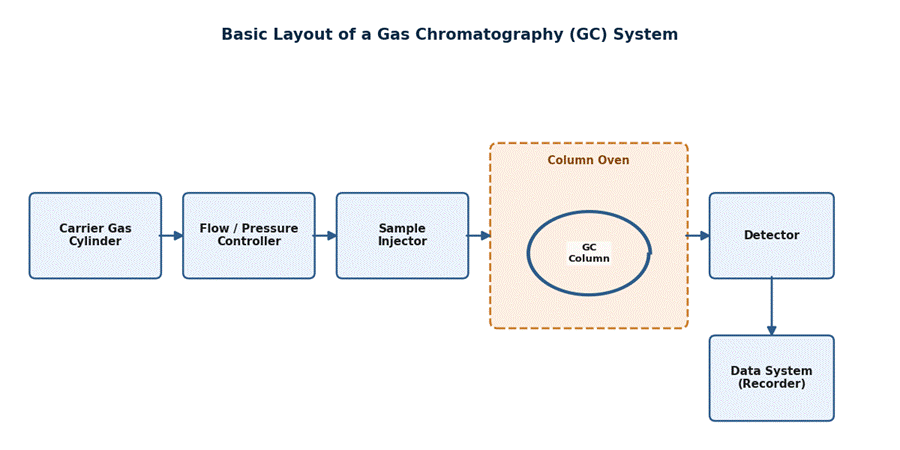
Figure 1: A simplified layout of a gas chromatography system, from carrier gas supply to the data system.
A Short History of Gas Chromatography
Gas chromatography did not appear overnight. The basic idea of chromatography goes back to the early 1900s, when a Russian botanist named Mikhail Tswett separated plant pigments using a column filled with chalk. He called this method chromatography, which literally means color writing, because the colored bands were easy to see as the pigments separated.
The gas-based version we use today came much later. In 1952, two British chemists, Archer Martin and Anthony James, developed the technique of gas-liquid chromatography, which became the foundation of modern gas chromatography. Martin later won a Nobel Prize for his work on chromatography in general. Since then, GC machines have grown far more precise, with better columns, more sensitive detectors, and software that used to take a full lab team just to interpret results by hand.
Today, gas chromatography is a standard tool in almost every analytical lab, and it keeps getting faster and more accurate as technology improves.
Types of Gas Chromatography
Not all gas chromatography setups are the same. Depending on the stationary phase and how the temperature is controlled, GC can be grouped into a few different types.
Gas-Liquid Chromatography (GLC)
This is the most common type of gas chromatography. Here, the stationary phase is a thin liquid film coated onto the inside of the column or onto a solid support. Most modern GC machines use this setup because it gives excellent separation for a wide range of compounds.
Gas-Solid Chromatography (GSC)
In this less common type, the stationary phase is a solid material rather than a liquid film. Gas-solid chromatography works well for separating small gas molecules, such as air components or light hydrocarbons, that do not separate well with a liquid coating.
Isothermal vs Temperature-Programmed GC
Gas chromatography can also be grouped by how the oven temperature is managed during a run. In isothermal GC, the column oven stays at one fixed temperature for the whole test. This works fine for simple samples but can take a long time for mixtures with a wide range of boiling points.
In temperature-programmed GC, the oven temperature slowly rises during the run. This helps lighter compounds separate early while heavier compounds are pushed through faster later in the run, which usually gives a cleaner, faster analysis overall. Most modern labs prefer temperature-programmed runs for anything beyond very simple samples.
Gas Chromatography Principle
The Basic Idea Behind Separation
Every gas chromatography method works on one simple principle: different chemicals move at different speeds through a column, depending on how strongly they interact with the stationary phase, which is a coating inside the column, compared to the moving gas, known as the mobile phase or carrier gas.
Think of it like a race where everyone starts together, but some runners keep stopping to chat along the way while others sprint straight to the finish. The ones who do not stop finish first. In gas chromatography, chemicals that do not stick to the column coating pass through quickly, while chemicals that stick more take longer to come out.
Mobile Phase and Stationary Phase
- Mobile phase: An inert gas, usually helium, nitrogen, or hydrogen, that carries the sample through the column without reacting with it.
- Stationary phase: A thin liquid or solid layer coated inside the column. Chemicals interact with this layer differently, and that difference is what causes them to separate.
This separation process is called partitioning, and it sits at the heart of the gas chromatography principle. Compounds with a stronger pull toward the stationary phase take longer to travel through the column, while compounds with a weaker pull move through quickly and exit first.
How Does Gas Chromatography Work? (Step-by-Step)
Understanding gas chromatography working becomes much easier once you break it down into simple steps.
Step 1: Sample Preparation and Injection
A small liquid sample is drawn into a syringe and injected into the machine through a heated port called the injector. The heat instantly turns the liquid into a gas.
Step 2: Carrier Gas Moves the Sample
An inert gas, usually helium or nitrogen, pushes the now-gaseous sample into the column. This gas is chosen because it does not react with the sample or the column coating.
Step 3: Separation Inside the Column
As the sample gas flows through the long, coiled column, the different chemicals in the mixture start separating. Some move quickly, others move slowly, depending on their chemical properties and how they interact with the coating inside the column.
Step 4: Detection
As each separated chemical exits the column, it passes through a detector. The detector senses the chemical and sends an electrical signal to the recording system.
Step 5: Data Recording and Interpretation
The data system draws a graph called a chromatogram. Each chemical shows up as a peak on this graph. The position of the peak, known as the retention time, tells you what the chemical likely is, and the size of the peak tells you how much of it is present in the sample.
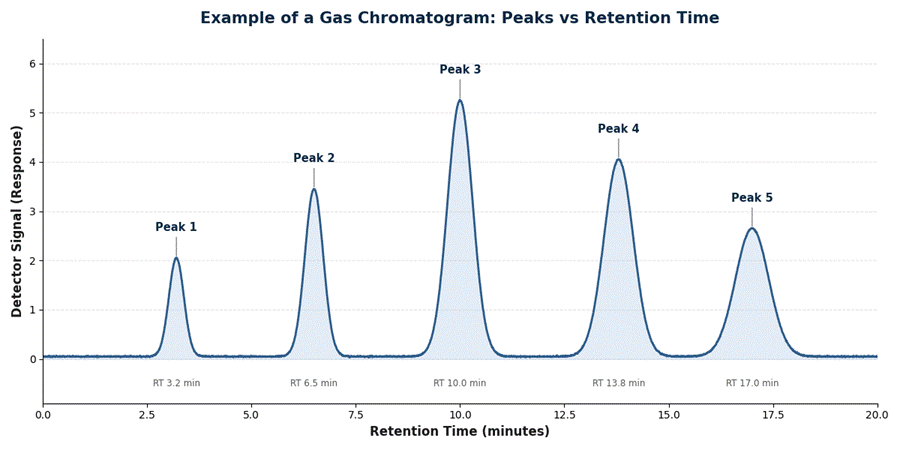
Figure 2: A typical chromatogram, showing separate peaks for each compound plotted against retention time.
Factors That Affect Gas Chromatography Separation
A few key factors decide how well a gas chromatography run separates the compounds in a sample. Getting these right is often the difference between a clean chromatogram and a messy one.
Column Temperature
Higher temperatures make compounds move through the column faster, but too much heat can cause peaks to overlap. Lower temperatures slow things down and can improve separation, but the test takes longer to finish.
Carrier Gas Flow Rate
A faster flow rate speeds up the test but can reduce how well compounds separate. A slower flow rate usually gives better separation but takes more time. Most methods use a flow rate that balances speed and accuracy.
Column Length and Diameter
Longer, narrower columns tend to give sharper, better-separated peaks, but they also take longer to run. Shorter, wider columns are faster but offer less separating power, which is why capillary columns dominate in labs that need precise results.
Sample Size
Injecting too much sample can overload the column, causing peaks to look wide and blurry. Injecting the right, usually very small, amount keeps peaks sharp and results accurate.
How to Read a Gas Chromatogram (Beginner’s Guide)
A chromatogram can look confusing the first time you see one, but it is easier to read once you know what to look for.
- X-axis (horizontal line): Shows retention time, which is how long each compound took to travel through the column.
- Y-axis (vertical line): Shows the detector’s response, which reflects how much of a compound is present.
- Peaks: Each bump on the graph represents one compound. The position tells you what it might be, and the height or area tells you how much of it is in the sample.
- Baseline: The flat line where no compound is being detected. A clean, steady baseline usually means the system is working well.
By comparing the retention time of a peak to a known reference standard, scientists can figure out which compound each peak belongs to. This is why running a standard sample alongside your test sample is such a common practice in GC labs.
Instrumentation and Components of a Gas Chromatography System
To fully understand gas chromatography instrumentation, it helps to look at each part of the machine one by one.
1. Carrier Gas Supply
This part supplies the inert gas that moves the sample through the system. Common gas chromatography carrier gases include helium, nitrogen, and hydrogen. Helium has long been popular because it gives clean, reliable results, though rising costs have pushed many labs toward hydrogen or nitrogen instead. For detailed comparisons of carrier gas performance, Agilent’s gas chromatography resources is a helpful place to look.
2. Sample Injector
This is where the sample enters the machine. It is heated so that the liquid sample turns into vapor right away, ready to be swept into the column by the carrier gas.
3. Column Oven
The column sits inside an oven that can be heated or cooled in a controlled way. Temperature control matters a lot here, because it directly affects how fast chemicals move through the column and how well they separate from each other.
4. The Gas Chromatography Column
The column is the heart of the whole system. It is usually a long, thin, coiled tube coated on the inside with a special material called the stationary phase. There are two main gas chromatography column types, and each has its own strengths.
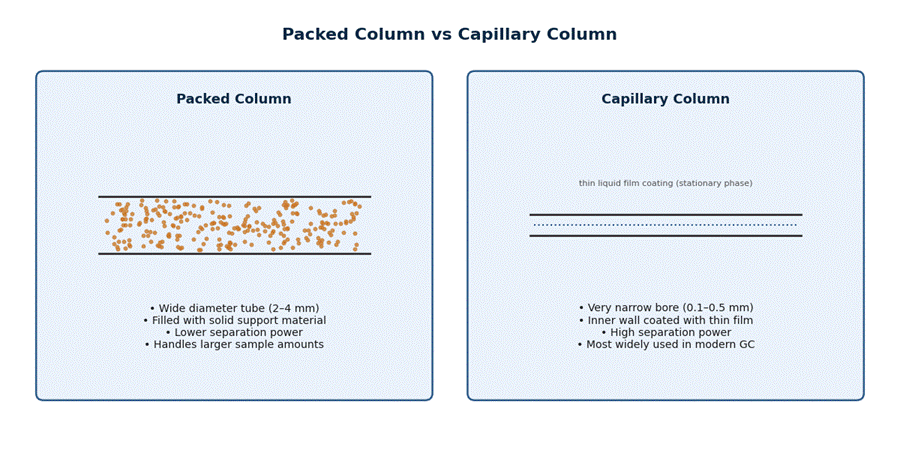
Figure 3: Packed columns are wider and shorter, while capillary columns are narrow, long, and offer much finer separation.
| Feature | Packed Column | Capillary Column |
| Diameter | Wide (2 to 4 mm) | Very narrow (0.1 to 0.5 mm) |
| Length | Shorter (1 to 3 meters) | Longer (10 to 100 meters) |
| Separation power | Lower | Much higher |
| Sample capacity | Higher | Lower |
| Common use | Simple gas mixtures | Complex mixtures, trace analysis |
Choosing the right stationary phase for your column depends heavily on the type of sample you are testing. Merck’s technical article on analytical chemistry offers a good breakdown of how different coatings behave with different compound classes.
5. Gas Chromatography Detector
Once chemicals leave the column, a gas chromatography detector identifies them. Different detectors work in different ways, and picking the right one depends on what you are testing for.
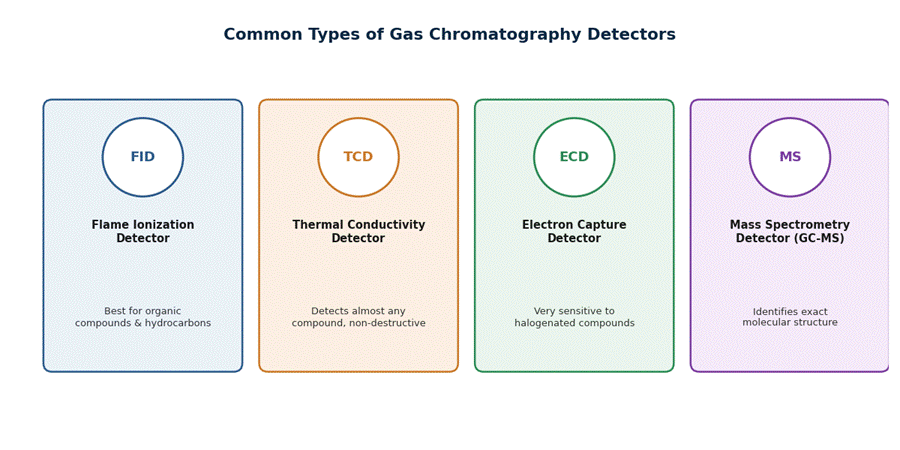
Figure 4: Four widely used gas chromatography detector types and what they are best suited for.
| Detector | Full Name | Best For |
| FID | Flame Ionization Detector | Organic compounds, hydrocarbons |
| TCD | Thermal Conductivity Detector | Almost any compound, non-destructive testing |
| ECD | Electron Capture Detector | Halogenated compounds, pesticides |
| MSD | Mass Spectrometry Detector | Exact compound identification (GC-MS) |
6. Data System
This is the computer or recorder that turns the detector’s electrical signals into a readable chromatogram. Modern GC machines come with software that automatically calculates peak areas, retention times, and compound concentrations, saving a lot of manual work.
Applications of Gas Chromatography
There is a wide range of gas chromatography applications across science and industry. For a deeper academic look at how these applications developed, ScienceDirect’s topic overview on gas chromatography is a solid reference point. Here are the most common uses you will come across:
1. Environmental Testing
Environmental labs use GC to check air, water, and soil samples for pollutants, pesticides, and toxic gases, helping regulators keep tabs on pollution levels. It is also used to track volatile organic compounds released by factories, which helps agencies enforce clean air rules and respond quickly when contamination is found.
2. Food and Beverage Industry
Food scientists use GC to test for flavors, preservatives, contaminants, and even alcohol content in drinks, making sure products meet safety standards. It also helps detect spoilage, rancid oils, and unwanted residues from packaging, which protects both consumers and brand reputation.
3. Pharmaceutical Industry
Drug makers rely on GC to check the purity of medicines and to detect any leftover solvents from the manufacturing process. Regulatory bodies often require this kind of testing before a drug batch can be approved for sale, which makes GC a routine part of quality control in this industry.
4. Forensic Science
Investigators use GC to detect drugs, poisons, or accelerants such as gasoline at crime scenes, often turning up evidence that would be impossible to find by eye. Combined with mass spectrometry, it can also help identify unknown substances found during an investigation with a high level of confidence.
5. Petrochemical Industry
Oil and gas companies use GC to analyze fuel composition and monitor the quality of natural gas before it reaches consumers. It also helps refineries track impurities that could damage equipment or reduce fuel efficiency, saving money on maintenance in the long run.
6. Sports and Anti-Doping Testing
GC, often paired with mass spectrometry, is used to detect banned substances in athletes’ samples, playing a quiet but important role in keeping sports fair. Testing labs accredited for anti-doping work rely on GC-MS because it can pick up trace amounts of banned substances that other methods might miss.
7. Chemical and Material Research
Researchers use gas chromatography to study new chemical compounds, check reaction products, and confirm that a synthesis worked as expected. It is a everyday tool in university and industry labs alike, often running dozens of samples a day.
These gas chromatography uses show just how flexible and important this technique is across so many different fields, from hospitals to oil rigs to university research benches.
Advantages of Gas Chromatography
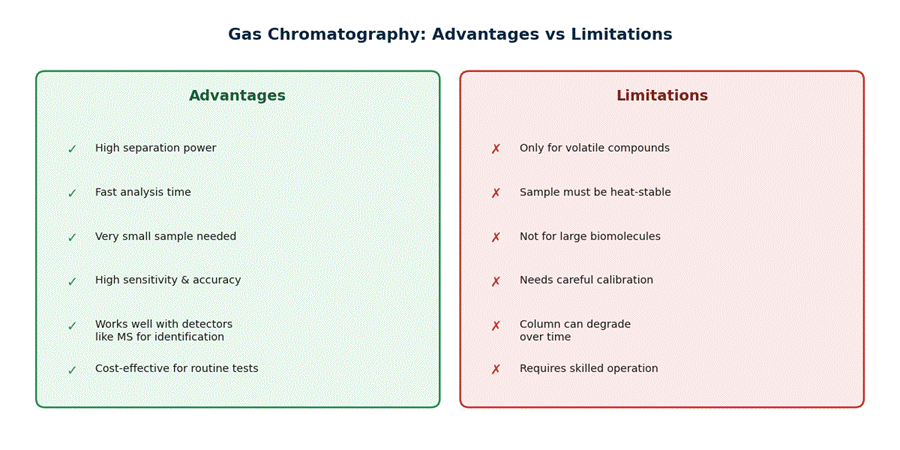
Figure 5: A quick side-by-side look at the main strengths and drawbacks of gas chromatography.
- High separation power, even for complex mixtures with many compounds
- Fast results, often within minutes rather than hours
- Needs only a very small sample size to run a test, which helps when samples are limited or expensive
- High sensitivity, able to detect very low concentrations, sometimes down to parts per billion
- Works well with detectors like mass spectrometry for accurate, confident identification
- Cost-effective for routine testing once the system is set up and calibrated
- Gives highly reproducible results when the method is followed carefully, which builds trust in the data
Limitations of Gas Chromatography
- Only works for compounds that can turn into a gas without breaking down, which rules out many samples
- Not suitable for large molecules such as proteins or other heat-sensitive biomolecules
- Sample must be heat-stable, since heat is used to vaporize it before testing
- Columns can wear out over time and need regular replacement, adding to running costs
- Needs a trained operator to get accurate, repeatable results, since small errors in injection or method can skew data
- Calibration and routine maintenance take extra time and effort, especially in busy labs
- Carrier gas costs, particularly for helium, can add up for labs running tests all day
Gas Chromatography vs Liquid Chromatography
People often mix up gas chromatography with its close cousin, liquid chromatography. Here is a quick comparison to clear up the confusion:
| Feature | Gas Chromatography (GC) | Liquid Chromatography (LC) |
| Mobile phase | Inert gas | Liquid solvent |
| Sample type | Volatile, gas-friendly compounds | Non-volatile, larger molecules |
| Typical speed | Generally faster | Can be slower |
| Common use | Fuels, gases, small organics | Proteins, drugs, large molecules |
Safety Tips When Working With Gas Chromatography
Gas chromatography machines involve heat, pressurized gas, and sometimes flammable carrier gases like hydrogen, so a few safety habits go a long way in any lab.
- Check gas cylinders and fittings regularly for leaks, especially when using hydrogen
- Let the injector and detector cool down before touching them or doing maintenance
- Work in a well-ventilated area, since some samples release fumes when heated
- Wear gloves and eye protection when handling samples and solvents
- Follow the manufacturer’s guidelines for shutting down the system safely
Who Uses Gas Chromatography?
Gas chromatography is not just for research scientists in big universities. A wide range of professionals use it every day as part of their normal job.
- Quality control technicians who test raw materials and finished products before they leave a factory
- Environmental scientists who monitor air, water, and soil quality for pollution
- Forensic analysts who examine evidence from crime scenes
- Pharmaceutical chemists who confirm drug purity and safety
- Food scientists who check products for contaminants and quality issues
- Petroleum engineers who monitor fuel and gas composition
Because it touches so many industries, learning gas chromatography is a genuinely useful skill for anyone heading into a chemistry, biology, or lab-based career.
Best Practices for Better Gas Chromatography Results
- Always use a clean, well-maintained column
- Choose the right carrier gas for your specific application
- Keep the detector and injector ports clean and properly calibrated
- Run standard reference samples regularly to check accuracy
- Store columns properly when they are not in use
Common Mistakes to Avoid in Gas Chromatography
Even experienced lab workers run into problems with GC from time to time. Knowing the common mistakes ahead of time can save hours of troubleshooting.
Injecting Too Much or Too Little Sample
Overloading the column with too much sample causes wide, distorted peaks that are hard to measure accurately. Injecting too little can make weak signals disappear into background noise. Finding the right amount usually takes a bit of trial and error with a new sample type.
Using the Wrong Column for the Sample
Not every column works for every compound. Using a column with the wrong coating or the wrong polarity can lead to poor separation, no matter how well the rest of the method is set up. Checking the column manufacturer’s recommendations before starting a new method saves a lot of frustration.
Ignoring Baseline Drift
A rising or unstable baseline can hide small peaks and throw off calculations. This is often caused by a dirty injector, a leaking column, or a detector that needs cleaning. Regular maintenance checks usually catch this before it becomes a bigger problem.
Skipping Calibration
Skipping regular calibration with known standards is one of the easiest ways to end up with inaccurate results. Even a well-maintained machine can drift over time, so building calibration into a routine schedule is worth the extra effort.
FAQs About Gas Chromatography
What is gas chromatography used for?
It is used to separate and identify chemicals in a mixture, especially in industries like pharmaceuticals, food testing, environmental monitoring, and forensics.
What is the main principle of gas chromatography?
It works on the principle of partitioning, where different chemicals move through a column at different speeds based on how strongly they interact with the stationary phase inside the column.
What gases are commonly used as carrier gases?
Helium, nitrogen, and hydrogen are the most common gas chromatography carrier gases, with the choice usually depending on cost, safety, and the detector being used.
What is the difference between GC and GC-MS?
GC separates the chemicals in a sample, while GC-MS adds a mass spectrometer at the end to identify the exact structure of each separated chemical.
Can gas chromatography test solid samples?
Not directly. Solid samples usually need to be dissolved or converted into a form that can turn into gas before they can be tested.
How long does a gas chromatography test take?
Most tests take anywhere from a few minutes to about an hour, depending on how complex the sample is and how many compounds need to be separated.
What is retention time in gas chromatography?
Retention time is how long a compound takes to travel from the injector, through the column, to the detector. It is one of the main clues used to identify a compound on a chromatogram.
Why is helium commonly used as a carrier gas?
Helium is inert, safe to use, and gives sharp, well-separated peaks with most detectors. However, its rising cost has led many labs to switch to hydrogen or nitrogen for routine work.
Is gas chromatography destructive to the sample?
It depends on the detector. Some detectors, like the flame ionization detector, destroy the sample as it is measured, while others, like the thermal conductivity detector, do not.
What industries rely most on gas chromatography?
Pharmaceuticals, food and beverage, environmental testing, petrochemicals, and forensic science are among the industries that depend on gas chromatography the most for daily quality checks and research.
Quick Glossary of Gas Chromatography Terms
- Analyte: The specific chemical being measured in a sample.
- Carrier gas: The inert gas that moves the sample through the column.
- Chromatogram: The graph produced by a GC run, showing peaks over time.
- Mobile phase: The gas that carries the sample through the system.
- Retention time: The time a compound takes to travel through the column and reach the detector.
- Stationary phase: The coating inside the column that interacts with the sample.
- Peak area: The space under a peak on a chromatogram, used to calculate how much of a compound is present.
Conclusion
Gas chromatography might sound technical at first, but at its core, it is a simple idea: separate chemicals based on how fast they travel through a column, then measure and identify them one by one. From testing our food and water to catching doping athletes and solving crimes, GC plays a quiet but powerful role in everyday science.
Whether you are studying it for the first time or brushing up on the basics, understanding the gas chromatography principle, working, instrumentation, and applications gives you a solid foundation in analytical chemistry. The more you work with it, the more you will notice how often GC data quietly shapes decisions, from the medicines we trust to the food on our plates and the air we breathe.
Like any lab skill, getting comfortable with gas chromatography takes practice. Reading a chromatogram, choosing the right column, and troubleshooting odd results all become easier with time and hands-on experience. Hopefully, this guide gives you a clear starting point for that journey.
Further Reading
Agilent: Gas Chromatography Overview
Merck: Gas Chromatography Technical Article
People also interested in these articles
- Pharmaceutical Stability Testing Guide: How to Keep Medicines Safe and Effective
- Cold Chain in Pharmaceutical Industry: A Complete Guide
- HPLC Explained: Principle, Instrumentation, Working, Types, Applications, Validation & Interview Questions
- Dissolution Testing in Pharmaceutical Industry
- UV Spectroscopy: Principle, Instrumentation, Working, Applications, Advantages & Limitations (Complete Guide)
- Pharma QA vs QC Difference