If you have ever taken a pill, a vitamin, or even a candy mint, you have used the end result of a table compression machine. Most people know this machine by its more common name, the tablet compression machine or tablet press. It is one of the most important machines in the medicine and health industry today.
In this guide, we will walk through how the machine works, the different types you can buy, the main parts inside it, where it is used, and how to keep it running well for years. We will keep the language simple so that anyone, even someone new to this field, can follow along.
Tablets have become the most common way to take medicine around the world. They are easy to swallow, easy to store, and easy to carry in a pocket or a bag. Behind every bottle of tablets on a store shelf, there is a machine working hard, day and night, to make sure each one is the same size, the same weight, and the same strength. That machine is the table compression machine, and by the end of this guide, you will understand exactly how it turns loose powder into a finished product you can trust.
What You Will Learn in This Guide
- What a table compression machine is and why it matters
- Step by step, how the machine turns powder into a tablet
- The main types of machines and when to use each one
- Every major part and what job it does
- Real world uses across different industries
- How to pick the right machine for your business
- Daily, weekly, and monthly maintenance tips
- Common problems and how to fix them
- Safety rules every operator should know
What Is a Table Compression Machine?
A table compression machine, also called a tablet press, is a machine that presses loose powder or granules into a solid, round, or shaped tablet. It uses strong metal tools called punches and dies to squeeze the powder under heavy force. The result is a tablet with a fixed weight, size, and hardness.
This machine is used mainly in the pharmaceutical industry, but it is also common in food, chemical, and supplement factories. Anywhere a company needs to turn powder into a small, easy to handle solid shape, a tablet press can do the job.
The idea is simple, but the engineering behind it is not. A good machine must press thousands of tablets an hour, and every single one must come out almost exactly the same. That is why the parts inside are built to very tight standards.
Think of it a bit like a cookie cutter, but far more powerful and far more precise. Instead of just cutting a shape from dough, the machine applies enough force to change loose, crumbly powder into a hard, solid piece that holds its shape even after being dropped, shipped, and stored for months. Getting that balance right, strong enough to survive handling but soft enough to dissolve properly, is the real skill behind good tablet making.
A Short History of the Tablet Press
The idea of pressing powder into a solid shape is not new. The first hand operated tablet presses appeared in the 1800s, when pharmacists needed a faster way to make pills than rolling them by hand. Early machines were simple, worked one at a time, and needed a person to pull a lever for every single tablet.
As demand grew through the 1900s, engineers built machines that could run on their own power and make many tablets in a row. The rotary press, which we will cover in detail later, was one of the biggest steps forward. Today, machines are guided by computers, and many can check tablet weight thousands of times an hour without any help from a person.
Why Tablets Are Such a Popular Form of Medicine
There are a few simple reasons tablets became so common. First, they are stable and can sit on a shelf for a long time without breaking down. Second, they are easy to make in exact doses, so a patient gets the same amount of medicine every time. Third, they are cheap to produce once a factory has the right machine, which keeps medicine affordable for more people.
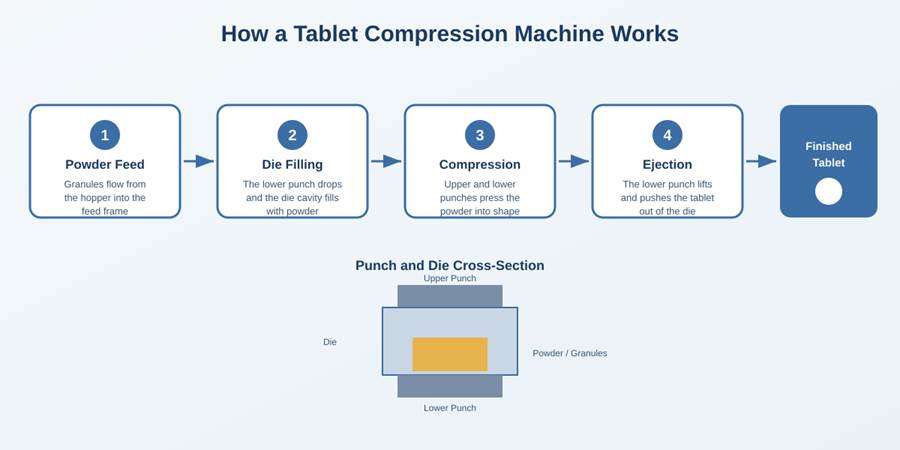
Figure 1: The basic flow of powder into a finished tablet
How Does a Table Compression Machine Work? (Working Principle)
The working idea behind a tablet press has stayed almost the same for over a hundred years, even though the machines have become faster and smarter. The process can be broken down into four simple steps.
Step 1: Powder Feeding
The process starts at the hopper, a large funnel-shaped container at the top of the machine. Powder or granules sit inside the hopper and flow down by gravity into a part called the feed frame. The feed frame spreads the powder evenly so that every die gets a fair, equal share.
Step 2: Die Filling
As the die passes under the feed frame, the lower punch drops down inside the die to create an open space. Powder falls into this space and fills the die cavity. The amount of powder that fills the die decides the final weight of the tablet, so this step must be very exact.
Step 3: Compression
Next, the die moves between two heavy rollers, or the upper and lower punches meet under strong force. The upper punch pushes down while the lower punch pushes up. Together, they squeeze the powder from all sides. This pressure locks the powder particles together and forms a solid tablet.
Step 4: Ejection
Once the tablet is formed, the upper punch lifts away. Then a part called the ejection cam pushes the lower punch upward until the tablet rises level with the die surface. A small blade called a scraper then pushes the finished tablet off to the side, and it drops into a collection tray.
Pre-Compression: An Extra Step on Rotary Machines
Many rotary tablet presses add a small step before the main compression, called pre-compression. Here, a lighter force is used first to push air out of the powder. This is followed by the main compression, which uses much more force to form the final tablet. This two step approach helps stop tablets from cracking or splitting, a problem known in the industry as capping.
What Materials Are Punches and Dies Made From?
Punches and dies go through huge amounts of stress every single day, so they cannot be made from just any metal. Most are made from hardened tool steel, and some high wear designs use tungsten carbide tips for extra strength. A good punch and die set can press millions of tablets before it needs to be replaced, as long as it is cleaned and stored the right way between uses.
A Quick Way to Remember the Process
- Fill – powder drops into the die
- Press – punches squeeze the powder
- Release – pressure is removed
- Eject – the tablet is pushed out
This four step cycle repeats over and over, sometimes more than a thousand times a minute on large rotary machines. You can read more about the physics of powder compaction on ScienceDirect, which covers the topic in more technical depth.
Types of Table Compression Machines
Not every factory needs the same kind of machine. The right choice depends on how many tablets you need to make and how much you can spend. Below are the main types you will find on the market.
1. Single Station Tablet Press
This is the simplest type. It has just one die and one set of punches. Every time the machine cycles, it makes one tablet. Because it is simple, it is also cheap and easy to clean. Small labs and companies doing early product tests often choose this type.
2. Rotary Tablet Press
A rotary press has many dies arranged in a circle on a rotating turret. As the turret spins, each die goes through the fill, press, and eject steps one after another. Because many dies work at once, this machine can make a huge number of tablets every hour. Most large drug companies use rotary presses for their main production lines.
3. Double Rotary Tablet Press
This is a bigger version of the rotary press. It has two feed frames and two sets of compression rollers on the same turret, so each die gets pressed twice during one full turn. This design roughly doubles the output compared to a standard rotary press.
4. Bilayer and Multi-Layer Tablet Press
Some medicines need two or more layers in one tablet, often to release different drugs at different times. A bilayer press fills and lightly presses one layer of powder, then adds a second layer on top before the final hard press. This gives a tablet with two clear layers, each one able to hold a different active ingredient or release at a different speed once inside the body.
These presses are more complex than standard machines because each layer needs its own feed system and its own light pre-press step. This extra complexity means bilayer presses usually cost more and need more careful setup, but they open the door to combination medicines that would not be possible with a single layer tablet.
5. Mini Rotary Tablet Press
A mini rotary press is a smaller version of the standard rotary machine. It is built for pilot batches, clinical trial supplies, or smaller companies that do not yet need full-scale output. It offers many of the same features as a full rotary press, just at a lower speed and a smaller footprint.
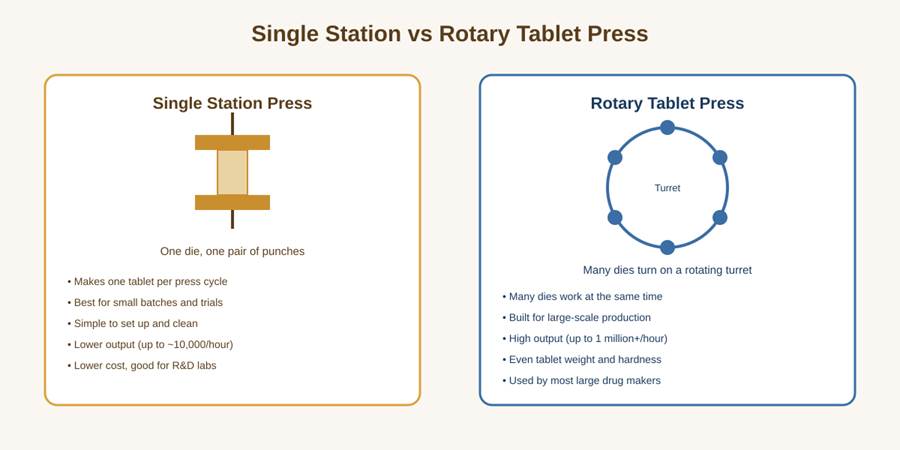
Figure 2: Single station press vs rotary tablet press, side by side
Quick Comparison of Machine Types
| Type | Best For | Typical Output |
| Single Station | R&D, small batches, testing | Up to about 10,000 tablets/hour |
| Rotary | Full-scale production | Up to about 1 million tablets/hour |
| Double Rotary | Very large factories | Higher than a single rotary press |
| Bilayer / Multi-Layer | Layered or combo medicines | Varies by number of layers |
Main Parts of a Table Compression Machine
Knowing the parts of the machine helps you understand how it works and makes it much easier to spot problems early. Here is a look at the key parts, along with what each one does.
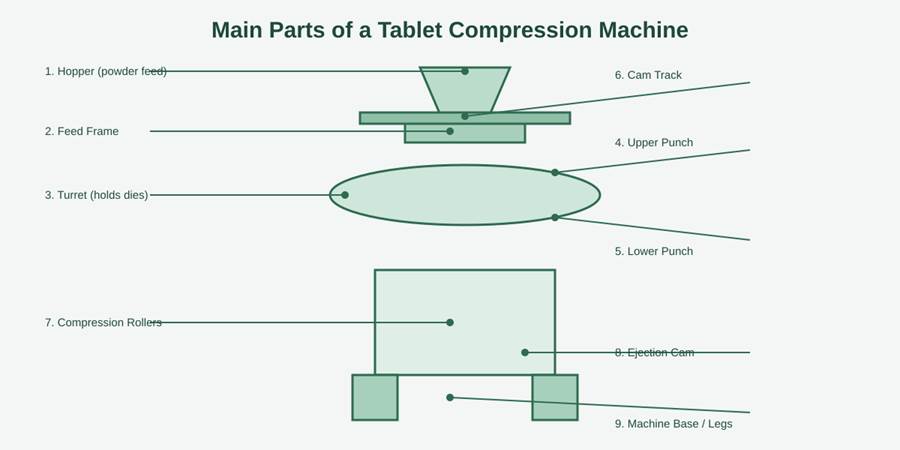
Figure 3: Labeled parts of a typical rotary tablet press
| Part | What It Does |
| Hopper | Holds the powder or granules and feeds them down by gravity |
| Feed Frame | Spreads the powder evenly across the dies as they pass under it |
| Die | A hole of a set shape that gives the tablet its outer form |
| Upper Punch | Presses down into the die to compress the powder |
| Lower Punch | Supports the powder during compression, then pushes the tablet out |
| Turret | The rotating plate that holds all the dies and punches together |
| Cam Track | A curved rail that guides punch movement without a motor for each punch |
| Compression Roller | Applies the final, strong force that shapes the tablet |
| Ejection Cam | Lifts the lower punch at the end to push the finished tablet out |
| Dust Extractor | Pulls away loose powder dust to keep the area clean and safe |
Each of these parts must work well together. A worn punch, for example, can throw off the weight of every tablet made after it, so operators check them often.
Key Applications of Table Compression Machines
While most people think of medicine when they hear tablet press, this machine is used far beyond pharmacies. Here are the main industries that rely on it.
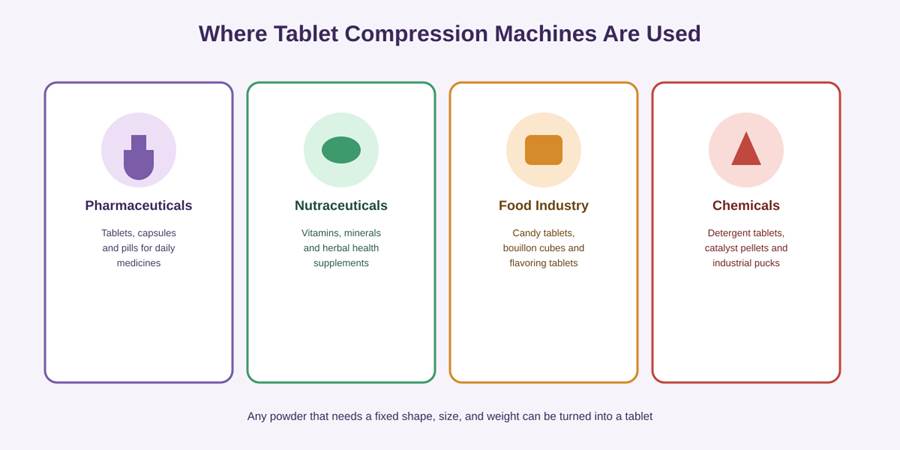
Figure 4: Four industries that rely on tablet compression machines
Pharmaceutical Industry
This is the biggest user by far. Painkillers, antibiotics, vitamins, and thousands of other drugs are made as tablets because they are easy to store, carry, and take in the right dose.
Nutraceutical and Supplement Industry
Vitamin tablets, mineral supplements, and herbal pills are all made the same way as medicine tablets, just with different raw material.
Food Industry
Some food products, like mint candies, bouillon cubes, and effervescent drink tablets, are shaped using the same basic compression method.
Chemical Industry
Detergent tablets, water treatment tablets, and even some catalyst pellets used in factories are pressed using the same working principle. These tablets often need to dissolve at a set speed, which means the compression force must be tuned carefully during production.
Animal Health and Veterinary Products
Tablets are not just for people. Pet medicine, livestock supplements, and animal vitamins are also made using tablet presses, often on the same type of machine used for human medicine, just with different formulas.
Quality Control Tests for Compressed Tablets
Making a tablet is only half the job. Every batch must also pass a set of quality checks before it can be sold or shipped. These tests make sure that each tablet will work the way it is supposed to once it reaches the customer.
Weight Variation Test
A small sample of tablets is weighed, and the results are compared against the target weight. If too many tablets fall outside the allowed range, something in the machine, often the feed frame or die fill, needs adjustment.
Hardness Test
This test checks how much force a tablet can take before it breaks. A tablet that is too soft may crumble during shipping, while one that is too hard may not dissolve properly in the body.
Friability Test
Friability measures how much a tablet wears down when tumbled around, similar to what happens during packing and shipping. Tablets are placed in a small spinning drum, and the weight loss after tumbling is checked. A low weight loss means a strong, durable tablet.
Disintegration Test
This test checks how long it takes for a tablet to break apart in a liquid similar to stomach fluid. This helps predict how fast the medicine inside will start to release once it is swallowed.
Thickness and Diameter Check
Tablets are also measured for thickness and width to make sure they match the design. This matters for packaging, since tablets that are too thick or too wide may not fit properly into bottles, blister packs, or bottling machines.
Benefits of Using a Table Compression Machine
Companies invest in this equipment because the benefits go well beyond just speed. Here are some of the biggest advantages a well chosen machine can bring to a production line.
- Produces tablets with the same weight, size, and shape every time
- Can make a very large number of tablets in a short time
- Cuts down on manual labor and human error
- Works with many types of powders and granules
- Supports different tablet shapes, from round to oval to custom logos
- Easy to scale up from small trial runs to full factory production
How to Choose the Right Table Compression Machine
Buying the wrong machine can waste both money and time, so it helps to think through a few key points first.
1. Production Volume
If you only need small test batches, a single station press may be enough. If you plan to run a full production line, a rotary press is almost always the better fit.
2. Tablet Design
Think about the shape, size, and number of layers you need. Some machines are built only for simple round tablets, while others can handle complex shapes or multiple layers.
3. Budget
Rotary presses cost more upfront but often save money over time because they make more tablets per hour. Weigh the starting cost against your expected output.
4. Regulatory Standards
If you are making medicine, your machine and process must follow strict rules set by health authorities. In the United States, manufacturers often follow guidance from the U.S. Food and Drug Administration, which sets standards for drug manufacturing quality.
5. After-Sales Support
Even the best machine will need spare parts and service over time. Choose a supplier that offers good training, fast spare parts, and clear manuals.
6. Good Manufacturing Practice (GMP) Compliance
If the tablets are for medicine or food, the machine itself needs to meet certain design rules. This includes smooth surfaces that are easy to clean, no hidden gaps where powder can get stuck, and parts that will not shed metal or rust into the product. A machine built to GMP standards will cost more, but it saves trouble later during factory inspections.
7. Space and Utility Requirements
Larger rotary machines need more floor space, stronger electrical power, and sometimes dust control systems built into the room. Before buying, it helps to check that your factory floor, power supply, and air handling system can support the machine you want.
Maintenance Tips for a Table Compression Machine
Good maintenance keeps tablets consistent and helps the machine last much longer. Maintenance can be split into three simple time frames: daily, weekly, and monthly.
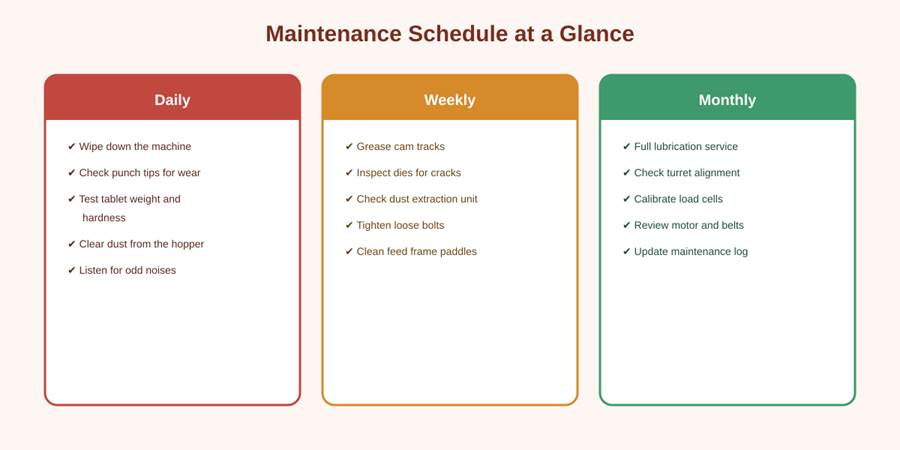
Figure 5: A simple daily, weekly, and monthly maintenance schedule
Daily Checks
- Wipe down the outer surfaces to remove dust
- Check a few tablets for weight and hardness
- Look at punch tips for early signs of wear
- Listen for any strange sounds while running
Weekly Checks
- Grease the cam tracks and moving parts
- Inspect the dies for small cracks or chips
- Clean the feed frame and hopper thoroughly
- Check that all bolts and guards are tight
Monthly Checks
- Do a full lubrication service on the machine
- Check that the turret is properly aligned
- Calibrate the weight and pressure sensors
- Review the motor, belts, and electrical parts
Keeping a simple logbook of these checks makes it much easier to spot patterns, like a part that wears out faster than expected, before it causes a bigger problem.
Common Problems and Simple Fixes
Even a well kept machine can run into issues. Here are some of the most common problems operators face, along with quick fixes.
| Problem | Likely Cause | Simple Fix |
| Tablets are too soft | Not enough compression force | Raise the compression pressure slowly |
| Tablets cap or split | Trapped air in the powder | Slow down the machine speed |
| Weight keeps changing | Uneven powder flow | Check the hopper and feed frame |
| Tablets stick to punches | Too much moisture or poor lubrication | Dry the granules and add lubricant |
| Loud or unusual noise | Worn cam track or loose part | Stop the machine and inspect at once |
Safety Tips for Operators
- Always turn off and lock the machine before cleaning or repairs
- Wear the right protective gear, including gloves and eye protection
- Never place hands near the punches while the machine is running
- Keep long hair and loose clothing away from moving parts
- Follow the machine guarding rules set by your local safety authority
For general workplace machine safety rules, the Occupational Safety and Health Administration (OSHA) offers clear, free guidance that applies to tablet presses and similar equipment.
Future Trends in Table Compression Machines (2026 and Beyond)
Tablet press technology keeps moving forward. A few trends stand out heading into 2026 and the years after.
Smarter Sensors and Automation
New machines come with sensors that check tablet weight and hardness in real time, so bad tablets get caught the moment they are made, not hours later.
Continuous Manufacturing
Instead of making tablets in separate batches, some factories now run a nonstop process from raw powder to finished tablet, which can save time and reduce waste.
Better Data Tracking
Modern presses often connect to factory computer systems, so every batch has a full digital record. This helps companies meet strict industry rules more easily. Groups such as the International Society for Pharmaceutical Engineering (ISPE) share updated guidance on these newer manufacturing methods.
Energy Use and Environmental Considerations
Modern tablet presses are built to use less power than older models, thanks to better motors and smarter control systems that slow down or pause when the machine is idle. Many newer designs also include enclosed dust collection systems, which not only keep the work area clean but also stop fine powder from escaping into the air.
Choosing a machine with efficient dust control and power management is not just good for the environment. It also lowers cleanup costs, reduces waste of raw material, and helps a factory meet local environmental rules, which matters more each year as regulations continue to tighten.
Frequently Asked Questions (FAQ)
What is another name for a table compression machine?
It is most often called a tablet press or tablet compression machine. Both names refer to the same type of equipment.
How much force does a tablet press use?
This depends on the tablet size and the type of powder, but many machines apply anywhere from a few hundred kilograms to several tons of force per tablet.
Can one machine make different tablet shapes?
Yes. You can change the shape by swapping the punches and dies for a different set, without buying a whole new machine.
How long does a tablet press usually last?
With good care and regular maintenance, a well built machine can run well for fifteen to twenty years or even longer.
What causes tablets to crack or split?
This is often caused by trapped air in the powder or by running the machine too fast for the material being used. Slowing down the speed usually helps.
Is a rotary press better than a single station press?
Neither is better in every case. A rotary press is better for large scale output, while a single station press is better for small batches, testing, and lower cost.
Where can I learn more about tablet manufacturing standards?
A good general starting point is the Wikipedia entry on tablet presses, which gives a clear overview of the machine’s history and design.
Do small businesses really need a rotary press?
Not always. Many small businesses start with a single station press to test their product and grow into a rotary press once demand increases. There is no need to buy a large machine before you actually need the output.
What is the difference between a tablet press and a pill press?
These terms are often used to mean the same thing. Both describe a machine that presses powder into a solid, though pill press is sometimes used more casually outside of formal industry settings.
Final Thoughts
A table compression machine, better known as a tablet press, plays a quiet but huge role in daily life. From the vitamin you take in the morning to the medicine that helps you heal, this machine is often the last step before the product reaches your hands.
Understanding how it works, what parts it has, and how to keep it running well is useful whether you run a small lab or manage a large factory line. With the right care, a good tablet press can serve a business well for many years to come.
Whether you are just starting to research this equipment or you are ready to buy your first machine, take time to match the type, size, and features to your real production needs. A machine that fits your business today, and can grow with you tomorrow, will always be a better investment than the biggest or fastest option on the market.
Similar Post
- Pharma QA vs QC Difference
- Top 100 Pharma QA Interview Questions and Answers
- How to Introduce Yourself in Job Interviews
- M Pharm Career Options: A Complete Guide to Jobs After Master of Pharmacy
- Gas Chromatography: Principles, Working, Components, Applications, Advantages & Limitations
- UV Spectroscopy: Principle, Instrumentation, Working, Applications, Advantages & Limitations (Complete Guide)
- Fluid Bed Dryer (FBD): Working Principle, Diagram, Operation, Advantages, and Disadvantages