A simple, plain-language guide to how a fluid bed dryer works, its main parts, step-by-step operation, and where it is used.
If you have ever worked in a pharmaceutical plant, a food processing unit, or a chemical factory, you have probably seen a tall, round machine with a bag-filled top standing near the granulation area. That machine is called a Fluid Bed Dryer, and most people just call it an FBD. It is one of the most common drying machines used today, and there is a good reason for that. It dries material fast, it dries it evenly, and it does not need a person standing over it the whole time.
In this article, we will go through what a fluid bed dryer is, how it actually works inside, its main parts, the step-by-step process of running one, its types, and where it is used in real industries. We will also look at its advantages and disadvantages so you get a full and honest picture, not just a sales pitch. By the end, you should be able to explain how an FBD works to anyone, even someone who has never seen one before.
Drying might sound like a small, simple step compared to mixing or granulation, but it is actually one of the most important stages in making a tablet, a food product, or a chemical powder. Get the drying step wrong, and you can end up with granules that are too hard, too soft, or full of uneven moisture pockets that cause problems later in the process. That is exactly why so many plants have moved away from old-style tray dryers and switched to the fluid bed dryer instead.
What Is a Fluid Bed Dryer?
A fluid bed dryer is a machine that dries wet powder, granules, or small particles by blowing hot air through them from the bottom. When the air passes through the material at the right speed, the particles start to float and move around, almost like water boiling in a pot. This floating and mixing action is called fluidization, and this is where the machine gets its name. You can read more about the general science behind this process on the Wikipedia page on fluidized beds.
Because every particle is surrounded by hot air on all sides, drying happens quickly and evenly. This is very different from older drying methods, like tray dryers, where only the top layer of material gets direct contact with hot air and the rest dries much slower. Fluid bed dryers are used a lot in the pharmaceutical industry to dry wet granules before they are turned into tablets, but you will also find them in food processing, fertilizer plants, and chemical manufacturing.
The idea of fluidization is not new. It has been studied and used in industry since the early part of the twentieth century, first in the coal and oil industry for chemical reactions, and later adapted for drying, coating, and mixing in the 1950s and 1960s. Pharmaceutical companies were quick to adopt it because tablets need very consistent granule quality, and an FBD gave them a way to dry large batches without the long wait times of a tray dryer sitting in a hot room.
Why Fluidization Works So Well for Drying
Think about drying a wet towel. If you leave it folded up in a ball, the middle stays wet for a long time because air cannot reach it. But if you hang it up loose, air moves around every part of the fabric and it dries much faster. A fluid bed dryer does something similar, except instead of hanging the material up, it uses moving air to keep every particle separated and exposed. This is the whole reason fluidized bed drying is faster and more even than most other drying methods on the market.
Main Parts of a Fluid Bed Dryer
Before we talk about how the machine works, it helps to know its main parts. The table below lists the major components and what each one does.
| Part | What It Does |
| Product Bowl / Container | Holds the wet material during drying. It is usually made of stainless steel and has a mesh bottom. |
| Air Distributor Plate | Sits at the bottom of the bowl and spreads the incoming air evenly across the material. |
| Blower (Fan) | Pulls in fresh air and pushes it through the heater and up into the product bowl. |
| Air Heater | Heats the incoming air to the temperature needed for drying, using steam, electricity, or gas. |
| Filter Bags (Finger Bags) | Trap fine powder particles so they do not escape with the exhaust air. |
| Bag Shaking Mechanism | Shakes the filter bags at intervals so trapped powder falls back into the bowl. |
| Exhaust Blower / Duct | Removes the moist air out of the system after it has passed through the material. |
| Control Panel | Lets the operator set air temperature, air flow, and drying time, and shows live readings. |
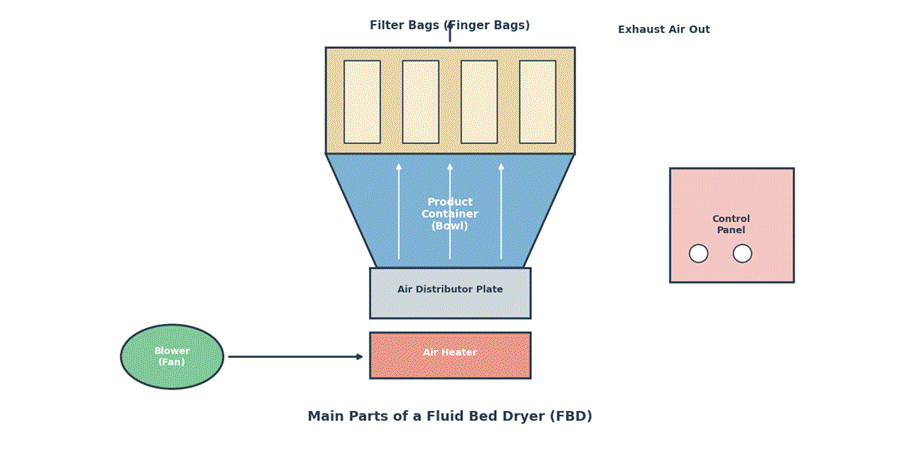
Figure 1: Main parts of a fluid bed dryer, from the blower and heater at the bottom to the filter bags at the top.
A Closer Look at the Key Parts
Product Bowl
The bowl is where the actual drying happens. It has a mesh or perforated bottom that lets air pass through while holding the solid material in place. Bowls come in different sizes, from small lab-scale units that hold a few kilograms to large production bowls that can handle several hundred kilograms in one batch.
Air Distributor Plate
This plate sits just above the plenum chamber and is full of small holes or slots. Its job is to spread the incoming air evenly across the whole bottom of the bowl. If this plate gets clogged or damaged, some parts of the bed will fluidize properly while others stay dry and heavy, which leads to uneven drying.
Filter Bags
As hot air rises through the bed, it naturally carries some very fine powder particles upward. The filter bags catch these fine particles before the air leaves the machine, so the operator does not lose product and the surrounding room does not fill with dust. Most machines shake these bags automatically every few minutes so trapped powder falls back down into the bowl.
Control Panel
Modern fluid bed dryers come with a digital control panel, sometimes with a full touch screen, where the operator sets the inlet air temperature, air flow rate, and total run time. Many panels also log this data automatically, which is useful for quality checks and audits later on.
Working Principle of a Fluid Bed Dryer
The working principle of an FBD is easier to picture in three stages, based on how fast the air is moving through the bed of material.
Stage 1: Static Bed
When there is no air flow, or the air flow is very slow, the wet particles just sit at the bottom of the bowl, piled on top of each other. Nothing is moving. This is how the material looks right after it is loaded into the machine.
Stage 2: Fluidized Bed
Once the blower reaches the correct speed, the air pushes up through the gaps between particles with enough force to lift them slightly. The particles start to separate, float, and tumble around, similar to a pot of water just starting to boil. At this point, every single particle is in contact with hot air, which is exactly why drying becomes so fast and so even. This is the stage the machine is designed to run in.
Stage 3: Blown Out Bed
If the air speed goes too high, the particles get pushed up too far and can escape into the exhaust system, or get thrown around too roughly. This wastes energy, causes excess dust, and can damage delicate granules. This is why air speed control is one of the most important settings on the machine.
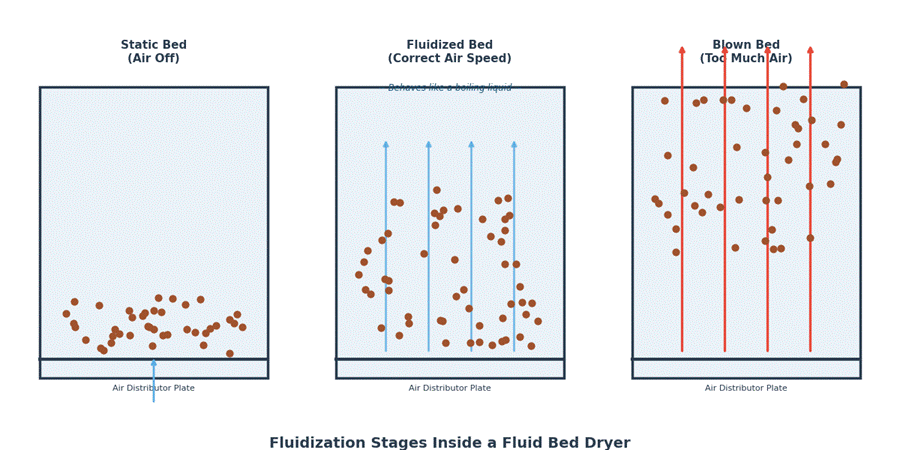
Figure 2: The three stages of fluidization inside a fluid bed dryer, from a still bed to a properly fluidized bed.
In short, the working principle depends on getting the air speed just right. Too slow, and the material barely dries. Too fast, and you waste air, energy, and possibly damage the product. The sweet spot in the middle is where a fluid bed dryer does its best work.
How a Fluid Bed Dryer Works: Step-by-Step Operation
Now that you know the basic principle, let’s walk through what actually happens when someone runs a fluid bed dryer on the shop floor.
Step 1: Loading the Wet Material
The wet granules or powder, usually coming straight from a wet granulation step, are loaded into the product bowl. The bowl is then locked into place at the bottom of the machine.
Step 2: Starting the Air Flow
The operator turns on the blower from the control panel. Fresh air is pulled in through an inlet filter, and the heater starts warming it up to the set temperature, often somewhere between 50°C and 80°C depending on the material being dried.
Step 3: Fluidization Begins
As air flow increases, the wet particles start to lift and mix. The operator watches the pressure and temperature readings on the control panel to make sure the bed has reached a proper, stable fluidized state.
Step 4: Drying Takes Place
Hot air keeps moving through the tumbling particles, carrying away moisture as water vapor. This stage can take anywhere from 20 minutes to over an hour, depending on the batch size, the starting moisture level, and the target moisture that needs to be reached.
Step 5: Filtering the Exhaust Air
As the moist air leaves the top of the bowl, it passes through the filter bags. These bags catch any fine powder that got carried up with the air stream. Every so often, the bags shake automatically, dropping the trapped powder back down into the bowl so nothing is wasted.
Step 6: Checking Moisture and Unloading
Once the material reaches the target moisture level, usually checked with a small sample and a moisture analyzer, the blower and heater are switched off. The dried product is then unloaded from the bottom of the bowl, ready for the next step in production, such as tablet compression or packing.
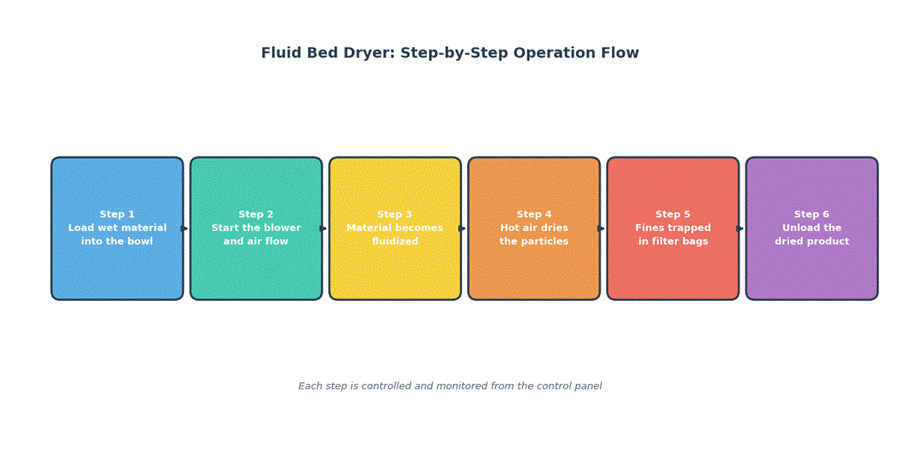
Figure 3: The six main steps in operating a fluid bed dryer, from loading wet material to unloading the dried product.
Factors That Affect Drying Time in an FBD
Two batches of the same material can take very different amounts of time to dry, and it usually comes down to one of these factors.
- Starting moisture content – wetter material naturally needs more time.
- Particle size – smaller particles dry faster because they have more surface area.
- Inlet air temperature – higher temperature speeds up drying, within safe limits.
- Air flow rate – more air movement usually means faster moisture removal.
- Batch size – larger batches take longer to reach the same moisture target.
- Ambient humidity – drying is slower on humid days if the incoming air is not dehumidified.
A good operator does not just set the machine and walk away. They keep an eye on these factors and adjust settings if the drying is taking longer or shorter than expected for that particular batch.
Safety Precautions When Operating an FBD
Fluid bed dryers are generally safe machines, but like any equipment that uses heat, moving air, and fine powder, a few precautions go a long way.
- Always check that the bowl is locked in place correctly before starting the blower.
- Never open the bowl or filter housing while the machine is running.
- Ground the machine properly to reduce the risk of static build-up with fine powders.
- Wear the right personal protective equipment, including a dust mask when handling powders.
- Follow lockout-tagout procedures before any cleaning or maintenance work.
- Keep flammable or explosive dust away from open flames or sparking equipment nearby.
How to Choose the Right Fluid Bed Dryer for Your Plant
If you are buying an FBD for the first time, a few questions will help narrow down the right choice. How large are your typical batch sizes? Is your material sticky, fine, or free-flowing? Do you need a batch process or a continuous one? Will the machine need to meet strict pharmaceutical GMP standards, or is it for a less regulated industry like fertilizers? Answering these questions first will save you from buying a machine that is either too small for your production needs or too complex and costly for what you actually need.
Types of Fluid Bed Dryers
Not every fluid bed dryer looks or works the same way. Depending on the industry and the type of material, manufacturers choose from a few different designs.
| Type | Best Suited For |
| Batch Fluid Bed Dryer | Small to medium batches, very common in pharmaceutical granulation. |
| Continuous Fluid Bed Dryer | Large volumes that need to be dried non-stop, common in food and fertilizer plants. |
| Vibrating Fluid Bed Dryer | Heavier or slightly sticky materials that need extra help moving through the bed. |
| Centrifugal Fluid Bed Dryer | Coating and drying pellets or beads quickly and evenly using a spinning motion. |
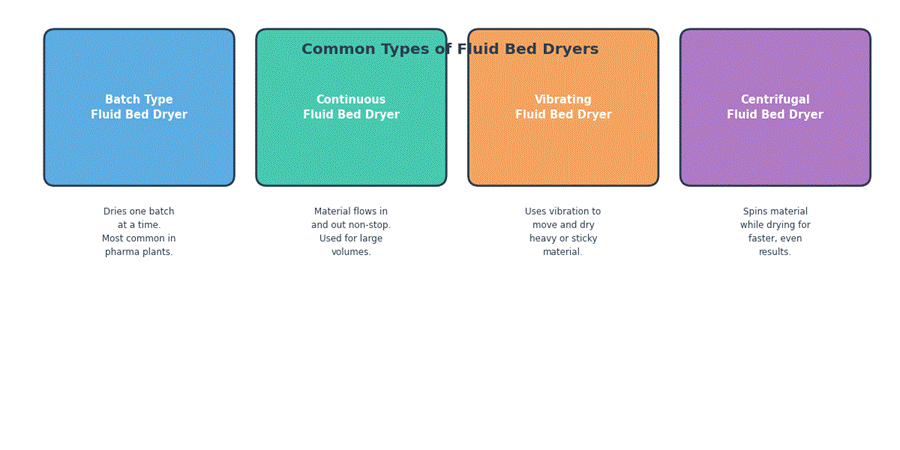
Figure 4: Four common types of fluid bed dryers used across different industries.
Batch Fluid Bed Dryer
This is the design most people picture when they hear the word FBD. One batch of wet material goes in, gets dried, and comes out before the next batch starts. It is the standard choice in pharmaceutical plants because each batch can be tracked and recorded separately, which regulators expect.
Continuous Fluid Bed Dryer
Instead of stopping and starting, material is fed in at one end and dried product comes out the other end in a steady stream. This design suits plants that need to process large volumes around the clock, such as fertilizer or grain drying operations.
Vibrating Fluid Bed Dryer
Adding a gentle vibration to the bed helps move heavier or slightly sticky particles that would otherwise sit still even with air flowing through them. This makes the vibrating design useful for materials that do not fluidize easily on their own.
Centrifugal Fluid Bed Dryer
This type spins the product in a circular motion while hot air moves through it, giving very fast and even drying. It is often chosen when a plant also wants to apply a coating to pellets or beads right after drying.
Advantages of Fluid Bed Dryer
Here are the main reasons why so many industries prefer FBDs over older drying machines:
- Drying is fast because hot air touches every particle, not just the top layer.
- The final product has even moisture content throughout the batch.
- Less manual handling is needed, which lowers labor cost and contamination risk.
- Gentle enough for delicate granules, so there is less breakage compared to some other dryers.
- Loading and unloading is quick since the bowl can be removed as one unit.
- Good energy efficiency once the machine is running, especially for large batches.
- Works well for a wide range of materials, from fine powders to small granules.
- Easy to clean, which matters a lot in pharmaceutical and food production.
Disadvantages of Fluid Bed Dryer
No machine is perfect, and an FBD has its own set of limitations:
- The starting cost of the machine and its installation can be high.
- Not suitable for very sticky, wet, or heat-sensitive materials.
- Filter bags need regular cleaning and occasional replacement.
- Fine, light powders can create dust or static electricity problems.
- Running the machine correctly needs a trained operator.
- It can be noisy while the blower and fan are running at full speed.
- Uneven fluidization can happen if the material has very different particle sizes.
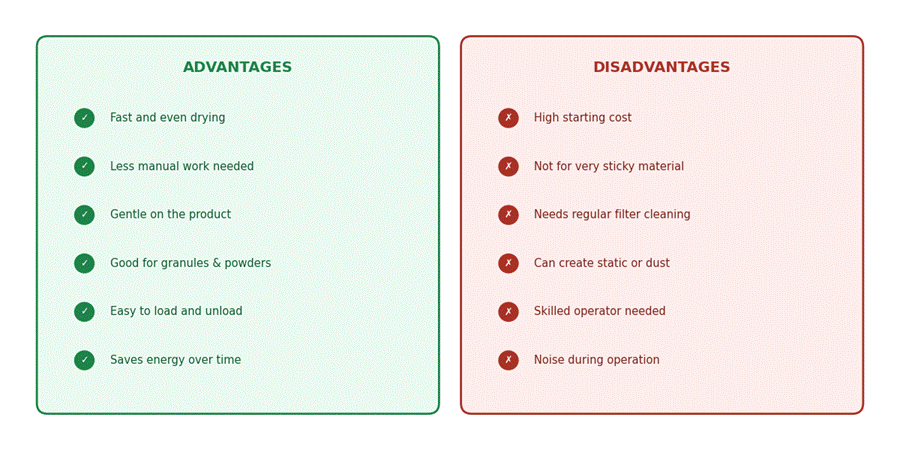
Figure 5: A quick side-by-side look at the advantages and disadvantages of a fluid bed dryer.
Applications of Fluid Bed Dryer
Fluid bed dryers show up in more industries than most people realize:
- Pharmaceutical industry, for drying wet granules before tablet compression.
- Food industry, for drying fruits, vegetables, cereals, and instant food products.
- Chemical industry, for drying dyes, pigments, and resins.
- Fertilizer industry, for drying granular fertilizers before packing.
- Plastic industry, for drying plastic pellets before molding.
In food processing, fluid bed dryers are behind many everyday products, from instant coffee granules to dried peas and breakfast cereal. In fertilizer plants, they dry granulated fertilizer just enough so it does not clump together in the bag during storage and transport. Plastic manufacturers use them to remove surface moisture from pellets before those pellets are melted and molded into finished parts, since even a small amount of leftover moisture can ruin the final product.
The pharmaceutical use case is especially well documented. Regulatory bodies such as the U.S. Food and Drug Administration and industry groups like the International Society for Pharmaceutical Engineering (ISPE) publish guidance on how drying steps like this should be validated and controlled in a GMP-regulated plant.
Fluid Bed Dryer vs Tray Dryer
People often compare the FBD to the older tray dryer since both are common in granulation areas. Here is a quick side-by-side look.
| Point of Comparison | Fluid Bed Dryer | Tray Dryer |
| Drying Time | Short, usually 20–60 minutes | Long, can take several hours |
| Moisture Uniformity | Very even throughout the batch | Top layers dry faster than bottom |
| Labor Needed | Low, mostly automatic | Higher, needs tray handling |
| Space Required | Compact footprint | Needs more floor and rack space |
| Best For | Granules and free-flowing powders | Sticky or heat-sensitive material |
Important Operating Parameters to Watch
Running an FBD well is really about keeping a few key numbers in the right range. Here are the ones operators check most often.
| Parameter | Why It Matters |
| Inlet Air Temperature | Too low slows drying, too high can damage heat-sensitive material. |
| Air Flow Rate (Fluidization Air Volume) | Controls whether the bed is under-fluidized, well-fluidized, or blown out. |
| Bag Shaking Interval | Keeps filter bags clear so airflow does not drop during the run. |
| Product Load (Batch Size) | Too much material in the bowl can cause poor, uneven fluidization. |
| Inlet Air Humidity | Humid incoming air slows down the drying rate. |
| End-Point Moisture Content (LOD) | Tells the operator exactly when to stop the drying cycle. |
Common Problems in Fluid Bed Dryer and How to Fix Them
| Problem | Likely Cause | Simple Fix |
| Uneven drying | Air distributor plate clogged or damaged | Clean or inspect the distributor plate |
| Too much dust in filter area | Air speed too high, or bags leaking | Lower air speed, check bag seals |
| Poor fluidization | Batch size too large or particles too fine | Reduce load, adjust air flow |
| Product sticking together | Inlet temperature too high or too fast | Lower temperature, dry more slowly |
| Long drying time | Humid inlet air or clogged filters | Check air source, clean filter bags |
Maintenance Tips for Longer Machine Life
- Clean the filter bags after every batch, or as per your SOP.
- Check the air distributor plate for blockages or damage regularly.
- Inspect gaskets and seals to avoid air leaks that reduce efficiency.
- Calibrate the temperature sensors on a set schedule.
- Keep a maintenance log so recurring issues are easy to spot.
For readers who want to go deeper into the engineering side of drying and heat transfer, the Wikipedia article on drying and research papers indexed on PubMed Central are both useful starting points.
Frequently Asked Questions (FAQ)
What is the full form of FBD?
FBD stands for Fluid Bed Dryer. It is also sometimes written as Fluidized Bed Dryer.
What is the working principle of a fluid bed dryer?
Hot air is blown from the bottom of the machine through a bed of wet particles. When the air speed is right, the particles lift and mix in the air, and this constant contact with hot air dries them quickly and evenly.
What is the difference between FBD and RMG?
An RMG, or Rapid Mixer Granulator, is used to mix and granulate powders into wet granules. An FBD is used right after, to dry those wet granules. They are two separate machines used one after the other in the granulation process.
How long does an FBD drying cycle take?
It depends on the batch size, starting moisture, and target moisture, but most cycles run somewhere between 20 minutes and 1.5 hours.
Why do filter bags shake during operation?
Fine powder particles get carried up with the air and stick to the filter bags over time. Shaking knocks this powder loose so it falls back into the bowl instead of blocking the bags and reducing air flow.
Is a fluid bed dryer used only in the pharmaceutical industry?
No. While it is very common in pharma, FBDs are also used in food processing, chemicals, fertilizers, and plastics manufacturing.
What happens if the air speed is too high in an FBD?
The material can get blown up too far, causing product loss into the exhaust system, extra dust, and wasted energy. This is why air speed is carefully controlled during a run.
Can a fluid bed dryer be used for coating tablets or pellets?
Yes. Many fluid bed dryers can be fitted with a spray gun and used for coating as well as drying, especially in the centrifugal and Wurster-style designs. This lets a plant granulate, dry, and coat using variations of the same basic technology.
How do I know when the drying process is complete?
Most plants use a moisture analyzer to test a small sample partway through and at the end of the cycle. Once the reading matches the target moisture set in the batch record, the drying process is considered complete.
Conclusion
A fluid bed dryer is a simple idea done well: blow hot air through wet material until every particle is dried evenly, without the long wait times and uneven results you get from older drying methods. Once you understand the three stages of fluidization and the basic parts of the machine, the rest of the process is easy to follow. Whether you work in a pharmaceutical plant, a food factory, or a chemical unit, chances are an FBD is either already part of your process or worth considering for it.
The next time you walk past one of these machines on a production floor, you will know exactly what is happening inside that tall steel body. Wet granules are tumbling in a stream of hot air, drying evenly from every side, on their way to becoming the finished product that eventually reaches store shelves or pharmacy counters.
Similar Post
- Pharma QA vs QC Difference
- Top 100 Pharma QA Interview Questions and Answers
- How to Introduce Yourself in Job Interviews
- M Pharm Career Options: A Complete Guide to Jobs After Master of Pharmacy
- Gas Chromatography: Principles, Working, Components, Applications, Advantages & Limitations
- UV Spectroscopy: Principle, Instrumentation, Working, Applications, Advantages & Limitations (Complete Guide)