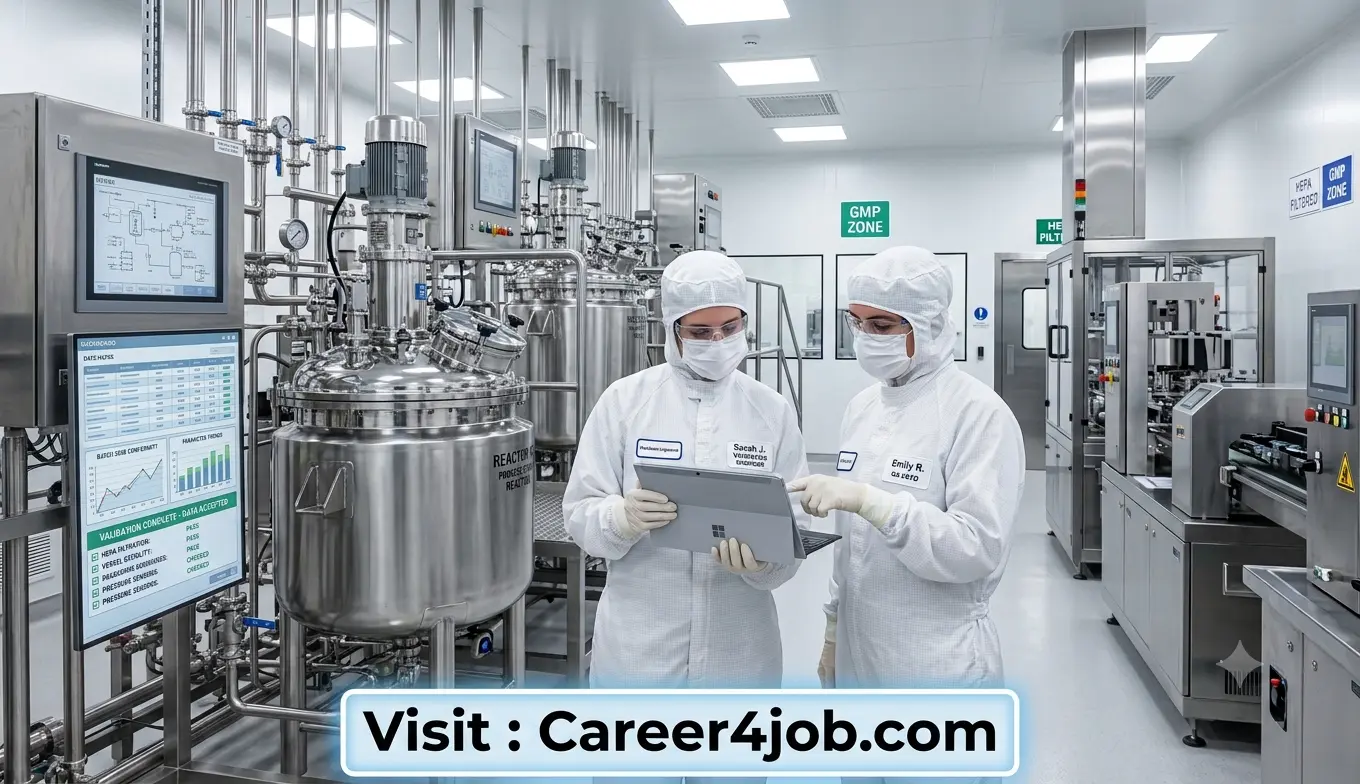
How artificial intelligence is helping drug makers clean smarter, pass audits faster, and keep patients safe
Cleaning validation is one of the most repetitive but important jobs in a pharmaceutical plant. Every tank, pipe, and tool that touches a drug product must be cleaned and checked before it is used again. For decades, this work has been done mostly by hand, with paper logs, manual swab tests, and long lab waits. That is now starting to change. Artificial intelligence, or AI, is stepping into cleaning validation and helping teams work faster, catch problems sooner, and build stronger proof that their equipment is truly clean.
In this article, we will look at what cleaning validation is, why it is hard today, how AI is changing it, and what the future may look like. We will keep the language simple so anyone in the industry, not just data scientists, can follow along.
What Is Cleaning Validation?
Cleaning validation is the process of proving that a piece of equipment has been cleaned well enough to be safe for the next batch of product. Drug makers cannot just assume a tank is clean after washing it. They have to test it and show, with real data, that leftover product, cleaning chemicals, and microbes are below a safe limit.
This usually involves three things:
- Swabbing or rinsing parts of the equipment and sending samples to a lab
- Testing those samples for leftover active ingredient, cleaning agent, and bacteria
- Writing up the results and comparing them against approved limits
Regulators such as the U.S. Food and Drug Administration (FDA) and the European Medicines Agency (EMA) expect drug companies to keep clear records of this work. If the paperwork is missing or the results are poor, a plant can face a warning letter, a delayed product launch, or in serious cases, a shutdown.
Why Cleaning Validation Is Hard Today
Even though the goal sounds simple, in practice cleaning validation is slow and full of small risks. Here are the main pain points that plants deal with every day:
- Manual testing takes time. Swab results can take hours or days to come back from the lab, which holds up production.
- Human checks can miss things. A tired or rushed operator may not spot a small residue spot during a visual check.
- Paper and spreadsheet records are easy to get wrong. Missing signatures or typos can cause audit findings.
- Every product and piece of equipment is a little different. Teams often repeat similar studies again and again instead of reusing what they already know.
- It is hard to know why a cleaning step failed. Was it the temperature, the time, the chemical strength, or the operator? Finding the real cause can take days of digging through records.
These problems do not just slow things down. They also add cost. Every hour a tank sits idle waiting for cleaning results is an hour it is not making product.
How AI Is Changing Cleaning Validation
AI does not replace the science behind cleaning validation. It still needs good chemistry, good engineering, and trained people. What AI does is take the huge pile of data a plant already has, such as batch records, swab results, temperature logs, and equipment history, and turn it into useful, fast answers.
Instead of treating every cleaning study as a fresh problem, AI tools look for patterns across hundreds or thousands of past cleaning runs. They can then predict which spots on a piece of equipment are hardest to clean, flag a cleaning record that looks unusual before it becomes a bigger problem, and suggest where to focus testing so teams are not wasting time on low-risk areas.
Below is a simple table showing where AI is already being used in cleaning validation today.
| AI Application | What It Does | Why It Helps |
| Predictive residue modelling | Uses past batch and cleaning data to guess where residue is most likely to remain | Helps teams focus swab and rinse testing on the highest-risk spots |
| Computer vision inspection | Cameras and image models check equipment surfaces after cleaning | Spots visible residue faster than a manual visual check, and creates a photo record |
| Smart scheduling | AI looks at production plans and suggests the best cleaning windows | Cuts downtime and avoids rushed or skipped cleaning steps |
| Automated data review | Software scans cleaning records and lab results for errors or missing entries | Reduces the time QA spends checking paperwork by hand |
| Root cause analysis | Machine learning links cleaning failures to likely causes such as time, temperature, or operator | Speeds up investigations and helps stop repeat failures |
| Digital twins of equipment | A virtual model of a tank or line tests cleaning cycles before they run live | Lets teams try new cleaning programs without wasting product or time |
Benefits of AI in Cleaning Validation
Bringing AI into cleaning validation offers real, practical gains. Here are the main benefits plants are reporting:
- Faster release of equipment: Less waiting time between cleaning and the next production run
- Fewer failed cleaning cycles: Better prediction of trouble spots means fewer repeat cleans
- Stronger audit readiness: Digital records with AI checks are cleaner and easier to search than paper files
- Lower cost per batch: Less downtime and fewer repeated tests add up to real savings over a year
- Better use of staff time: QA and validation teams spend less time on paperwork and more time on real problem solving
- Early warning of drift: AI can flag a slow decline in cleaning performance before it turns into a failed batch
A Simple Example of AI in Action
Picture a plant that makes several different tablets on the same production line. In the past, the validation team had to run a full cleaning study almost every time a new product was introduced, even if the equipment and cleaning steps were very similar to ones used before.
With an AI-based system, the team feeds in data from past cleaning studies, including which chemicals were used, how long cleaning took, and what the swab results showed. The AI model then predicts how a new product and cleaning combination is likely to perform, based on similar cases in the past. The validation team still runs a confirmation test, but they know ahead of time where to focus their sampling, and they enter the study with a strong starting point instead of a blank page.
Over time, as more studies are added, the model gets sharper. Teams often find that their number of repeat or failed cleaning runs drops noticeably within the first year of using this kind of tool.
Challenges and Limits of AI in Cleaning Validation
AI is helpful, but it is not magic, and it comes with its own set of challenges that teams need to plan for.
- Data quality matters most. If past cleaning records are messy or incomplete, the AI model will learn the wrong lessons.
- Regulators want to understand how a model makes decisions. A tool that cannot explain its reasoning is harder to defend during an audit.
- Staff need training. People on the floor and in QA need to trust and understand the tool, not just click buttons blindly.
- Upfront cost and time. Setting up an AI system, cleaning the data, and validating the software itself takes real investment before benefits show up.
- AI cannot replace core science. It supports decisions; it does not remove the need for proper chemistry, engineering, and human judgment.
Because of these limits, most experts suggest starting small. A pilot on one production line or one type of equipment lets a team learn what works before rolling AI out across an entire site.
What Regulators Are Saying
Health authorities have started to publish guidance on the use of AI in pharmaceutical manufacturing and quality systems. The core message so far is consistent: AI tools used in a regulated process must still be validated, their data sources must be trustworthy, and there must be a clear way to explain how the tool reached its output. Companies are expected to treat AI-based cleaning tools the same way they treat any other computer system used in a GxP environment, with proper risk assessment, documentation, and change control.
This means AI is not a shortcut around good documentation. It is a new tool that still has to fit inside the same quality framework that has always applied to cleaning validation.
The Future of AI in Cleaning Validation
Looking ahead, a few trends seem likely to grow over the next several years:
- More plants will connect sensors directly to AI systems, so cleaning data is captured automatically instead of typed in by hand
- Digital twins, which are virtual copies of real equipment, will let teams test new cleaning methods on a computer before trying them on the plant floor
- AI tools will move from just predicting problems to suggesting the exact cleaning steps needed for a specific product and equipment combination
- Cleaning validation reports may shift from static documents to live dashboards that update automatically as new data comes in
None of this removes the need for trained validation experts. If anything, those experts become more valuable, because they are the ones who decide whether an AI suggestion makes sense and whether it meets the strict standards drug manufacturing requires.
A Simple Roadmap to Get Started
Many quality and validation leaders ask the same question: where do we even begin? You do not need a huge budget or a team of data scientists to start seeing value from AI in cleaning validation. A simple, staged approach works well for most plants.
- Step 1: Clean up your existing data. Gather cleaning logs, swab results, and batch records into one organized system, even if it is just a well-structured spreadsheet at first
- Step 2: Pick one line or one product family for a pilot. Choose an area with a good history of data and a clear pain point, such as frequent repeat cleans
- Step 3: Work with a vendor or internal team to build a basic prediction model. Start with something simple, like flagging high-risk cleaning records for extra review
- Step 4: Validate the tool properly. Treat it like any other GxP computer system, with documented testing and sign-off before it touches real decisions
- Step 5: Review results after a few months. Look at whether repeat cleans dropped, whether audit findings improved, and whether staff actually trust the output
- Step 6: Expand slowly. Once the pilot proves its value, roll the approach out to more lines or more products, using lessons learned along the way
This staged path keeps risk low while still building real experience with the technology. It also gives regulators and internal auditors confidence that the rollout was thoughtful rather than rushed.
Frequently Asked Questions
Is AI allowed in pharmaceutical cleaning validation?
Yes. There is no rule against using AI. However, any AI tool used in a regulated process must be validated and documented, just like any other computer system used in drug manufacturing.
Does AI replace the need for swab and rinse testing?
No. AI helps predict where problems are likely and speeds up data review, but physical testing is still needed to confirm that equipment is actually clean.
How much data does a plant need before AI is useful?
There is no fixed number, but most successful projects start with at least one to two years of consistent cleaning and batch records. More history usually means better predictions.
Is AI expensive to set up for a small or mid-size drug manufacturer?
Costs vary widely. Many companies start with a small pilot on one line or one product family to test the value before spending on a full site-wide rollout.
Will AI reduce the number of QA and validation jobs?
Most plants report that AI changes the type of work more than it cuts jobs. Staff spend less time on manual paperwork and more time reviewing results, handling exceptions, and improving processes.
What is the biggest risk of using AI in cleaning validation?
The biggest risk is relying on poor quality data. If past records have errors or gaps, the AI model can learn the wrong patterns and give misleading suggestions.
Conclusion
Cleaning validation will always be a core part of making safe medicine. What is changing is how much manual effort it takes to prove that equipment is clean. AI is giving pharmaceutical manufacturers a way to use their own data better, catch problems earlier, and free up skilled staff for higher value work. It is not a replacement for good science or careful people, but as a support tool, it is quickly becoming part of how modern drug plants operate. Companies that start testing these tools now, even on a small scale, are likely to be in a stronger position as the rest of the industry catches up.
References
FDA – Process Validation: General Principles and Practices
FDA – Artificial Intelligence and Machine Learning in Software as a Medical Device
European Medicines Agency – Artificial Intelligence in Medicines Regulation
ISPE – International Society for Pharmaceutical Engineering
Related articles
- Wet granulation process
- Fluid bed drying in pharma manufacturing
- Tablet compression machine
- GMP guidelines for pharmaceutical manufacturing
- Pharmaceutical equipment validation: IQ, OQ, and PQ validation.