How trial data moves from a patient visit to a final, clean database — explained step by step.
Every new medicine or medical device has to pass through clinical trials before it reaches patients. Behind every trial is a huge amount of data — blood test results, patient diaries, doctor notes, and lab reports. Someone has to collect all of this, check it for mistakes, and turn it into a clean file that scientists can trust. That job is called clinical data management, or CDM for short.
In this guide, we will explain what clinical data management is, why it matters, how the process works, who does the job, and what tools they use. We will keep the language simple, so you don’t need a science degree to follow along.
What Is Clinical Data Management?
Clinical data management is the work of collecting, cleaning, and storing data from a clinical trial. The main aim is simple: make sure the data is correct, complete, and safe to use for analysis.
Think of a clinical trial as a giant recipe. Patients are the ingredients, doctors and nurses are the cooks, and the data is the record of exactly what went into the dish and how it turned out. If that record has mistakes, the whole result can’t be trusted. CDM is the quality check that keeps the record honest.
Regulatory bodies such as the U.S. Food and Drug Administration and the European Medicines Agency will not approve a new drug unless the trial data is clean and well managed. This makes CDM one of the most important jobs in the drug development chain.
Why Clinical Data Management Matters
- It protects patient safety by catching errors early, such as a wrong dose entered by mistake.
- It keeps the trial results honest and free from bias.
- It helps a new drug reach the market faster, since clean data means fewer delays during review.
- It saves money, because fixing errors late in a trial costs far more than catching them early.
- It meets legal rules set by health authorities around the world.
The Clinical Data Management Process, Step by Step
CDM is not one single task. It is a chain of steps that all connect together. Here is what that chain looks like in a typical trial.
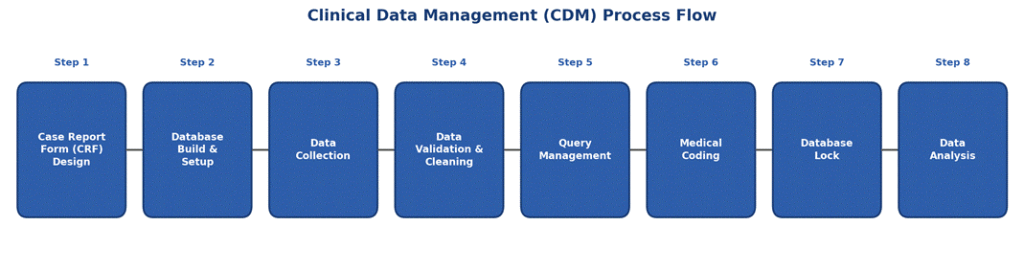
Figure 1: The main steps in a clinical data management workflow
1. Case Report Form (CRF) Design
First, the team designs the form that doctors and nurses will use to record patient data. This can be a paper form, but today it is almost always a digital form called an eCRF.
2. Database Build and Setup
Next, programmers build the study database. They also add checks, called edit checks, that flag data that looks wrong the moment it is entered.
3. Data Collection
As the trial runs, site staff enter patient data into the database. This can include vital signs, lab results, side effects, and patient surveys.
4. Data Validation and Cleaning
The data management team reviews the data closely. They look for missing values, values that don’t make sense, and answers that don’t match each other.
5. Query Management
When something looks wrong, the team sends a query back to the site, asking them to check or fix it. This back-and-forth continues until every question is closed.
6. Medical Coding
Terms like drug names and side effects are coded using standard dictionaries, such as MedDRA for medical terms and WHODrug for medicines. This makes data easy to compare across the whole study.
7. Database Lock
Once every check is done and every query is closed, the database is locked. After this point, no one can change the data.
8. Data Analysis
The locked, clean data is handed to biostatisticians, who run the analysis and help write the final study report.
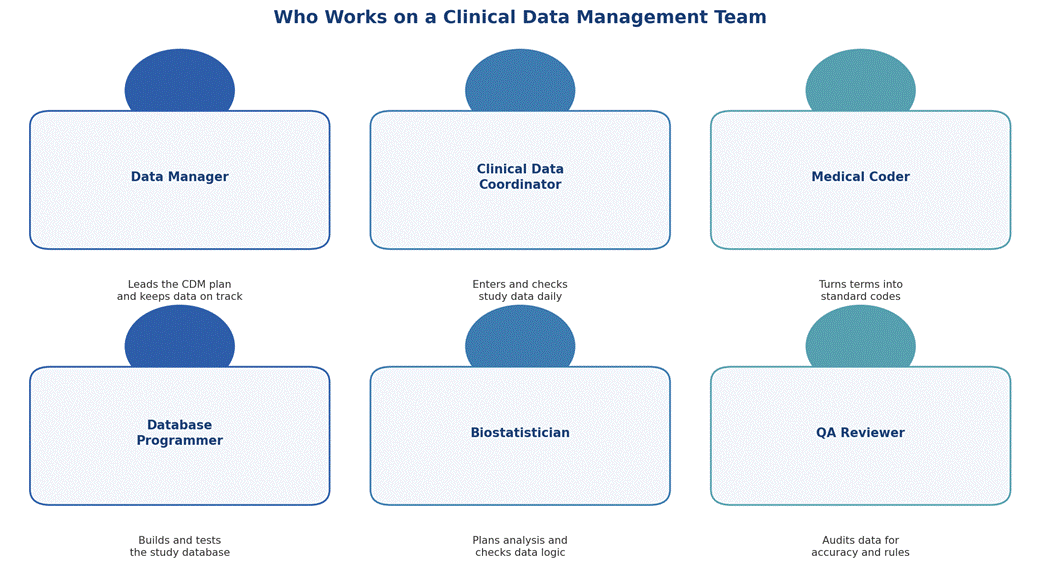
Who Works in Clinical Data Management?
CDM is a team effort. Each person plays a different part in keeping the data clean and on time.
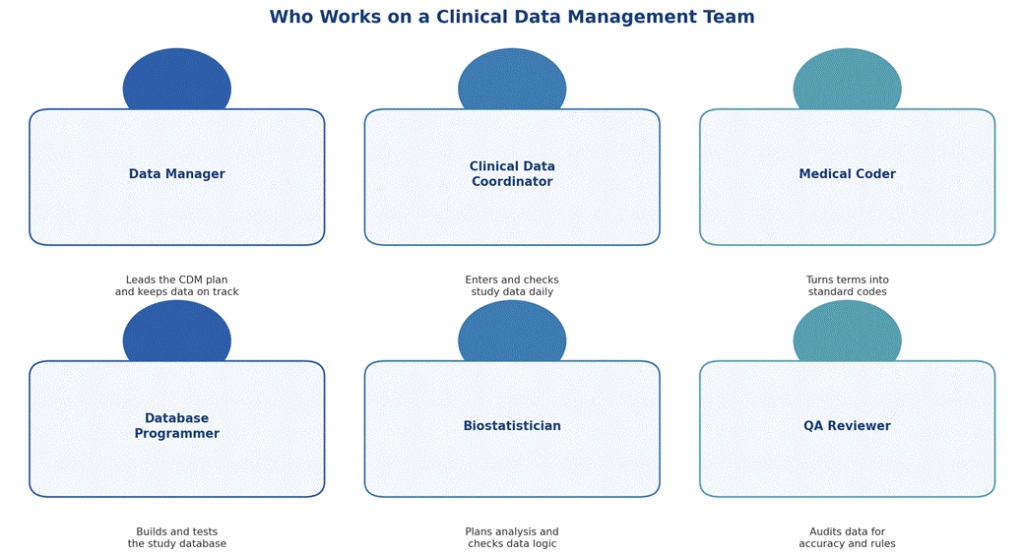
Figure 2: Common roles on a clinical data management team
Common Tools Used in Clinical Data Management
Most CDM work today happens through software, not paper. Below is a simple table of the tool types you will hear about most often.
| Tool Type | Examples | What It Does |
| EDC (Electronic Data Capture) | Oracle Clinical One, Medidata Rave, Veeva Vault CDMS | Collects patient data straight from the study site |
| CTMS | Veeva CTMS, Oracle Siebel CTMS | Tracks study timelines, sites, and staff tasks |
| Coding Software | TAUTAS, ARISg (coding modules) | Turns medical terms into standard codes like MedDRA and WHODrug |
| Data Cleaning Tools | SAS, R, Spotfire | Finds errors and odd patterns in the data |
| Randomization Systems (IRT/RTSM) | Suresh Systems, Almac IRT | Assigns patients to study groups the fair way |
Common Challenges in Clinical Data Management
- Data coming from many sources: labs, wearable devices, patient apps, and paper diaries all need to line up correctly.
- Keeping up with different rules in different countries during global trials.
- Human error during data entry, especially in large studies with thousands of patients.
- Late or missing data from trial sites, which slows down the whole timeline.
- Keeping patient data private and secure at every step.
Best Practices for Good Clinical Data Management
- Build edit checks into the database early, so errors are caught the moment they happen.
- Train site staff well before the trial starts, so they enter data the right way from day one.
- Use a clear data management plan that everyone on the team can follow.
- Review data often during the trial, not just at the end.
- Keep clear records of every change made to the data, so the trial stays fully auditable.
The Future of Clinical Data Management
Clinical data management keeps changing fast. Trials now collect data from smartwatches, home health devices, and mobile apps, not just hospital visits. Artificial intelligence tools are starting to help spot data errors faster than a human reviewer alone. Cloud-based systems make it easier for teams in different countries to work on the same clean, live dataset. As trials grow bigger and more global, the role of clean, well-managed data will only grow with them.
Frequently Asked Questions
What is clinical data management in simple words?
Clinical data management is the process of collecting, checking, and storing data from a clinical trial. The goal is to make sure the data is clean, correct, and ready for analysis.
Why is clinical data management important?
Bad data can lead to wrong conclusions about a drug or treatment. Good CDM keeps the study honest, protects patient safety, and helps a new drug get approved faster.
What skills does a clinical data manager need?
A clinical data manager needs to know clinical trial rules, basic statistics, and how to use EDC software. Attention to detail and clear communication are just as important as technical skill.
What is the difference between CDM and biostatistics?
CDM focuses on collecting and cleaning the data. Biostatistics focuses on analyzing the clean data to find results. CDM comes first, and biostatistics builds on top of it.
How long does clinical data management take in a trial?
It depends on the size of the study. A small trial may take a few months. A large, multi-country trial can take a year or more, since data keeps coming in until the last patient visit.
What is database lock in CDM?
Database lock is the point where no more changes can be made to the study data. It happens after all checks are done and every query is closed. Once locked, the data goes to the statistics team for the final analysis.
Final Thoughts
Clinical data management may not be the most talked-about part of a clinical trial, but it is one of the most important. Clean, honest data is what allows doctors and regulators to trust a study’s results. Without strong CDM, even the best new treatment could face delays or rejection simply because its data wasn’t managed well. As trials grow bigger and more digital, clinical data management will only become more valuable to the future of medicine.
References
U.S. Food and Drug Administration — Guidance on Electronic Source Data in Clinical Investigations: fda.gov
Society for Clinical Data Management (SCDM) — Good Clinical Data Management Practices: scdm.org
National Library of Medicine — Clinical Data Management Overview: ncbi.nlm.nih.gov
European Medicines Agency — Clinical Trials Data: ema.europa.eu