If you have done B Pharma and now you want a government job, you are on the right page. Many students finish their pharmacy degree and then feel confused about what to do next. A government job gives you a fixed salary, job safety, and a lot of respect in society. In this post, we will talk about all the government jobs you can get after B Pharma, the exams you need to give, the salary you can expect, and simple tips to clear these exams. Let’s start.
B Pharma opens the door to many government job options
What is B Pharma?
B Pharma, or Bachelor of Pharmacy, is a four year degree course. In this course, students learn about medicines, drugs, their effects on the human body, and how medicines are made. After finishing this degree, a student can work in hospitals, medical shops, drug companies, or government offices. The degree is recognised by the Pharmacy Council of India, so it holds good value across the country.
Why Choose a Government Job After B Pharma?
A private job may give you a good salary in the start, but a government job gives you long term safety. Here are some simple reasons why B Pharma students look for government jobs:
- Fixed monthly salary with regular increments
- Job security, even during hard economic times
- Pension and other benefits after retirement
- Respect and recognition in society
- Better work-life balance compared to many private jobs
- Chance to serve the public through health services
Types of Government Jobs for B Pharma Graduates
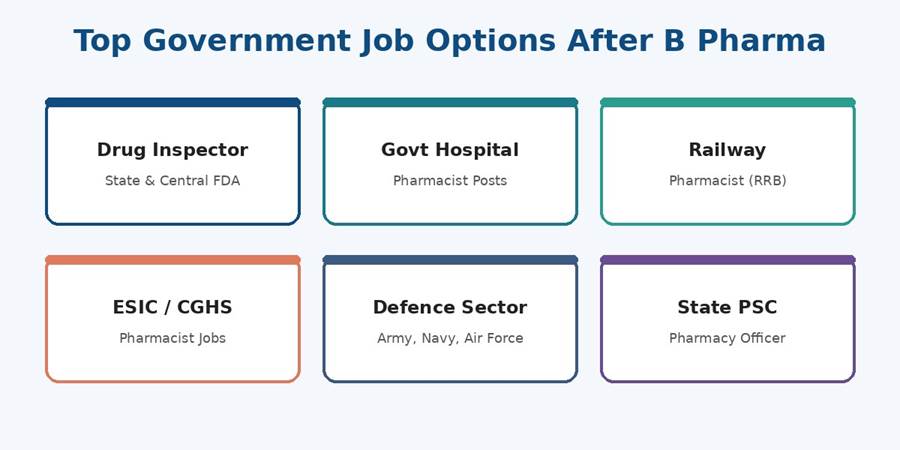
There are many government departments that hire B Pharma graduates every year. Below is a quick look at the most common job types, followed by more details on each one.
Common government career paths for B Pharma graduates
Drug Inspector
A Drug Inspector checks the quality of medicines sold in the market. This job is with the State or Central Food and Drug Administration (FDA). It is one of the most respected posts for pharmacy graduates and usually needs a written exam and an interview.
Pharmacist in Government Hospitals
Government hospitals, both state and central, hire pharmacists to manage the medicine store, give medicines to patients, and keep proper records. This is one of the most common government jobs for B Pharma students.
Railway Pharmacist
Indian Railways runs its own hospitals for staff and their families. The Railway Recruitment Board (RRB) releases pharmacist posts from time to time. This job also comes with railway travel benefits.
ESIC and CGHS Pharmacist
The Employees State Insurance Corporation (ESIC) and Central Government Health Scheme (CGHS) hire pharmacists for their hospitals and dispensaries across India. These jobs are known for good pay and steady work hours.
Defence Sector Jobs
The Indian Army, Navy, and Air Force also need pharmacists for their hospitals and medical units. These jobs come with extra allowances, quarters, and other defence benefits.
State PSC Pharmacist Posts
Every state has its own Public Service Commission (PSC) that releases pharmacist vacancies for state-run hospitals and health centres. Keep checking your state PSC website for fresh notices.
Eligibility Criteria for B Pharma Government Jobs
Eligibility rules can change a little from post to post, but most of them follow a similar pattern. Here is a simple table to help you understand:
| Post | Qualification Needed | Age Limit |
| Drug Inspector | B Pharma / M Pharma | 21 to 30 years |
| Hospital Pharmacist | B Pharma / D Pharma | 18 to 27 years |
| Railway Pharmacist | B Pharma / D Pharma | 18 to 30 years |
| ESIC / CGHS Pharmacist | B Pharma | 18 to 30 years |
| Defence Pharmacist | B Pharma | 19 to 25 years |
Note: Age relaxation is given to SC, ST, OBC, and other reserved categories as per government rules. Always check the official notice before applying.
How to Apply for B Pharma Government Jobs
Applying for these jobs is simple if you follow the right steps:
- Check the official notification on the department’s website
- Read the eligibility criteria carefully
- Fill the online application form before the last date
- Pay the application fee, if any
- Take a printout of the filled form for your records
Documents You Will Need
- B Pharma or D Pharma degree certificate
- Pharmacy Council registration certificate
- Class 10 and Class 12 mark sheets
- Category certificate, if applicable
- Recent passport size photo and signature
Exam Pattern for B Pharma Government Jobs
Most B Pharma government exams follow an objective type pattern. Here is a general idea of the sections you may face:
| Subject | Number of Questions | Marks |
| Pharmacology | 25 | 25 |
| Pharmaceutics | 25 | 25 |
| Pharmaceutical Chemistry | 20 | 20 |
| Pharmacy Jurisprudence | 10 | 10 |
| General Knowledge | 20 | 20 |
Negative Marking Rule
Many exams cut a small part of a mark for every wrong answer. So it is better to attempt only those questions where you are sure about the answer.
Salary and Perks of Government Pharmacist Jobs
The pay depends on the post and the pay level given by the government. Here is a rough idea:
| Post | Pay Level / Grade Pay | Approx Monthly Salary |
| Drug Inspector | Level 7 / Grade Pay 4600 | Rs 44,900 to 1,42,400 |
| Hospital Pharmacist | Level 5 / Grade Pay 2800 | Rs 29,200 to 92,300 |
| Railway Pharmacist | Level 5 | Rs 29,200 to 92,300 |
| ESIC / CGHS Pharmacist | Level 5 | Rs 29,200 to 92,300 |
Apart from basic pay, government pharmacists also get dearness allowance, house rent allowance, medical benefits, and pension after retirement.
Top Recruiting Organizations
Some of the top government bodies that hire B Pharma graduates every year are:
- Staff Selection Commission (SSC)
- Railway Recruitment Board (RRB)
- Employees State Insurance Corporation (ESIC)
- State Public Service Commissions
- Indian Army, Navy, and Air Force
- State and Central Drug Control Departments
You can check current openings and notices on the official Staff Selection Commission website, which lists many pharmacist and technical posts across departments.
For rules about your pharmacy registration and license, you can also visit the Pharmacy Council of India website to stay updated with the latest guidelines.
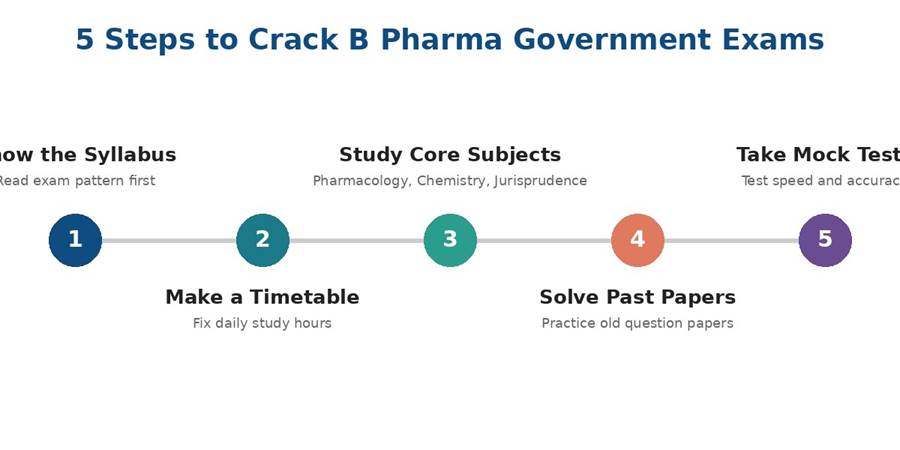
5 Tips to Crack B Pharma Government Exams
Simple steps to prepare for B Pharma government exams
- Read the full syllabus first, so you know what to study
- Make a daily study timetable and stick to it
- Focus more on Pharmacology, Pharmaceutics, and Jurisprudence
- Solve old question papers to know the exam pattern
- Take mock tests to improve your speed and accuracy
Frequently Asked Questions
Is B Pharma good for government jobs?
Yes, B Pharma is a good degree for government jobs. Students can apply for pharmacist posts, drug inspector posts, and other health department jobs across India.
Which exam is best after B Pharma?
There is no single best exam. It depends on your interest. Some students prefer state PSC pharmacist exams, while others go for SSC, RRB, or defence exams.
What is the salary of a government pharmacist?
A government pharmacist usually earns between Rs 29,000 and Rs 92,000 per month, depending on the post, pay level, and years of service.
Can B Pharma students apply for other non-pharmacy government jobs?
Yes, many B Pharma students also apply for general government exams like SSC CHSL, bank exams, and state level exams, as long as they meet the basic eligibility criteria.
Final Thoughts
A government job after B Pharma is a smart choice for students who want job safety along with good pay and respect. Whether you choose to become a drug inspector, a hospital pharmacist, or join the defence sector, the key is to stay updated with new job notices and prepare well for the exams. Start your preparation today, keep patience, and success will follow.