Thinking about a career in pharmacovigilance? You are not alone. As more medicines reach the market every year, drug safety has become one of the fastest growing fields in the pharmaceutical industry. This guide walks you through what pharmacovigilance actually is, the skills you need, the career path you can expect, and how to get your first job in this field.
What Is Pharmacovigilance?
Pharmacovigilance, often shortened to PV, is the science of tracking how medicines behave once they are used by real patients. Before a drug reaches the market, it is tested on a limited number of people in clinical trials. But once millions of people start using it, new side effects can show up. Pharmacovigilance teams collect this safety data, study it, and report it to health authorities so that unsafe drugs can be flagged early.
In simple words, pharmacovigilance professionals are the people who keep watch over medicines after they are approved. Their job protects patients and helps drug companies stay on the right side of the law.
Why Pharmacovigilance Is a Good Career Choice
Here are a few reasons why so many life science graduates are choosing this path:
- Steady demand: Every pharma and biotech company needs a safety team, so jobs rarely dry up.
- Work from home options: Many PV roles, especially case processing, can be done remotely.
- Clear growth path: You can move from an entry level associate role to a director level position in a well planned way.
- Good starting pay: Compared to many other entry level pharma jobs, PV often pays better.
- Global opportunities: Companies in the US, Europe, and Asia all hire for pharmacovigilance.
Skills You Need to Work in Pharmacovigilance
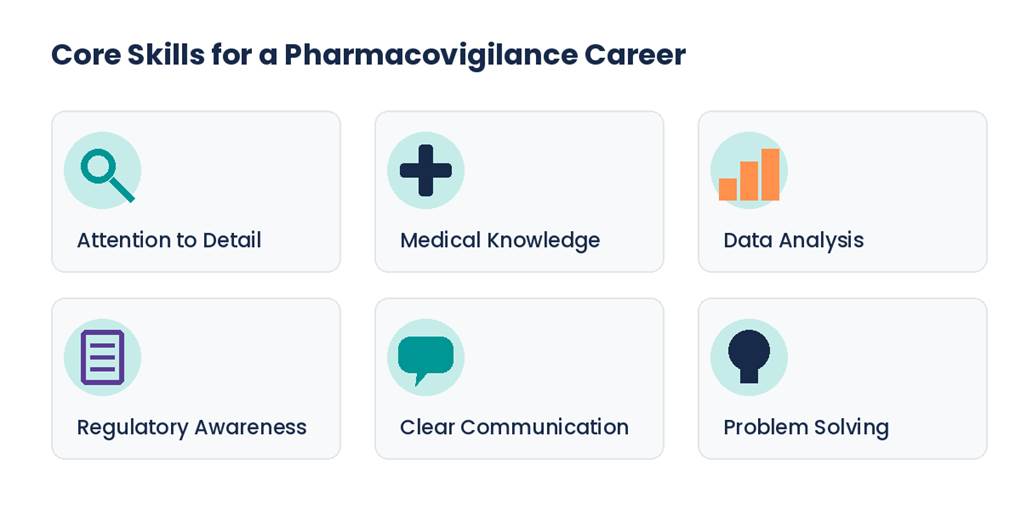
You do not need to be a doctor to work in pharmacovigilance, but a mix of medical understanding and soft skills does help a lot.
Technical Skills
- Basic knowledge of human anatomy, diseases, and drugs
- Understanding of adverse event reporting and case processing
- Comfort with safety databases such as Argus or ArisG
- Awareness of rules set by agencies like the FDA and EMA
Soft Skills
- Attention to detail, since even a small error in a case report can cause big problems
- Clear writing, because most PV work involves documenting cases
- Patience to handle repetitive tasks without losing accuracy
- Good time management, as most safety reports have strict deadlines
Educational Qualifications for Pharmacovigilance Jobs
Most companies look for a degree in a life science subject. Common qualifications include:
- B.Pharm or M.Pharm (Pharmacy)
- MBBS or BDS (Medical or Dental degree)
- BSc or MSc in Life Sciences, Microbiology, or Biotechnology
- Nursing degrees, in some cases
A degree alone is often not enough. Many freshers add a short pharmacovigilance certification course to their resume. This shows recruiters that you already understand the basics of case processing, coding of adverse events, and safety reporting timelines, even before your first job.
Pharmacovigilance Career Path: From Fresher to Director
One of the best things about this field is the clear ladder you can climb. Here is what a typical path looks like:
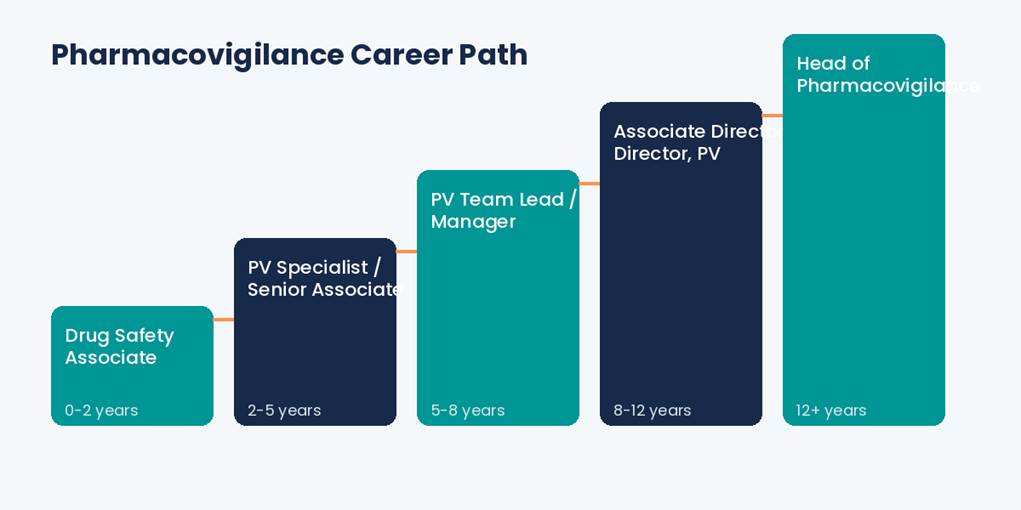
| Career Stage | Typical Job Title | Years of Experience |
| Entry level | Drug Safety Associate / PV Associate | 0 – 2 years |
| Mid level | PV Specialist / Senior Associate | 2 – 5 years |
| Senior level | PV Team Lead / PV Manager | 5 – 8 years |
| Leadership | Associate Director / Director, PV | 8 – 12 years |
| Executive | Head of Pharmacovigilance / VP Safety | 12+ years |
Common Job Titles in Pharmacovigilance
As you search for openings, you will come across many different titles for roles that are quite similar. Some of the most common ones are:
- Drug Safety Associate
- Pharmacovigilance Associate / Officer
- Case Processor / Medical Reviewer
- Signal Detection Analyst
- Regulatory Affairs and PV Specialist
- PV Quality and Compliance Auditor
Pharmacovigilance Salary Expectations
Salary depends on your location, company, and experience level. The numbers below are approximate and meant only as a general guide.
| Job Title | India (per year) | USA (per year) |
| Drug Safety Associate | ₹3.5 – 6 lakh | $50,000 – $65,000 |
| PV Specialist | ₹6 – 10 lakh | $65,000 – $85,000 |
| PV Manager | ₹12 – 20 lakh | $95,000 – $120,000 |
| Director, PV | ₹25 – 40 lakh | $140,000 – $180,000 |
How to Start Your Career in Pharmacovigilance
Step 1: Complete the Right Degree
Start with a pharmacy, medical, or life science degree. This is the base requirement for almost every PV job posting.
Step 2: Learn the Basics of Drug Safety
Read about adverse events, case processing, and how health agencies review drug safety data. Free articles and short online courses are a good place to begin.
Step 3: Take a Short Certification Course
A good certification can teach you the practical side of the job, such as how case narratives are written and how timelines work.
Step 4: Apply for Internships or Entry Level Roles
Many companies hire freshers directly into associate roles, especially in outsourcing and CRO companies.
Step 5: Keep Learning on the Job
Rules and guidelines change often. Reading updates from health authorities keeps your knowledge fresh.
Challenges Pharmacovigilance Professionals Face
- Handling a high volume of repetitive case reports
- Meeting strict, sometimes tight, reporting deadlines
- Keeping up with changing rules across different countries
- Working night shifts to match US or European time zones
Future of Pharmacovigilance Careers
The demand for pharmacovigilance professionals is not slowing down. More drugs are being approved every year, and health authorities around the world are tightening safety rules. Automation and artificial intelligence are also changing the way case reports are processed, which means professionals who are comfortable learning new tools will have an edge.
For accurate and updated global standards, it helps to follow official resources such as the World Health Organization’s pharmacovigilance program and the FDA’s MedWatch safety reporting program. Both are useful if you want to understand how real world drug safety monitoring works.
Frequently Asked Questions
Is pharmacovigilance a good career choice?
Yes. It offers steady demand, decent starting pay, and a clear path for growth, which makes it a solid choice for life science graduates.
Do I need coding skills for pharmacovigilance?
No. Basic computer skills are enough for most roles. Some advanced signal detection roles may use data tools, but coding is not a must.
Can a fresher get a pharmacovigilance job?
Yes. Many companies hire freshers for associate level roles, especially if the candidate has a relevant degree and a short PV certification.
Final Thoughts
Pharmacovigilance is one of the few pharma careers where you can start with a basic degree and grow into a leadership role over time. If you enjoy detail-oriented work and want a job that has real impact on patient safety, this field is worth exploring. Start with the right degree, add a certification, and apply for entry level roles to get your foot in the door.