Pharma QA vs QC Difference, QA vs QC What’s the Real Difference? Pharma QA role and responsibility, Pharma QC role and responsibility.
If you’ve spent any time around a pharmaceutical manufacturing floor, you’ve probably heard the terms QA, QC, quality and quality assurance used almost every day. New hires mix them up constantly, and honestly. After more than a decade working alongside both quality assurance and quality control teams in solid dosage and sterile manufacturing, I can tell you the confusion is understandable — the two functions overlap, share data, and ultimately serve the same goal. But they are not the same job and treating them as interchangeable.
This article breaks down what Quality Assurance (QA) and Quality Control (QC) actually do in a pharmaceutical company, how their roles differ day to day, and why understanding that difference matters whether you’re a fresher preparing for an interview, a quality professional revisiting on fundamentals.
Regulatory bodies such as the USFDA, WHO, and ICH guidelines don’t leave much room for confusion here. cGMP frameworks expect a clear separation of roles between the people who design and oversee the quality system and the people who generate analytical data. Blurring that line, even informally, often shows up as an observation during inspections. So beyond satisfying curiosity, getting this right protects your facility’s compliance standing and, more importantly, the patients who eventually take the medicine your team helped release.
What Is Quality Assurance (QA) in Pharma?
Quality Assurance is the umbrella system that ensures every process, document, and procedure used to manufacture a drug product is designed correctly and followed consistently. QA doesn’t test tablets or swab equipment for microbial counts. Instead, QA builds and polices the framework that makes sure the right things happen at the right time, every single time.
Think of QA as the architect and the building inspector rolled into one. QA writes and approves Standard Operating Procedures (SOPs), manages document control, conducts internal audits, oversees vendor qualification, handles change control, and ultimately decides whether a finished batch is fit to be released to the market. QA is fundamentally preventive — its job is to stop quality problems before they ever reach the production floor.
A typical day for a QA executive might involve reviewing an executed Batch Manufacturing Record line by line, signing off on a deviation report, scheduling an upcoming supplier audit, or sitting in a change control board meeting to evaluate whether a proposed equipment upgrade needs revalidation. None of this involves pipettes or analytical instruments, yet all of it directly shapes whether the product reaching a pharmacy shelf is safe and effective.
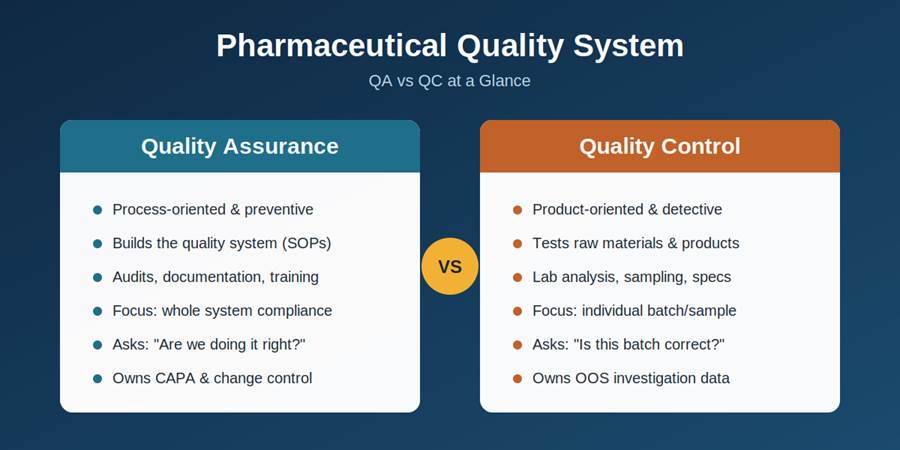
Figure 1: Quality Assurance vs Quality Control — core focus areas compared side by side.
What Is Quality Control (QC) in Pharma?
Quality Control, on the other hand, is the hands-on laboratory function. QC analysts test raw materials, in-process samples, and finished products against predefined specifications using validated analytical methods — HPLC, dissolution testing, microbial limit testing, and so on. If QA is the rulebook, QC is the referee checking whether the actual product meets the rules.
QC is detective rather than preventive. It identifies whether something has already gone wrong by generating objective, measurable data. A QC chemist doesn’t decide whether a batch gets released — that decision sits with QA — but without QC’s test results, QA would have nothing concrete to base that release decision on.
A day in the QC lab might include running dissolution profiles on a tablet batch, performing assay and related substances testing via HPLC, conducting environmental monitoring in a sterile facility, or calibrating a pH meter before it’s used for a release test. Every result gets logged, reviewed, and trended, because a single anomalous data point can trigger an entire OOS investigation involving multiple departments.
QA vs QC: The Core Differences
Here’s where the distinction becomes clearer once you frame it through a few lenses:
- Scope: QA covers the entire quality management system; QC focuses narrowly on testing samples and batches.
- Nature: QA is proactive and preventive; QC is reactive and detective.
- Output: QA produces SOPs, audit reports, CAPAs, and release decisions; QC produces test data, certificates of analysis, and lab reports.
- Question asked: QA asks, “Is our system capable of consistently producing quality product?” QC asks, “Does this specific sample meet specification?”
- Location: QA work often happens in offices, audit rooms, and document control systems; QC work happens primarily inside the analytical laboratory.
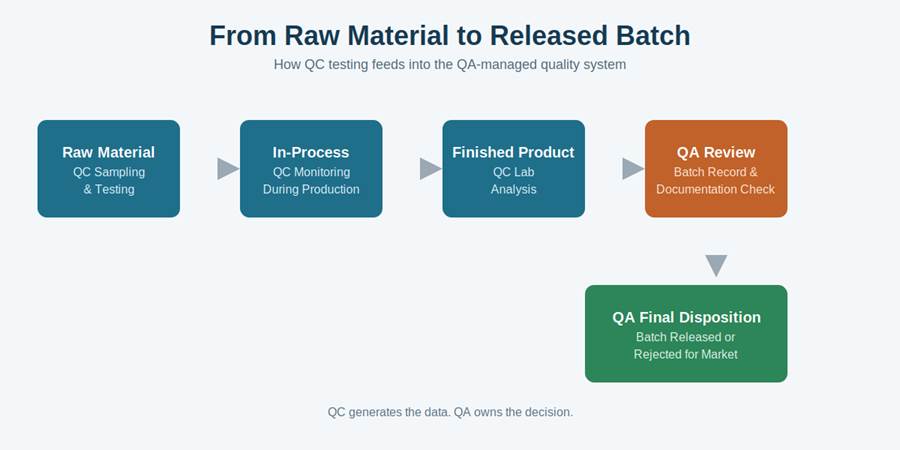
Figure 2: How a batch moves from raw material testing through QC analysis to final QA disposition.
How QA and QC Work Together
In practice, neither department functions in isolation. A finished product batch can’t be released without QC generating valid test results, and those test results mean nothing if QA hasn’t first verified that the testing was performed under a validated method, by a trained analyst, using calibrated instruments, and documented according to Good Documentation Practices.
When a QC analyst encounters an Out-of-Specification (OOS) result, that triggers an investigation. QC documents what happened in the lab, but QA usually leads or oversees the formal OOS investigation, determines the root cause, and decides on corrective and preventive actions (CAPA). This is a perfect example of the partnership: QC supplies the evidence, QA interprets it within the broader quality system and makes the call.
Similarly, during a regulatory inspection from agencies like the USFDA, MHRA, or a national regulatory authority, QA typically acts as the face of the quality department, presenting the overall system, while QC documentation and lab records back up the claims with hard data.
A Quick Side-by-Side Summary
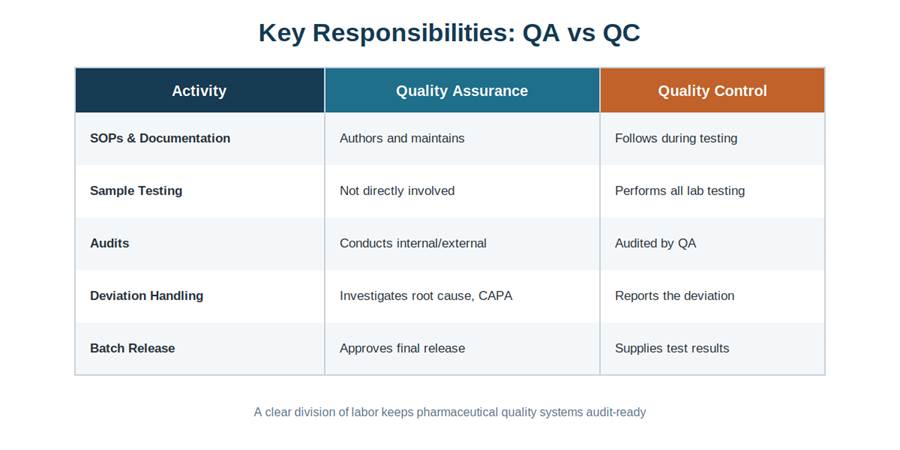
Figure 3: Key responsibilities split between QA and QC across common quality activities.
As shown above, the responsibilities rarely overlap directly — they’re designed to complement each other. QA owns the system-level decisions; QC owns the analytical evidence those decisions rely on.
Why This Distinction Matters for Your Career
If you’re applying for a pharma job, interviewers love asking this exact question — partly because it’s a quick way to filter out candidates who’ve only memorized definitions versus those who actually understand how a quality department functions. Knowing that QA is system-focused and QC is product-focused, and being able to explain how they interact during something like an OOS investigation or batch release, immediately signals that you understand real-world pharmaceutical operations rather than textbook theory.
It also matters for career planning. QC roles typically require strong analytical chemistry or microbiology skills and a comfort with instrumentation and lab work. QA roles lean more toward documentation, regulatory knowledge, auditing skills, and cross-functional communication. Some professionals move from QC to QA later in their careers once they’ve built a strong technical foundation and want to shift toward systems-level thinking and compliance leadership.
Common Myths to Avoid
- Myth: QC is less important than QA. Reality: Neither function works without the other; they’re equally critical.
- Myth: QA never enters the lab. Reality: QA regularly audits lab practices, reviews raw data, and verifies analyst training records.
- Myth: QC can release a batch on its own. Reality: Final batch disposition is a QA responsibility, even though QC supplies the test data.
Final Thoughts
Quality Assurance and Quality Control are two halves of the same commitment to patient safety, but they operate at different altitudes. QA is the system-level guardian making sure processes are designed right and consistently followed. QC is the analytical checkpoint confirming that what comes out the other end actually meets specification. Understanding this difference isn’t just academic — it shapes how quality departments are structured, how regulatory inspections unfold, and how individual careers in pharmaceutical quality develop over time.
Whether you’re studying for a GMP certification, preparing for your next interview, or simply trying to make sense of your own job description, remembering this one line will keep you straight: QA builds and owns the system; QC tests the product within that system. Get that distinction firmly in your head, and the rest of pharmaceutical quality terminology starts falling into place a lot more easily.